
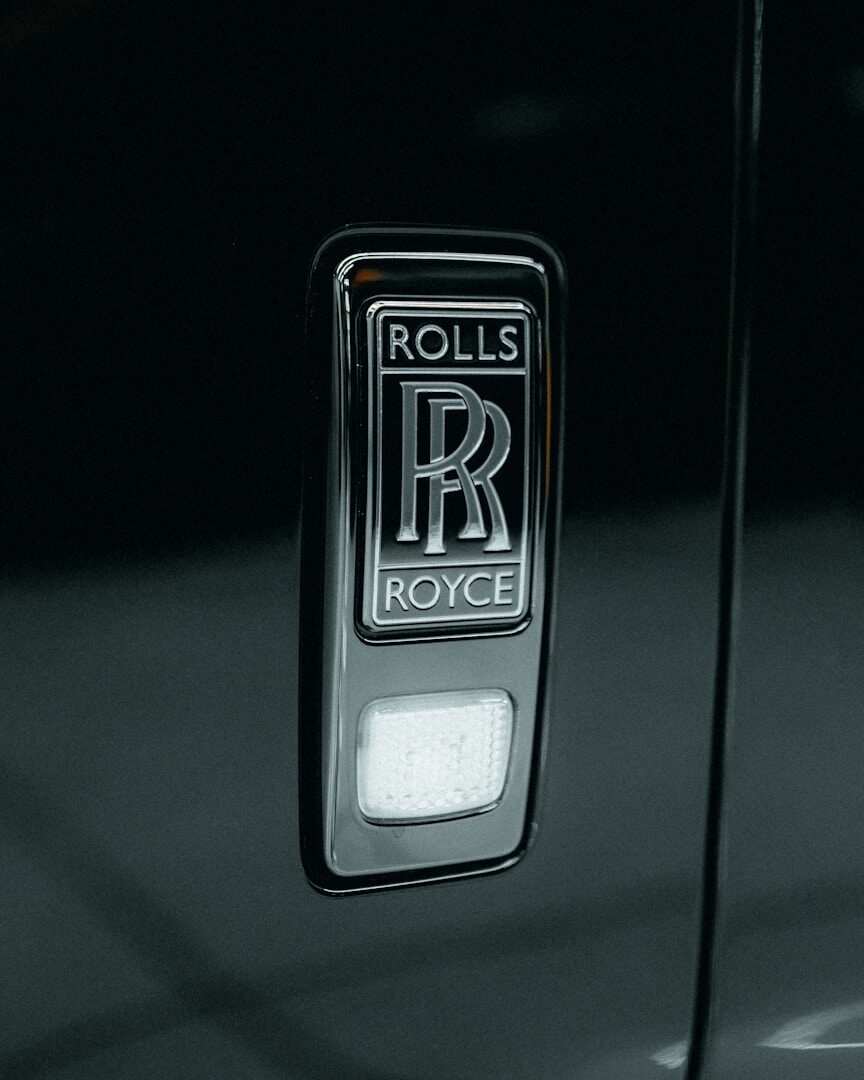
Skim the headline and you’ll picture Goodwood: a clean room in the English countryside where craftsmen hand-stitch leather into a Phantom. That is not what opened this week in Mankato, Minnesota, a city of roughly 44,000 people ninety minutes south of Minneapolis. There isn’t a single car anywhere in this story.
Rolls-Royce officially opened a $24 million, 250,000-square-foot Logistics Operations Center next to its existing plant in Mankato this week. The expansion will more than double the site’s capacity to build mtu Series 4000 generator sets, the diesel engines that keep hospitals, airports, and data centers running when the grid fails. It adds more than 100 jobs, a nearly 20 percent increase to the local workforce, and makes Rolls-Royce one of the largest manufacturers in Mankato.
None of that involves the company most people picture when they hear the name.
The Rolls-Royce that makes the Phantom, Cullinan, and Spectre is Rolls-Royce Motor Cars, based in Goodwood, England, and owned by BMW since 1998. The Rolls-Royce that just expanded in Minnesota is Rolls-Royce plc, a London-listed aerospace and power systems company with no ownership tie to the cars at all. The split dates to 1971, when the jet engine division’s RB211 program nearly bankrupted the entire company. The British government nationalized the aerospace and industrial business to save it, and the car division was spun off two years later as its own company, eventually sold, and eventually landed at BMW. Two businesses have shared one name and no boardroom since Nixon was in office.
The generators themselves carry an even stranger lineage. The mtu brand traces back to Maybach Motorenbau, the German engine maker founded by Wilhelm Maybach, the engineer who helped design the original Mercedes. Through a tangle of twentieth-century mergers, that lineage fed into diesel engines fitted to German U-boats during the Second World War, then into the industrial and marine diesels built for decades under the Tognum and MTU Friedrichshafen names. Rolls-Royce took full ownership of that business in 2014, folding a century of German diesel engineering under a British aerospace badge. The name on the building is British. The engineering culture in Friedrichshafen is not.
Here’s the part worth paying attention to: why is Rolls-Royce doubling down on generator capacity in 2026? Not for hospitals or airports, which have needed backup power for decades without anyone building new logistics centers to serve them. The growth is coming from data centers, and specifically from the compute boom driving them: artificial intelligence.
Nearly every hyperscale data center announced over the past two years has run into the same wall. The power grid cannot connect new large loads on the timeline operators want. Utilities in major markets are quoting multi-year waits for grid interconnection studies alone. So operators are doing what heavy industry has always done when the grid can’t be trusted on schedule: buying their own generation and treating it as insurance. Large-format diesel generator sets, the kind Rolls-Royce just doubled its capacity to build, are becoming a standard line item in data center construction budgets rather than a rarely used backup measure.
That shift matters beyond the balance sheet. Backup generators have historically qualified for a lighter emissions standard under EPA rules, because regulators assumed they would run only a limited number of hours a year during genuine emergencies. As data centers lean on generators more routinely, whether to bridge interconnection delays or to shave peak demand during grid stress, that assumption gets tested. Expect closer scrutiny of how these engines are actually being used, not just how they were permitted to be used.
There’s a broader pattern here too. Toyota just committed $3.6 billion to a Texas truck plant, and the real story there wasn’t jobs, it was which vehicles are worth building on American soil under current trade rules. Rolls-Royce’s Minnesota bet is a quieter version of the same logic: an industrial manufacturer expanding U.S. capacity because policy and market demand are pointing the same direction, not out of sentiment.
The irony gets richer when you line up Rolls-Royce’s other headlines. The Motor Cars division committed years ago to going fully electric by 2030. Meanwhile, Toyota has been testing whether EVs can serve as home backup power during blackouts on a household scale. Rolls-Royce plc is solving the same power-reliability problem at industrial scale, with an engine architecture that traces back to a World War II submarine.
Rolls-Royce hasn’t decided whether its future runs on batteries or diesel. It has decided its future is both, depending entirely on which Rolls-Royce you’re asking. The next time an AI data center comes online without a hiccup, remember that somewhere nearby, a room full of German-engineered diesel engines wearing a British badge was standing by to make sure of it.