
The Department of Justice just closed the books on a $7.5 million fraud settlement involving a battery plant in western Kentucky. That sounds like the headline. It isn’t.
The real number in this story is zero, as in the amount of federal grant money the Department of Energy has left to give Ascend Elements, the company that was supposed to turn a site outside Hopkinsville into one of the largest lithium-ion battery recycling operations in the country. The fraud case is basically an epilogue. The real story is what happens when Washington tries to will an entire industry into existence with grant money, and the industry shows up late.
Start with the settlement, because it’s a genuinely strange one. According to prosecutors, Ascend spent roughly eighteen months, September 2023 through February 2025, billing the Department of Energy for inflated labor hours, unnecessary equipment rentals, and tool purchases that had nothing to do with building its Apex-1 battery materials plant. The DOE says it overpaid the company more than $5.3 million because of it. Ascend agreed to pay back $7,497,555.65.
Do that math and something interesting pops out: the settlement is nearly 40% higher than what the government says it actually lost. That isn’t the company getting punished extra for good measure. Under the False Claims Act, the government’s opening position in cases like this is treble damages, three times whatever was allegedly taken. Run $5.3 million through that formula and the number lands close to $15.9 million, which multiple reports pegged as the figure on the table before this deal. Ascend self-reported the problem, cooperated with investigators, and walked away paying roughly half of its theoretical exposure. That’s the entire incentive structure the False Claims Act is built on: confess early and the fine shrinks dramatically; get caught later by a whistleblower or an auditor, and negotiate from a much weaker chair. Every automaker and supplier sitting on a federal grant right now, and there are a lot of them thanks to the EV transition, is running that exact calculation somewhere inside its legal department.
The fraud itself, though, is almost the least surprising part of a cost-reimbursement government grant. When Washington agrees to reimburse a company for building something, it is effectively handing that company an expense account and trusting an audit to catch the abuse after the fact. This time, it did. It doesn’t always.
Here’s the detail that should actually grab an enthusiast’s attention. Ascend Elements isn’t some anonymous government contractor; its patented process, called Hydro-to-Cathode, is built to solve one of the ugliest problems in the EV supply chain: what happens to a battery pack once the car it powered is gone. Instead of shredding old cells down into raw, ore-like black mass and running that material back through the entire mining-and-refining pipeline, Ascend’s process is designed to convert spent battery material directly into new cathode precursor in far fewer steps. If it works at real scale, it is a genuine shortcut around a supply chain that still leans heavily on nickel and cobalt sourced from politically unstable regions. That is the kind of technology that quietly determines how expensive a replacement battery pack is a decade from now, which is the same battery pack an insurer prices into a total-loss decision after a fender-bender.
That promise is why the federal government bet big on Hopkinsville in the first place. In October 2022, the DOE approved $480 million across two grants for the site, part of a wave of Bipartisan Infrastructure Law funding meant to build a domestic battery supply chain from raw material to finished product. Kentucky’s governor stood at the groundbreaking and called it the largest economic development project in Christian County’s history: a $1 billion investment, 400 jobs, the full ceremonial package.
Then the EV market didn’t grow the way anyone’s spreadsheet assumed it would.
By March 2025, Ascend and the DOE had mutually agreed to cancel $164 million of that funding tied to a cathode active material line the company no longer planned to build at that scale. A little more than a year later, in April 2026, Ascend filed for Chapter 11 bankruptcy in Texas, telling the court its financial problems were insurmountable despite having raised more than $1.1 billion in private capital along the way. Construction disputes, cost overruns, and a market that had cooled on EV demand all landed at once. Now, per this week’s settlement, the Department of Energy has canceled every dollar of funding that remained.
Which brings us to the actual twist, and it’s a better one than the fraud case.
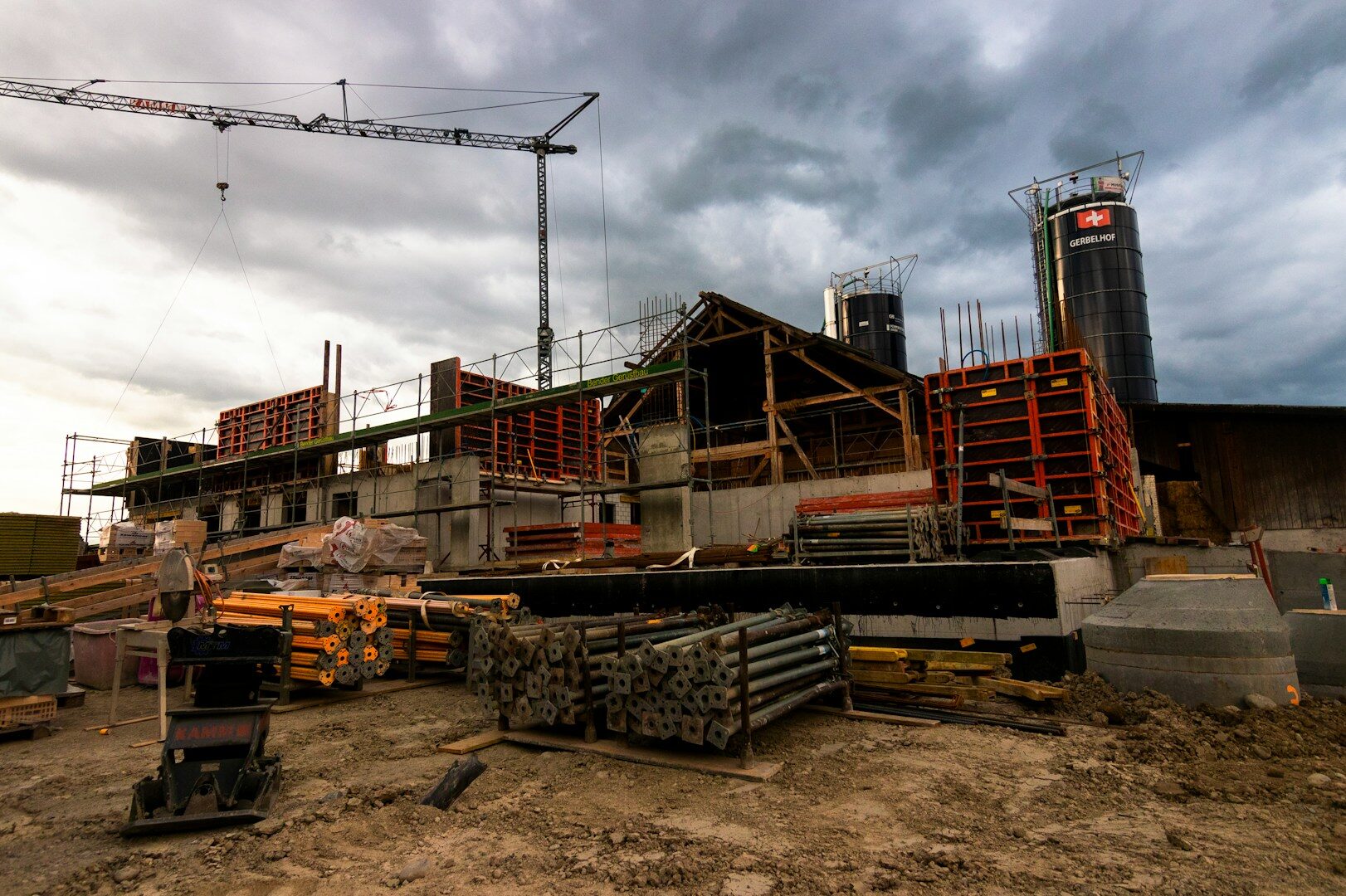
The Hopkinsville plant didn’t get abandoned. It got bought, at bankruptcy auction, by Turner-Kokosing Industrial Joint Venture. That name might sound like just another distressed-asset buyer. It isn’t. Turner-Kokosing is the general contractor that was physically building the plant, and it was reportedly pursuing litigation over unpaid work at the very same time it was bidding on the property. The construction company that wasn’t getting paid to build the factory now owns the factory. Construction is reportedly about 65% complete, and the new owner says it intends to finish the job, even though what actually gets manufactured there once it’s done remains an open question. Local officials say Turner-Kokosing is already shopping the finished facility to a manufacturer.
That’s the sentence worth remembering here: the contractor didn’t get a paycheck. It got the deed.
It’s also a preview of where a lot of Inflation Reduction Act and infrastructure-era battery money may be headed. The Auto Wire has already tracked pieces of this pattern playing out with Bosch’s federally backed EV chip expansion and with the ICE raid that disrupted Hyundai’s Georgia battery plant, different companies, same underlying tension between political ribbon-cuttings and market reality. Ford’s recent battery-related manufacturing headaches only reinforce how thin the margin for error has become across this supply chain. When a factory gets financed on the assumption that EV adoption climbs in a straight line, any wobble in that curve turns into layoffs, lawsuits, or, in this case, a change of ownership decided in bankruptcy court instead of a boardroom.
None of this means Ascend ran some grand conspiracy. What’s described in the settlement, padded labor hours, extra tool purchases, equipment nobody needed, reads less like corporate villainy and more like a construction site treating a government reimbursement account the way a contractor treats a client with a loose budget. It’s sloppy, it’s illegal, and the company owned up to it fast enough to cut its exposure in half. But $7.5 million doesn’t explain why a billion-dollar battery plant ended up in bankruptcy court. A slower-than-promised EV market does that.
Five years from now, nobody will remember the settlement figure. What they might remember, if this plant ever gets finished, is that it took a bankruptcy, a canceled federal grant, and a construction company deciding to become a factory owner just to salvage a fraction of the battery recycling capacity America was promised. That’s not a fraud story. That’s a supply chain learning, the hard way, what happens when policy moves faster than the market it’s trying to create.