
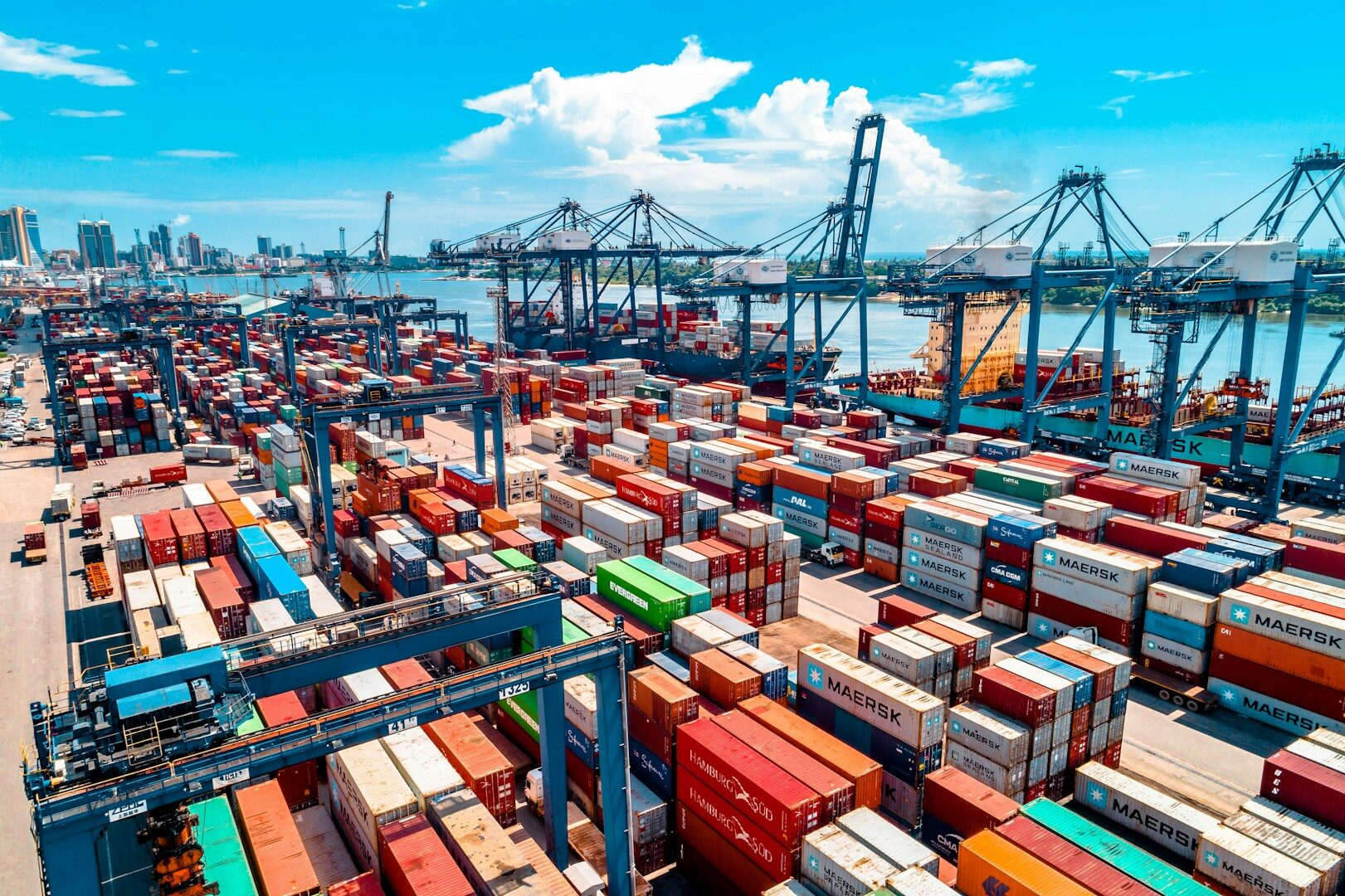
Mexico auto parts production just had its best stretch in years. Its car factories did not. Somewhere in Coahuila, a plant is running hotter than it has in years, stamping out wiring harnesses and alternators bound for Detroit. A few states over, an assembly line that used to build finished trucks and sedans is running slower. Same country. Same industry. Opposite trend lines. That’s not a coincidence of the market. That’s a tax code doing exactly what it was designed to do — just not necessarily what it was designed to accomplish.
Mexico’s National Auto Parts Industry association, known as INA, reported this month that the country produced $52.878 billion worth of auto parts between January and May of 2026. That’s a 10 percent jump over last year, putting the sector within half a percent of the all-time record set in 2024. May alone brought in $10.9 billion, up 6.9 percent year over year. INA director Gabriel Padilla credited the rebound to steady vehicle sales and assembly volumes north of the border.
Finished vehicles are telling a different story. Mexico’s vehicle manufacturers association, AMIA, reported that assembly fell 2.2 percent in July to 302,673 units, with exports down 9.7 percent for the month. Widen the lens and vehicle exports to the United States, still roughly three-quarters of everything Mexico ships out, are down 4.5 percent for the year through July. Parts factories are humming. Assembly lines are cooling off. Inside the same national industry, at the same time, under the same trade agreement.
The reason isn’t buried in a footnote. It’s sitting in a White House fact sheet from March 2025, the same document that introduced the 25 percent Section 232 tariff on imported automobiles and auto parts. That proclamation drew two very different lines depending on which side of the assembly line a company is standing on. Finished vehicles moving under the USMCA get taxed immediately on whatever share of their content isn’t American. Parts got a gentler deal: the proclamation states that “USMCA-compliant automobile parts will remain tariff-free” until Commerce and Customs build a system to tax their non-U.S. content. As of this writing, that system still doesn’t exist.
Translate that into plain English and the incentive is almost embarrassingly obvious. Build a wiring harness in Saltillo and ship it to a plant in Texas, and it crosses the border duty-free. Build the entire truck in Saltillo and ship it north instead, and Washington taxes it the moment it clears customs. Same labor pool, same industrial parks, same country. The only variable that changes the tax bill is which side of the border the last bolt gets torqued.
Automakers did not need that explained to them twice.
Toyota just moved Tacoma assembly out of Mexico and into a plant in Texas, and buried the real justification in a single sentence about USMCA content requirements. Honda did almost the identical thing with the Civic Hybrid back in 2025, shifting the line from Mexico to the U.S. not long after the tariff took effect. Volkswagen hasn’t relocated the Jetta or Taos yet, but its CEO has spent months publicly lobbying for a tariff break on Mexico-built cars while the company pours new investment into Tennessee — a polite, corporate way of admitting the math doesn’t currently pencil out.
None of this means Mexico is losing its grip on the American supply chain. It’s the opposite, and it’s the most interesting number in the entire report.
The tariffs were written, in the administration’s own telling, to correct a supply chain weakened by heavy import competition and reduce the country’s dependence on foreign-made components; the same fact sheet cites a $93.5 billion U.S. trade deficit in auto parts as proof of the problem. Yet in the time since those tariffs took effect, Mexico’s share of the U.S. auto parts import market hasn’t shrunk. It climbed to a historic high of 44.73 percent, up from 43.74 percent a year earlier and nearly 15 points higher than in 2007. A policy built to loosen Mexico’s grip on America’s parts bin has, so far, tightened it.
The biggest single category driving that growth is electrical components — the wiring harnesses, sensor arrays, and connector assemblies that route power and data through every modern vehicle. They account for nearly a fifth of everything Mexico’s auto parts industry builds and grew 11.4 percent year over year to $10.3 billion. That’s not a phenomenon the tariff fight created. Wiring harnesses have anchored Mexican manufacturing for more than three decades for a mundane reason that has nothing to do with trade policy: they’re one of the last major vehicle components that resists automation. A modern harness routes more than a thousand individual circuits through a chassis, and a meaningful share of that routing and connector work is still done by hand, not by a robot arm. Cheap, skilled labor built that business first. The tariff structure just handed it a growth spurt.
There’s a repair-shop-level consequence hiding in the geography, too. Ten Mexican states account for 87 percent of Mexico’s total auto parts output, and three of them alone — Coahuila, Guanajuato, and Nuevo León — combine for 42 percent. That’s an enormous share of America’s collision-repair and OEM parts pipeline sitting inside a fairly small footprint. A labor dispute, a grid failure, or a bad storm season in any of those states would ripple into U.S. body shops and dealership parts counters faster than most owners would ever guess.
One more detail worth sitting with: gasoline engine production was the fastest-growing category in the entire report, up 39 percent to $3.3 billion, expanding even as Mexico’s electric and hybrid component lines also grow. Padilla’s own framing was that the industry’s shift toward new technology isn’t heading in one direction at all. Manufacturers are hedging, building out combustion and electrification infrastructure at the same time, because nobody in this industry is confident enough in either timeline to bet an entire factory on it.
The tariff-free status parts currently enjoy isn’t permanent. The same fact sheet that exempted them also promises a future process to tax their non-U.S. content — Commerce simply hasn’t built it yet. When it does, this specific incentive disappears, and some of these numbers could reverse as fast as they inflated. The broader trade relationship isn’t calming down in the meantime, either: Canada is currently taxing American wine, cheese, and hockey sticks in retaliation for the same tariff regime, and automakers have already absorbed an estimated $35 billion in tariff-related costs that are steadily working their way into sticker prices.
This was never really a story about Mexico having a good year. It’s a story about which half of a vehicle Washington decided to tax first, and how quickly an entire industry reorganized itself around the gap. Automakers didn’t suddenly fall in love with Texas and Tennessee. They just got very good, very fast, at reading a tariff schedule. The wiring harness hasn’t gotten the same memo — because nobody in Washington has finished writing it.