
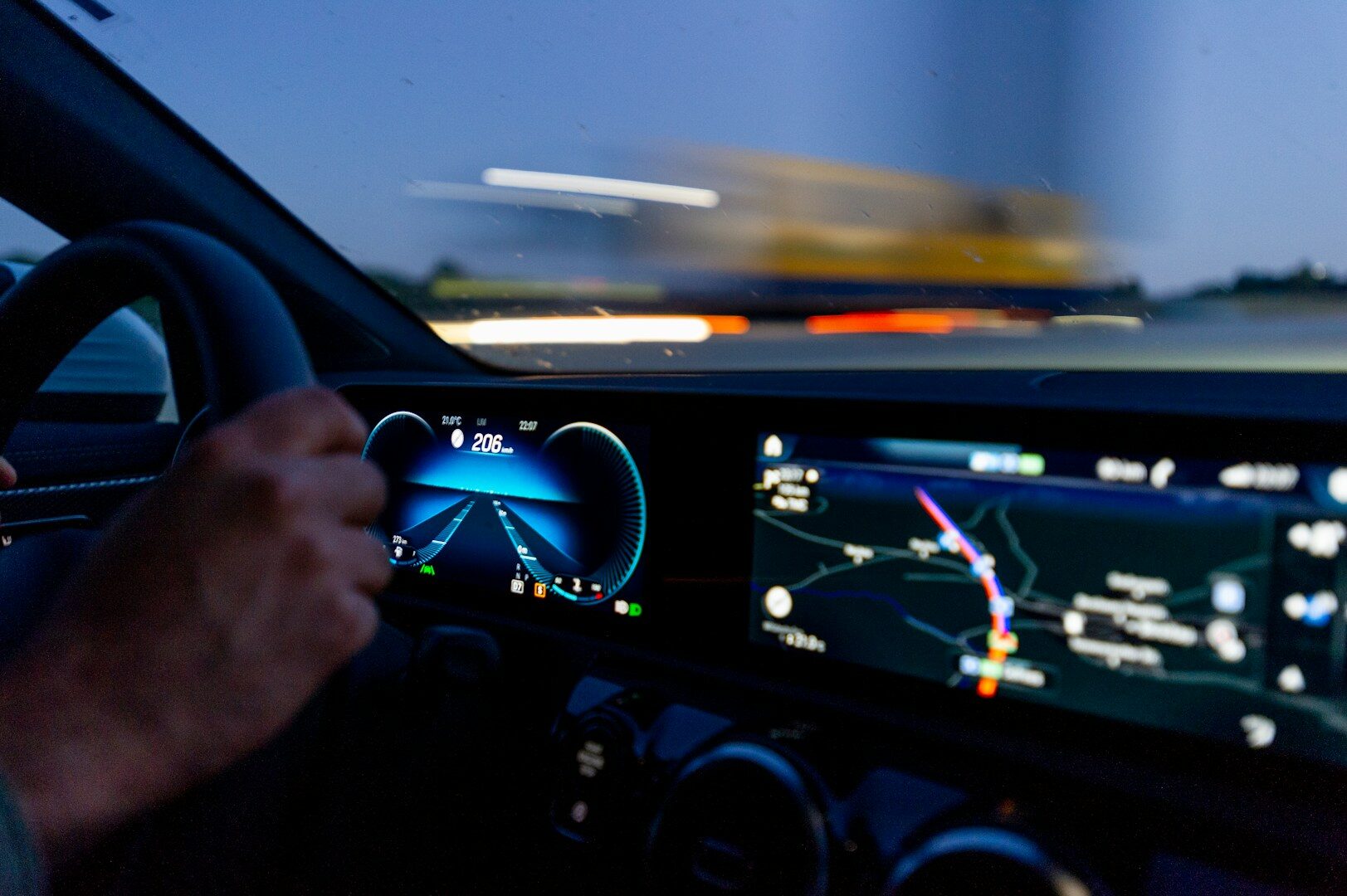
Somewhere in an engineering office in Stuttgart or Santa Clara, someone just booked a very good decade. You’re going to pay for it. The badge on your next car won’t say who.
That’s the part the latest industry forecast doesn’t put in the headline. This week, research firm MarketsandMarkets published one of those projections built to be skimmed and forgotten: the global market for automotive software will nearly double, from about $43 billion in 2026 to $83 billion by 2033. Big number, distant year, a chart pointing politely up and to the right. Easy to nod at. Easier to ignore.
Don’t ignore it. But don’t look at the number, either. Look at the names.
The tell is the guest list
When a report like this lists the “key players” shaping a market, it’s really telling you where the money is going to sit. So read the list. Robert Bosch. NVIDIA. NXP Semiconductors. Mobileye. Aptiv. KPIT. A cluster of chipmakers and Tier 1 suppliers, plus a software house or two.
Notice who’s a supporting character. Volkswagen, BMW, Mercedes, Toyota, Tesla, BYD — the companies whose names actually go on the cars — show up mostly as customers and case studies. The firms positioned to capture this $83 billion are, overwhelmingly, the ones selling silicon and code to the automakers, not the automakers themselves.
That’s the whole story in one line. The car is becoming a computer, and in computers, the profit has never lived in the company that bolts the box together.
The forecasters can’t keep up — and that’s the interesting part
Here’s the first thing that should stop you.
In December 2023, this same firm looked at this same market and pegged it at $19 billion, growing to $32.3 billion by 2030. Less than three years later, its 2026 starting point is $43 billion. Read that again: the base year of the new forecast is already a third bigger than what the earlier report predicted the market would reach four years later.
The people paid to measure this thing more than doubled their own read of it in under three years. That’s not a rounding error. That’s the sound of an industry being rewired faster than anyone modeling it can revise their spreadsheets. When your forecasters keep sprinting to catch up to reality, reality is the story.
What “software-defined” actually costs you
Strip away the jargon — telematics, digital cockpit, ADAS, “flexible reusable platforms” — and here’s the plain version. Automakers spent a century mastering the hard part: stamping steel, casting engines, building the ten-thousandth identical car without a flaw. Software turned that mastery into table stakes. Anyone can source a competent chassis now. The differentiation, and the margin, moved into the part you can’t see.
So the money followed. A modern car runs on tens of millions of lines of code and a stack of processors that would embarrass a mid-2000s laptop. The company that designs those chips and the supplier that integrates them increasingly own the piece customers actually pay a premium for. The automaker is drifting toward a role the electronics industry already has a name for: the assembler. The Foxconn of the road. Your car’s most valuable component may soon be the one component its manufacturer didn’t make.
That’s uncomfortable if your name is on the hood. It’s why every legacy automaker has spent the past five years and billions of dollars trying, mostly badly, to become a software company — even teaming up with old rivals to share the burden. The forecast’s real subtext is that many of them are losing the race to their own suppliers.
Wait — software is now a condition of the car existing
Here’s the second thing you probably didn’t know.
Software in a car isn’t just a feature anymore. In Europe, it’s a license to exist. A United Nations vehicle regulation known as R155 requires every new car sold to be backed by a certified “cybersecurity management system.” No compliant software governance, no type approval. No type approval, no sale.
When the rule’s second phase took effect in July 2024, automakers did the math on updating older platforms — and simply killed the cars instead. The casualty list is real and it stings: the Porsche 718 Boxster and Cayman pulled from Europe, the Audi TT and R8, the Volkswagen Up!, the Renault Zoe, the combustion Porsche Macan. Beloved cars, some of them, ended not by emissions rules or slumping sales but by a cybersecurity requirement they weren’t worth re-engineering to meet.
Let that sink in. A regulation about hacking retired the Boxster faster than the market did. That’s how thoroughly software has swallowed the automobile — the same shift that now has luxury brands recalling tens of thousands of cars over code. Software can now decide which cars get to keep being sold.
The subscription everyone hates and nobody’s abandoning
If the value is migrating to code, automakers have an obvious countermove: sell you that code, over and over. Recurring revenue is the prize — the Silicon Valley dream of the car as an app store, billing you monthly for hardware that’s already bolted in.
Customers noticed. When BMW tried charging a subscription for heated seats — physical hardware, already installed, switched on for a monthly fee — the backlash was immediate and brutal. BMW retreated on the seats. It did not retreat on the strategy; it has said plainly it still intends to sell features by subscription, just ones buyers might resent less. Lawmakers noticed too: New York has moved to limit in-car subscriptions for hardware you already own.
That tug-of-war is the consumer-facing edge of the same story. Automakers want the recurring software money. Buyers keep refusing to hand it over directly. And so, for now, the reliable profit keeps flowing to the suppliers who get paid up front, per chip, per license, whether or not you ever subscribe to anything.
What to actually remember
Forget the $83 billion. Forget 2033. Here’s the idea worth keeping.
A car used to be a machine you owned outright. It’s becoming a device someone else keeps a key to — and the someone with the most valuable key increasingly isn’t the company whose emblem is on the grille. The next time an automaker tells you its new model is “software-defined,” hear what it’s quietly admitting: the part that defines the car is a part it may no longer control.
The metal still has a badge on it. The money moved to the code behind it.