
Rosslyn has been pressing sheet metal into cars since before the Springboks toured with a whites-only side. It has never once changed hands. That streak ended this summer, and the buyer is not who anyone in Pretoria would have picked a decade ago.
Nissan and Chery confirmed the deal on 23 January 2026: the Chinese group’s South African arm would buy the land, the buildings, and — critically — the nearby stamping plant. Nissan Africa president Jordi Vila offered the corporate-speak version of a plant closure, saying “External factors have had a well-known impact on the utilisation of the Rosslyn plant and its future viability within Nissan.” Translated: the Navara alone could not fill a factory built for far more, and once the NP200 died there was nothing left to fill it with.
Related Articles
- Tesla’s ‘Insane’ Mode Is On Trial For A Salon Crash. It Shouldn’t Be The Only Defendant
- BYD Filed Six New Solid-State Battery Patents, But the Real Story Is Whether Two Rocks Actually Touch
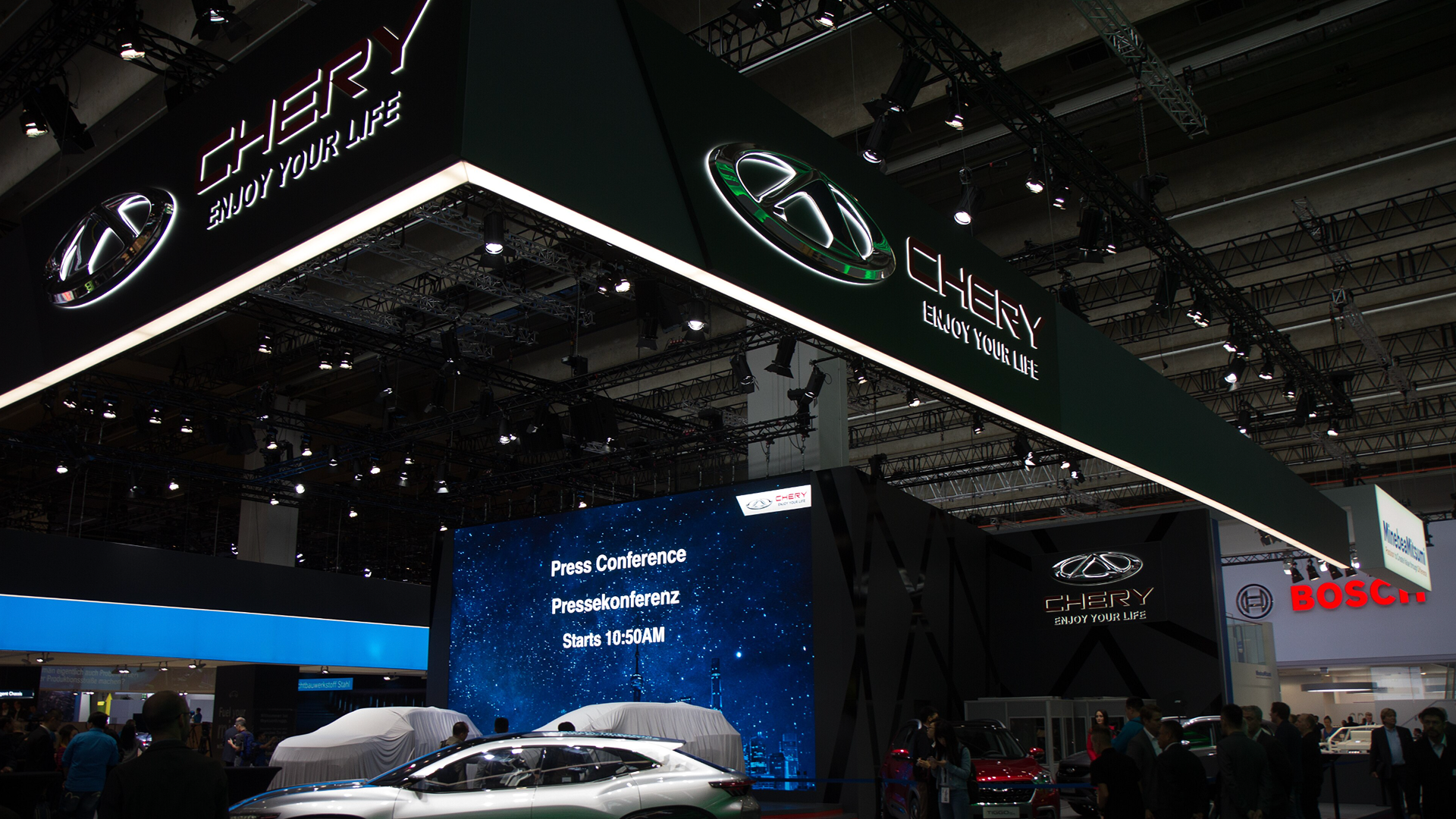
South Africa’s Competition Tribunal signed off under case number LM209Mar26, an approval subject to conditions issued on 26 June 2026. Chery threw the ribbon-cutting a week later, on 3 July, with roughly 350 guests including Deputy President Paul Mashatile and Chinese ambassador Wu Peng. Chery chairman Yin Tongyue told the room, “We have moved from being an importer to a manufacturer — and from a market participant to a long-term partner in South Africa’s industrial story.”
What Chery actually bought
Here is the part that gets glossed over: a stamping plant is the single most expensive, most permanent thing in a car factory. Transfer presses in the 1,000-to-2,000-tonne range, blanking lines, die storage, the reinforced foundations that keep a building from shaking itself apart — that is capital equipment measured in years of lead time, not months. Buying it secondhand and already installed is worth more than the assembly line.
But presses are not tooling. The die sets that stamped Navara doors and NP300 bedsides are model-specific lumps of hardened steel worth nothing to Chery beyond scrap value. Chery gets the machines; it must commission an entirely new set of dies for whatever it decides to build. That, more than anything, explains why Chery’s own timeline puts initial production at mid-2027 — roughly a year after taking the keys — with a planned 15,000 units across the third and fourth quarters of that year. Chery has committed to keeping all 692 existing employees and says the wider project will generate close to 3,000 direct and indirect jobs.
The 10,000-unit number nobody mentions
That 15,000-unit ramp-up figure is not a marketing round number. It is a regulatory one.
Read the APDP Phase 2 regulations published by ITAC and the picture sharpens considerably. Section 17.4 states that new-entrant vehicle manufacturers qualify for the Volume Assembly Localisation Allowance only with a production capacity of 10,000 units per annum. Section 17.2 adds that ITAC will only calculate the Company Specific Percentage — the multiplier SARS applies to work out the actual allowance — once a registered manufacturer hits 10,000 units measured over the most recent four quarters.
The VALA is the mechanism that lets an assembler reduce the customs value of imported original-equipment components. Miss the threshold and you are paying full freight on every imported part while your competitors are not. Chery’s ramp plan clears the bar with room to spare in its first full year, which is almost certainly the point.
There is a second lever, and it is the more interesting one. Production Rebate Certificates are calculated on local value addition, and the regulations set the PI factor at 50 percent for vehicles but 62.5 percent for components and tooling. In plain terms, the incentive framework pays better for making parts than for bolting them together. That is why Chery says it is already surveying Tier-1 suppliers with localisation targets set for 2028. Screwdriver assembly does not pay under this scheme.
One more wrinkle that rarely gets discussed: Section 8.1 requires PRC applicants to be B-BBEE compliant under the relevant codes. A wholly foreign-owned newcomer does not get to opt out of South Africa’s empowerment framework and still collect duty credits.
Why the government wanted this badly
The Automotive Masterplan adopted in 2018 set three headline targets for 2035: 1 percent of global vehicle output, 60 percent local content, and a doubling of value-chain employment from 112,000 to 224,000. Production has crept along and local content has essentially flatlined in the high thirties. Losing an entire OEM would have made the 2035 arithmetic laughable rather than merely optimistic.
Nissan’s exit was never really about South Africa. The Re:Nissan recovery plan commits to cutting vehicle plants from 17 to 10 and shedding 20,000 jobs by FY2027, chasing ¥500 billion in savings. Rosslyn was a low-volume, single-model site in a market where Toyota, Ford and Isuzu own the bakkie segment. It was always going to be on the list.
What owners and buyers should take from this
If you own a Navara or an NP200, nothing changes on the service side. Nissan remains in the market as an importer and distributor, with Tekton and Patrol launches on the books. Warranty and parts obligations sit with the brand, not the building.
Related Articles
- California’s New EV Rebate Just Went Live. The Automaker It Was Written For Didn’t Show Up
- Lotus Unveils a Hybrid V8 Supercar to Save the Brand. The Real Story Is the Chinese Factory Running at One-Fifth Capacity
What does change is exchange-rate exposure. Locally assembled vehicles draw their component costs through a duty-rebate structure; fully built imports do not. Cars that shift from local assembly to import sourcing become more sensitive to the rand and to shipping costs, and that filters through to parts pricing and eventually to insurance premiums, since insurers price on repair cost and parts lead time. The flip side applies to Chery: once locally pressed panels come off those Rosslyn presses, panel replacement on a written-off-or-not decision gets faster and cheaper. Body shops that have spent three years waiting on containerised Chinese sheet metal will notice first.
The market context is not subtle. Per naamsa’s July figures, Chery Auto South Africa moved 2,709 units in the month, sitting inside the top six manufacturers by domestic volume. The group’s local portfolio now runs to six brands, and its EV push includes the Chery Q arriving from R350,000 with a claimed 400 km range.
The honest caveat: a factory that has not built a car since May 2026 and will not build one until mid-2027 is, right now, a very large empty building with a good press shop. Chery has bought the hardest asset to replace and the easiest promise to make. Whether Rosslyn becomes a genuine regional export hub or an SKD depot with a ribbon-cutting photo depends entirely on whether those Tier-1 localisation targets survive contact with 2028.
Images Via: Wikipedia