
A single PDF sitting on the Texas Comptroller’s server has been getting turned into headlines about a $10 billion factory and nearly 10,000 jobs. Both numbers are in the document. Neither means what the summaries suggest.
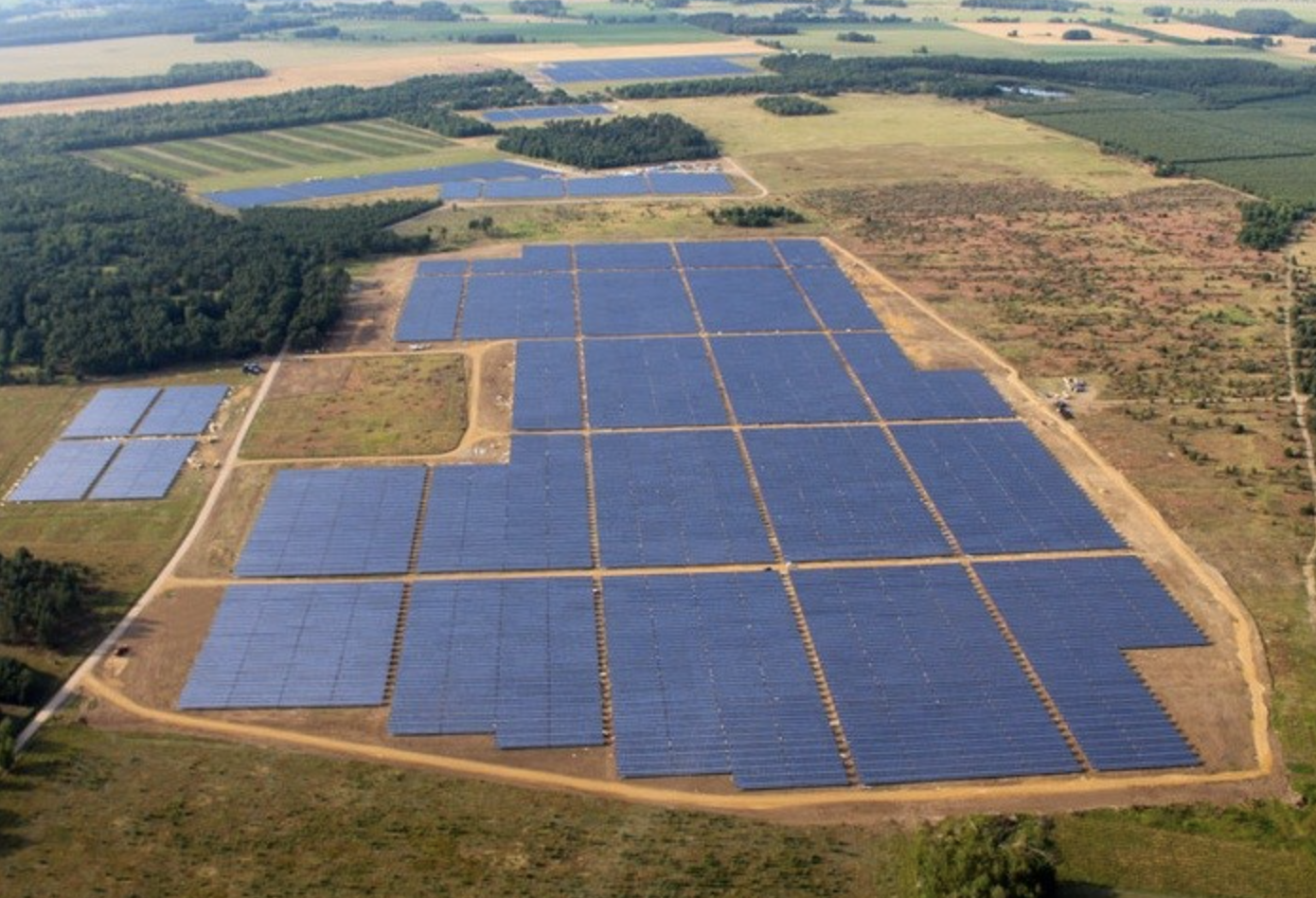
Here’s what actually happened: on July 22, Tesla’s associate general counsel for U.S. tax signed a JETI application asking Lamar Consolidated ISD in Fort Bend County to cap the taxable value of a proposed solar cell plant for ten years. Kroll’s site-selection arm prepared the economic benefit statement. The internal name is Project Crystal Sun. The land is five parcels off FM 762 and FM 1994 near Richmond, southwest of Houston, and the filing is explicit that the project might only occupy portions of them.
Related Articles
- The Physics Behind Tesla’s Forced Headlight Recall, Explained
- Why Used EV Prices Are Climbing While Diesel Values Slide
That’s it. That’s the news. Nobody has broken ground, and Tesla’s own paperwork confirms it hasn’t applied for a single federal, state, or local permit for the site. The reinvestment zone that would have to exist for any of this to work is listed as “TBD.”
The 9,712 number is a 2033 figure
This is the detail worth carrying around.
Kroll’s job creation schedule inside the filing lays out headcount year by year. Construction runs 2026 through 2028 with a peak of roughly 1,147 temporary construction workers — none of whom are Tesla employees. Commercial operations start in 2029 with 1,942 people. The plant adds 1,942 more each year through 2033. That’s when the 9,712 permanent positions actually exist.
So the honest framing is about 1,900 jobs in 2029 and 9,712 four years after that, assuming everything hits. A four-year hiring ramp is normal for a fab of this scale. Compressing it into a single headline number attached to the 2029 start date is not.
There’s a second thing hiding in that table. Full-operations payroll is projected at roughly $1.3 billion for 9,712 people, which works out to about $134,000 a head. Now flip to the wage section: Fort Bend County’s average annual manufacturing wage under NAICS 33441 is listed at $121,953, and 110% of that — the JETI statutory wage floor — is $134,148. The payroll projection isn’t a forecast so much as a compliance number.
It’s not a “solar panel factory.” It’s a chip fab that makes solar cells.
The application lists Tesla’s NAICS code as 334413 — semiconductor and related device manufacturing. That’s the same classification bucket as the people making silicon logic and power devices, and it tells you more about this building than the word “solar” does.
Look at the eligible property Tesla wants covered: ingot manufacturing equipment, wafer manufacturing equipment, coating equipment, metallization and printing lines, cell testing and QC, automated material handling, cleanroom infrastructure, chemical storage and delivery systems.
Read that as a process flow. You start with polysilicon and pull or cast it into an ingot. You slice the ingot into wafers — thin enough that handling breakage is a real yield problem. You texture and dope the wafer, deposit passivation layers, then screen-print silver paste busbars and fingers onto it in the metallization step. Then every cell gets flash-tested and binned by efficiency.
Almost nobody in America does that whole chain. The domestic solar manufacturing boom of the last few years has overwhelmingly been module assembly — laminating imported Asian cells into aluminum-framed panels. Ingot-to-cell under one roof is the hard, capital-intensive part, which is exactly why $8.6 billion of the $10.1 billion is equipment and only $1.5 billion is real property. You’re not paying for a building. You’re paying for cleanrooms and tools.
Why “one roof” matters more than it used to
There’s a federal tax reason this is structured as a single vertically integrated campus rather than a wafer plant here and a cell plant there.
Section 45X pays per-unit credits for domestically produced solar components — on the order of four cents per direct-current watt for a photovoltaic cell, seven cents per watt for a module, twelve dollars per square meter for a wafer, three dollars per kilogram for solar-grade polysilicon. Stack those across an integrated chain and the credits are enormous relative to the cost of the silicon.
But last year’s tax law tightened the rules for vertically integrated producers claiming multiple 45X credits: for tax years after 2026, the primary component generally has to be integrated into the secondary component within the same facility, with a domestic-content test on direct material costs. Which is a fairly strong argument for putting ingot, wafer, and cell production in one building on one site — precisely what this filing describes. Tesla’s application also checks the boxes for both 45X and the Section 48D advanced manufacturing investment credit.
Related Articles
- Cops Called Him ‘The World’s Worst Businessman.’ His Tesla Fraud Ring Still Made More Sense Than You’d Think
- 388 Fake Driver’s Tests: Indiana BMV Bribery Case Explained
Timing gets interesting here too. The solar side of 45X steps down at the end of the decade. A Q1 2029 start captures roughly one full year at the top rate before the ratchet begins. Slip eighteen months — a routine outcome for greenfield fabs — and the economics change materially.
The part where Tesla says the quiet thing out loud
JETI approval requires an applicant to prove the incentive is a genuine factor in a competitive site decision, so every filing under the program contains some version of “we might go elsewhere.” Tesla’s is unusually direct: without the value limitation, the company writes, the Texas economics would be less favorable than the competing site and Tesla “would be forced to further evaluate this potential investment outside of the state of Texas.” The rival location is described only in a confidential supplement.
Kroll’s math on what’s at stake: absent incentives, about $1.1 billion in property taxes across 38 years, roughly $2.2 billion in state tax revenue, $6.4 billion in combined direct and indirect state and local taxes, and a $107 billion bump to Texas GDP. Those are advocacy figures produced by a consultant hired to make the case, built on input-output multipliers. Read them accordingly.
The mechanical effect of the break is visible in the schedules. In 2029, the property’s value for school district interest-and-sinking purposes is listed above $3.15 billion, while the maintenance-and-operations value under the limitation is about $1.58 billion. Roughly half the school tax base, held down for a decade.
What the filing does not say
No gigawatts. Nowhere in the application does Tesla state a nameplate output for this plant. The only capacity figure anywhere in the document is a quoted remark Musk made at Davos in January: “The SpaceX and Tesla team, both separately, are working to build to 100 GW a year of solar power in the U.S., of manufactured solar power. That’ll probably take us 3 years or something.” Tesla’s own lawyers append a note that public statements from leadership about this project should be treated as forward-looking and subject to risk. texas
For anyone here because they care about cars: this is the energy division, not the vehicle division. No solar cell built in Fort Bend County goes into a Model Y. What it does affect is where Tesla’s capital and engineering attention goes over the next three years, at a moment when the vehicle lineup isn’t exactly overflowing with new metal.
And the process still has a long way to run. Under the state’s JETI procedure, the Comptroller has 60 days to recommend or decline once an application is deemed complete, and then both the Governor’s office and the school district have to agree before anyone signs anything. Fort Bend County commissioners would then need to create the reinvestment zone. Permits come after that.
Ten billion dollars is a real number. Right now it’s a real number in a tax filing.