
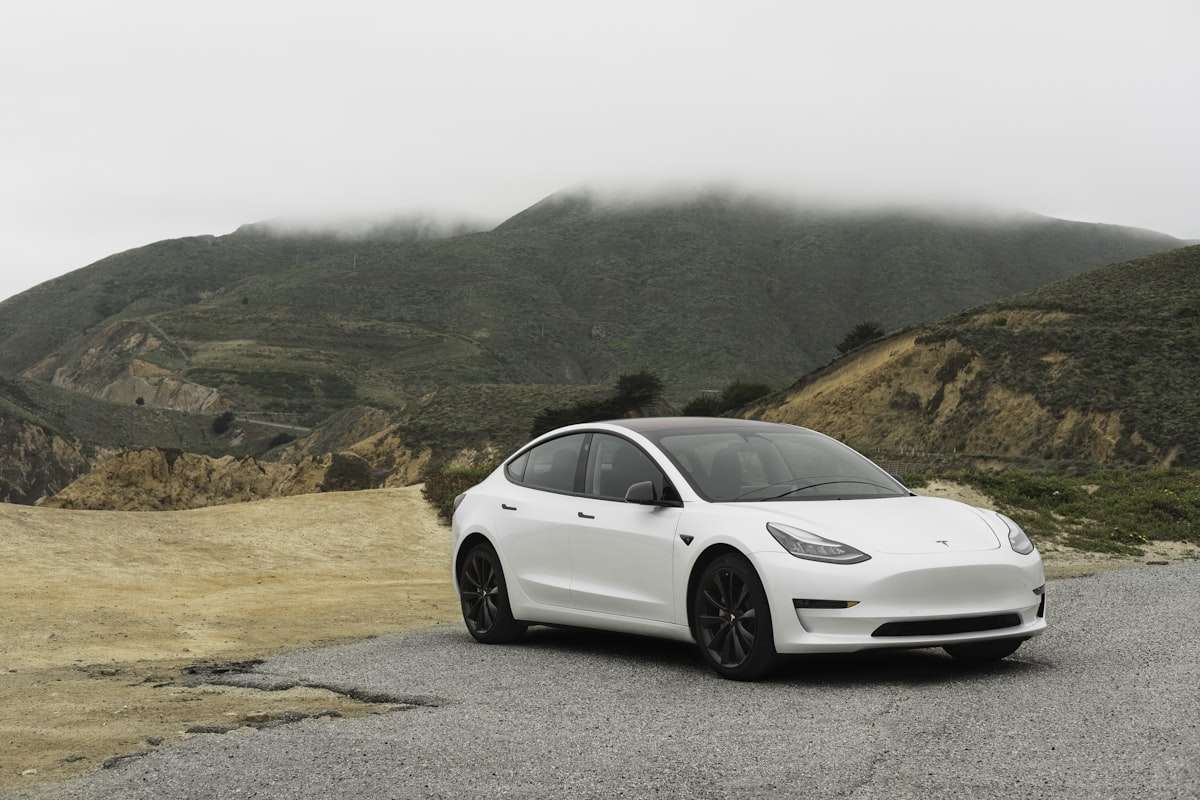
Daytona Beach police arrested two men last week over what they’re calling a multi-state Tesla theft scheme, and the arrest video is worth watching for one moment alone. An officer stands over a handcuffed 23-year-old named Liwei Sun, listens to him explain how the operation worked, and delivers the verdict: “You’re the world’s worst businessman.” He’s not wrong about the math. He’s missing the part of the story that actually matters.
Sun wasn’t stealing Teslas, at least not directly. By his own account to police, he paid $5,000 a car, shipped the vehicles elsewhere to be sold, and got his $5,000 back once they moved. Somewhere in the middle, someone else on the crew had one very specific job: disable the car’s tracking before it went anywhere.
That detail is the entire story.
This wasn’t really a car theft ring. It was an insurance-fraud scheme running on cars that happen to carry cellular modems, and modems create problems that didn’t exist the last time this particular scam was popular.
According to Daytona Beach police, Sun and 39-year-old Hongyu Kuang were arrested outside a Tesla dealership after investigators connected them to vehicles falsely logged as stolen in multiple states. Body camera footage shows officers pulling Kuang out of a black Tesla they say was taken from Merritt Island, more than 50 miles away. Sun told officers he had identified himself at the dealership under the name William Golden. He now faces charges of organized scheme to defraud over $50,000, unauthorized possession of a driver’s license, and grand theft of a motor vehicle. Kuang’s role, according to investigators, was simpler: drop the car at a hotel parking lot and let it disappear into someone else’s hands. Police believe the operation was already running in other states.
Insurance investigators have a name for the maneuver at the center of this case: an owner give-up. It is not a new scam. It surged during the 2008 financial crisis, when a wave of car owners found themselves owing more on a loan than the vehicle was worth and discovered the fastest way out was to hand the keys to somebody else, report the car stolen, and let the insurance company write the check.
What’s changed isn’t the fraud. It’s the car.
A sedan from the give-up fraud’s heyday was easy to make disappear. A friend drove it off, and the paper trail went cold. A Tesla is a worse getaway car for the same reason it’s a better daily driver: it knows where it is. Sentry Mode logs anyone who touches it, and the companion app can locate, lock, and in many configurations immobilize the vehicle remotely. None of that stops a determined crew. It does turn “make the car disappear” into a two-step job instead of a one-step job.
Twenty years ago, that second step didn’t exist in this business. Now it’s a line item.
The fake name at the dealership matters just as much as the disabled tracking. Sun didn’t need to break a window or hot-wire an ignition, because a Tesla has neither. What he needed was a license good enough to fool a salesperson for a few minutes. The Auto Wire has covered this exact gap before: a California man pleaded guilty this summer to running sixteen fake driver’s licenses through dealership finance offices, and a Tampa dealer separately turned phantom loan paperwork into an attempted Rolls-Royce smuggling case. Dealerships are built to move inventory fast, not to run forensic document review on every walk-in. That gap is exactly where fraud like this lives.
Once a VIN is flagged stolen in the United States, it becomes almost impossible to title, register, or insure here. That’s precisely why the next move, case after case, is export, whether the car was actually stolen off a driveway or handed over willingly as part of a give-up scheme. Customs officers and insurance investigators have spent years pulling stolen vehicles out of shipping containers at ports up and down the East Coast, and The Auto Wire has reported on rings that moved stolen SUVs from New Jersey to West Africa and from rental fleets into the same overseas pipeline. A flagged Tesla is worthless in a parking lot in Florida. Overseas, where American EVs carry a premium and import paperwork gets less scrutiny, it’s still a $40,000 car.
The lock they had to defeat wasn’t on the door. It was on the title.
That’s the detail that should bother you more than the arrest itself. Police allege Kuang was sitting in a car actually stolen out of Merritt Island, while Sun was separately describing an arrangement that sounds like owners reporting their own cars stolen for a payout. Two different crimes, feeding the same pipeline. Once a car enters that system, it stops mattering whether it was taken by force or handed over on purpose. The disposal process is identical: kill the connectivity, move the car fast, get it past a port before the title catches up. Auto theft and auto insurance fraud used to be separate categories with separate investigators. Increasingly, they’re just two entry points into the same business.
Sun’s arithmetic never worked, and the officer was right to mock it. Paying $5,000 to eventually get $5,000 back, with $2,000 floating in between, is not a profitable business by any definition a real businessman would recognize.
But Sun was never running a car business. He was running a title-laundering operation that used a Tesla as raw material, the same way a chop shop uses a sedan for parts. He just needed a fake ID and a working knowledge of which setting turns off the GPS, instead of a torch and a getaway driver. Daytona Beach police say this scheme was already running in other states before anyone made an arrest in Florida. Somewhere right now, somebody else is filling that same job opening: turn off the tracking, don’t ask where the car came from.