
Two former counter clerks at the Indiana Bureau of Motor Vehicles are now defendants in Marion County criminal court, accused of manufacturing driver’s knowledge tests that no human being ever sat down and took.
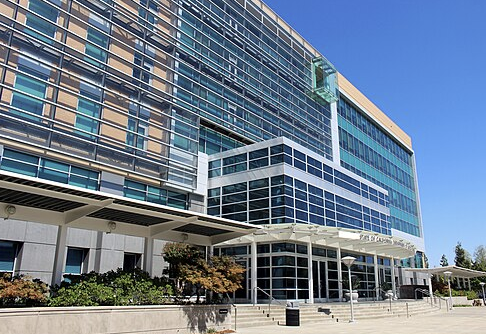
The Indiana Office of Inspector General says Gabriella C. Perry and Winters Ann VanDyke, both formerly assigned to the BMV’s Midtown branch on Meadows Parkway in Indianapolis, each face one count of bribery — a Level 5 felony — and one count of official misconduct, a Level 6. Investigators, working with Indiana State Police and the BMV itself, identified 388 illegitimate written exams entered under the pair’s own BMV login credentials between June 2023 and February 2024. The OIG opened the case on Feb. 19, 2024, after a complaint alleged that at least two employees at that branch were producing fabricated tests in volume.
The mechanics here are worth understanding, because they say something about how state credentialing systems actually fail. Nobody forged a plastic card. Nobody ran a laminator in a basement. According to charging documents, Perry and VanDyke simply opened customer records in the BMV’s own system and typed in passing scores. The credentials that came out the other end were real — issued by the state, printed on state stock, backed by a genuine record in the state database. The only fictional part was the exam.
Related Articles
- California’s New EV Rebate Comes With an Escape Hatch, and Only Tesla and Lucid Fit Through It
- The 1966 Loophole Behind California’s Emissions Power, and the Senate Push to Kill It
That’s a far more dangerous failure mode than counterfeiting. A fake license gets flagged the moment a trooper runs it. A legitimately issued license backed by a fraudulent test result passes every check the system knows how to perform, because the system has no way to ask whether the applicant was physically present.
The tell was paper
What eventually surfaced the scheme wasn’t software. It was clerks at another branch noticing the same faces.
Staff at the McCordsville branch flagged a pattern: applicants who had recently failed the knowledge exam there were turning up shortly afterward holding permits or licenses. An internal review turned up more anomalies — test records created outside normal branch operating hours, and exams marked complete in the system that had never been printed or administered on paper as BMV procedure requires.
There was also a language pattern that should raise an eyebrow for anyone who understands how Indiana administers the test. The BMV translates the exam into multiple languages and, for languages it doesn’t support, permits an applicant-supplied interpreter who must sign an affidavit limiting their role strictly to translation. So when applicants who had failed in their native language at one branch suddenly recorded passing scores in English at another, that isn’t a plausible study-hard success story. That’s a data point.
Charging documents say Perry acknowledged in 2024 taking payments in the $75 to $100 range and producing more than 330 fabricated exams, and that she moved $750 to VanDyke across seven separate transactions. Investigators interviewed VanDyke in February 2025, who described entering fabricated tests for “a couple hundred dollars per test.” Prosecutors also identified at least one recipient who recalled meeting Perry at the Kokomo branch, where he got a learner’s permit after nothing more than a vision screening and a photo.
Here’s the part that makes the whole enterprise look economically stupid: the Indiana knowledge exam is 50 questions split into two separately scored sections — 16 on signs, 34 on rules — and you need 80% on each component independently. Fail it, and you can come back the next business day and try again. Free retries, one day apart, with the entire question pool derived from a publicly posted manual. Buyers weren’t purchasing access to something otherwise unavailable. They were paying a hundred bucks to skip a Tuesday.
What happened to the 388
The BMV invalidated every credential tied to the fraudulent entries back in February 2024 and notified the holders that they’d have to retest legitimately before getting a valid permit or license.
That notification created an ugly window. Anyone who kept driving on a voided credential was, under Indiana law, operating without ever having received a valid license — a Class C misdemeanor on a first offense, escalating with priors and escalating hard if a crash with injuries is involved.
The insurance exposure is worse than the criminal exposure, and it’s the part most people never think through. Indiana’s financial responsibility law requires 25/50/25 minimum liability coverage, and the BMV can demand proof of it after any reportable crash. A driver whose license was retroactively voided may find an insurer arguing the policy was issued on a material misrepresentation — leaving the driver personally on the hook for damages that could easily exceed a $25,000 property-damage limit before the tow truck arrives. The other party in that crash, meanwhile, gets to discover the value of their own uninsured/underinsured motorist coverage.
Related Articles
- Musk’s Terafab Will Run on Its Own Gas Plants and Battery Banks
- Huawei Promised It Would Never Build A Car. It Didn’t Have To – It’s Already Running 25 Of Them
None of this is theoretical. NHTSA’s crash data consistently shows that drivers without valid licenses are heavily overrepresented in fatal collisions — in 2023 alone, 14% of non-speeding drivers involved in fatal crashes lacked a valid license, and 29% of speeding drivers did.
Not a new genre
Counter-level license fraud is a recurring feature of American motor vehicle bureaus, not an aberration. Indiana’s own inspector general documented BMV title fraud built on falsified Social Security numbers two decades ago. Federal prosecutors in Massachusetts spent years unwinding a Brockton RMV scheme in which a driving school owner paid more than $20,000 in cash bribes to a road test examiner so applicants could pass tests they never took. In Southern California, a DMV supervisor and examiners were charged in a conspiracy involving more than $100,000 in bribes routed through recruiters.
The common thread is that these agencies audit documents obsessively and audit their own employees’ keystrokes almost not at all. Every one of these schemes was caught by a human noticing something odd, not by an automated integrity check. An anomaly detector that flagged after-hours score entries, or exam records with no corresponding printed form, would have closed this Indiana window in weeks rather than nine months.
If convicted, Perry and VanDyke face up to six years on the bribery count and up to two and a half on official misconduct. One detail worth noting for anyone tracking the long tail: an official misconduct conviction is specifically excluded from Indiana’s expungement statute. That one doesn’t come off the record.
Both are presumed innocent, and the cases have not yet been tried.
The practical takeaway for buyers and owners: if you obtained an Indiana permit or license at the Midtown branch during that 2023–2024 stretch and never received a retest notice, pull your official driving record rather than assuming silence means everything is fine. And if you’re buying a used vehicle from a private seller in a jurisdiction where credential fraud has surfaced, remember that a voided license doesn’t void a title — but it does complicate every insurance claim that touches it.
Images Via: Wikipedia