
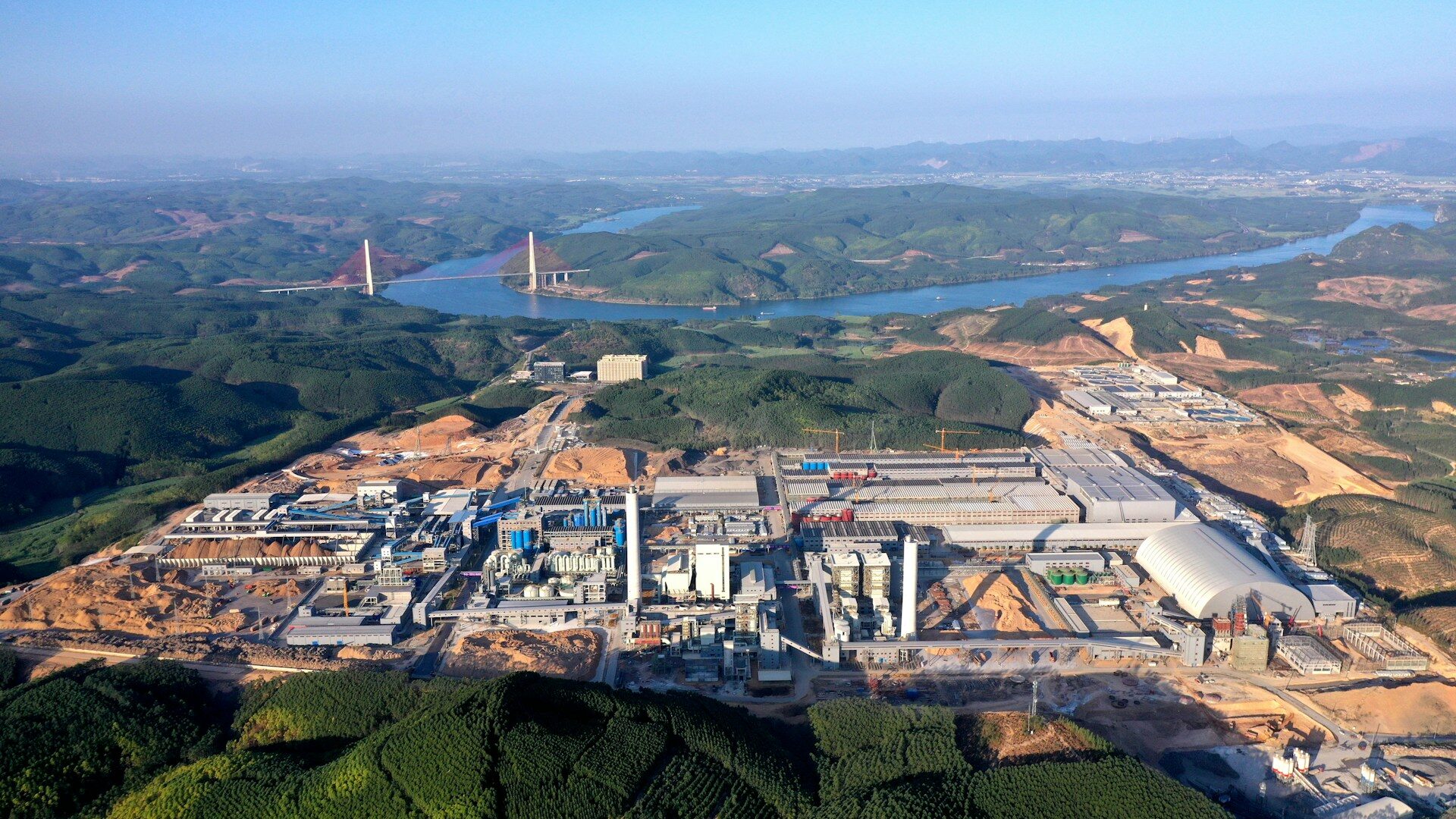
SpaceX has told Grimes County that its enormous new chip plant will not be plugging into the Texas grid like the rest of us. It’s building its own power stations instead.
At the August 5 question-and-answer session before the Grimes County Commissioners Court — the first time company representatives sat in a room and took questions from residents directly — SpaceX’s Riley Trettel, who runs energy and data center development, said the company plans to generate on site. “We’re bringing our own power,” he told the room. That means natural gas-fired power plants built by SpaceX itself, paired with what Trettel described as very large battery arrays. The company’s pitch to the county was that Terafab won’t push anyone else’s electric bill up, because it won’t be drawing on ERCOT to do it. The meeting record is archived by the county. TechSpot
Related Articles
- Uber Pledges $10 Billion to Robotaxis — What That Actually Buys, and Who Builds the Cars
- An East LA AutoZone Gets Ransacked During Street Takeover. California’s Looting Law Never Even Applied.
Two days earlier, Governor Greg Abbott’s office confirmed the project: a vertically integrated semiconductor fab, first phase pegged at more than $16.8 billion, with a $30 million Texas Enterprise Fund grant and eligibility under the state’s JETI program. SpaceX’s own company update puts the finished campus at more than 100 million square feet with combined Tesla and SpaceX chip demand projected north of one terawatt of compute. Texas Governor
Why a fab can’t just buy power like everybody else
Here’s the part nobody explains well. A semiconductor fab isn’t a big load so much as a fragile one. Lithography tools, ion implanters and etch chambers run continuously, and they are exquisitely sensitive to quality of supply, not just quantity. A voltage sag lasting a fraction of a second — the kind of blip you’d never notice in your house — can drop tools offline mid-process and scrap an entire batch of wafers worth six figures. The industry has spent decades writing equipment immunity standards specifically because grid transients are the enemy.
That’s the real argument for the battery arrays, and it’s a better argument than “gas is cheap.” Turbines are slow to respond to sudden swings; lithium-ion storage responds in milliseconds. Batteries ride through the transient, turbines carry the steady load, and the fab never notices. It also explains why Tesla is standing conveniently nearby with a warehouse full of Megapacks. SpaceX’s own registration statement already lists the first gigawatt-scale Megapack battery installation among its 2026 milestones, and states outright that it considers the binding constraints on AI growth to be physical ones — chip manufacturing, data center infrastructure and power generation. sec
What’s conspicuously absent from any of this is ground-mounted solar, which is a strange omission for a project half-owned by the largest solar and storage company in North America.
The site is a graveyard, and that’s the point
Terafab is going on the Gibbons Creek property, and this is the detail most coverage skips. That site was a 470-megawatt lignite-fired station that began operating in 1983 and was retired in 2018 because it couldn’t compete with cheaper wholesale power — a 6,200-acre plant site that includes the 2,200-acre cooling reservoir, per the sale documents circulated among its municipal owners. The Texas Municipal Power Agency built it for Bryan, Denton, Garland and Greenville, and TMPA still owns roughly 350 circuit miles of 345 kV and 138 kV transmission plus 13 substations per the acquisition announcement from the remediation firm that took the plant off their hands in 2021. City of Denton Charah
So SpaceX bought a brownfield with a switchyard, heavy transmission infrastructure, a giant industrial water body and a community already zoned for a power plant. The company says it will draw process water from the reservoir rather than local groundwater. Building the same thing on raw pasture would add years of interconnection studies and permitting. This is site selection as time arbitrage. SpaceX
The legal exposure is the interesting part
Texas rewrote the rules for exactly this kind of project in 2025. The legislative analysis for Senate Bill 6 describes a law that sets a minimum transmission rate for loads served behind the meter by on-site generation and requires large loads to share load-shed obligations during shortages. Practically, large customers with substantial on-site backup generation must disclose it, and ERCOT can direct them to fire up that generation or shed load during emergencies. “Bringing our own power” does not mean opting out of the grid operator. Bracewell LLP
Then there’s air permitting. Stationary turbines above certain thresholds need New Source Review authorization from TCEQ before construction, not after. That matters because a sibling company is currently litigating this exact question. The NAACP sued xAI in April, alleging 27 gas turbines running without an air permit in Southaven, Mississippi, to feed the Colossus 2 data center. Grimes County residents asking pointed questions about emissions aren’t being paranoid; they’re reading the news. NAACP
What any of this means if you drive a Tesla
Almost nothing, for years. That’s the honest answer.
Musk gave his own rough allocation for what Terafab will actually produce: roughly 25 percent for Optimus and 75 percent for AI spacecraft. Cars don’t appear in that split. He also noted that the 3,000 jobs cover phase one of ten, which tells you how far out full capacity sits. Benzinga AOL
Related Articles
- Dodge Brings Back the Super Bee With 600 HP — And Buries the Real News in the Fine Print
- Relay Car Theft Explained: Why Your Key Fob Is Broadcasting Through Your Front Door
Meanwhile, the silicon that will actually run your car’s driving stack is being made elsewhere. On Tesla’s most recent earnings call, Musk said AI5 enters full-scale mass production around mid-2027, split between Samsung Foundry and TSMC, with Samsung’s Taylor, Texas plant handling AI5 and AI6. Intel is in the mix too, having announced its involvement with a post saying it would help refactor silicon fab technology. bloomingbit X
The practical takeaway for owners: don’t treat Terafab as a hardware-upgrade timeline. Your car’s compute path over the next three to four years runs through Taylor and Arizona, not Grimes County. What Terafab actually buys Tesla is insurance — a captive supply line for the back half of the decade, when a robotaxi fleet and a humanoid robot program would otherwise be bidding against every hyperscaler on earth for wafer starts.
For Grimes County, the trade is already written down. Per the county’s abatement documents and statements from SpaceX’s counsel at the August session, the effective abatement runs around 78 percent, with fixed payments of $20 million a year for 35 years totaling $710 million, while the binding written commitment is $5 billion invested by 2030 and 1,800 jobs by 2035 — considerably smaller numbers than the ones in the headlines. KXXVKBTX
A county of about 34,000 people just agreed to host a private power plant and the largest building anyone has proposed on this continent. Whether the turbines get permitted before they get installed is the thing worth watching.