
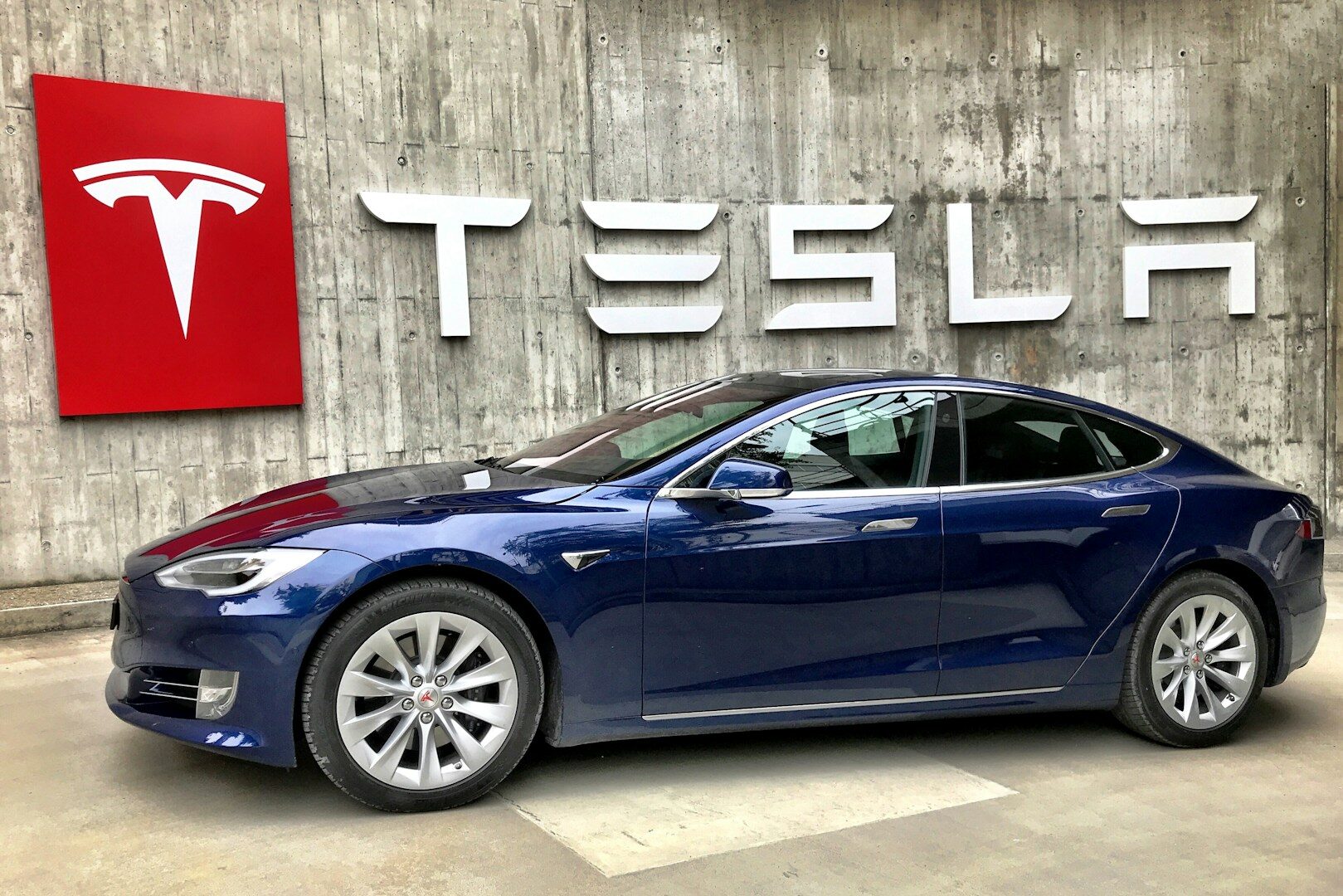
Tesla’s Gigafactory Shanghai has never taken a real Chinese New Year holiday. Not once, not since it opened. That changes this coming January, and the size of the change tells you more than the holiday itself does.
According to an internal production schedule reviewed by Reuters, Tesla will run its Shanghai plant at reduced output from Jan. 3 through Jan. 19, then stop building the Model 3 and Model Y entirely from Jan. 20 through Jan. 31. Twelve straight days of a dark assembly line at the single busiest car factory Tesla has ever operated. Tesla did not explain why, and did not respond to a request for comment.
The easy explanation is the one most outlets are reaching for: demand. Tesla’s China sales fell roughly 9% in the first half of 2026, and CnEVPost’s tracking of the domestic NEV market found Tesla had dropped out of the top ten automakers by market share in July, a market it once helped invent with the Model 3. BYD alone claimed 23.5% of it.
That’s a real problem for Tesla. It is not, however, the interesting one.
A little more than a week before Reuters got its hands on that production schedule, Reuters reported something else entirely: Tesla executives had reportedly been told to prepare contingency plans for separating the company’s China business, a step that could clear a path toward merging with Elon Musk’s other trillion-dollar company, SpaceX. Musk denied it, saying the idea had “never even come up in a discussion.” Reuters and the Wall Street Journal kept reporting it anyway.
Here’s the detail that should stop you: Gigafactory Shanghai isn’t a satellite plant. It is Tesla’s largest and most productive factory on the planet, and for most of the company’s history it has doubled as the primary export hub feeding Europe, Canada, and the rest of the Asia-Pacific region. At times it has built more than half of every Tesla sold worldwide. A production pause there isn’t really a China story. It’s a global supply story wearing a Chinese New Year costume.
Separating a business that entangled is nothing like selling off a warehouse. Tesla’s Shanghai operation shares software, AI training data, self-driving updates, and supply chains with the rest of the company, the same underlying architecture behind the chatbot-driven cabin features Tesla rolled into cars this summer. A UCLA supply-chain professor told Reuters that even routine technology transfers, like beaming self-driving software updates to a standalone Chinese entity, could run into U.S. export-control problems. Chinese officials, meanwhile, would almost certainly want a board seat in any new standalone entity, according to analysts who advise Tesla investors, and mainland investors would face governance questions that simply don’t exist today.
None of that is a reason to leave China. It is, however, exactly the kind of mess that gets tidied up quietly before a deal gets discussed seriously, not after.
The SpaceX side of the equation explains the urgency. Both companies are now valued above $1 trillion, and SpaceX just priced a $75 billion IPO in June. Roughly a fifth of SpaceX’s 2025 revenue came from U.S. federal agencies, according to its own IPO filing, which means folding in a business with deep manufacturing and governance ties to China would invite exactly the kind of national-security scrutiny that kills mergers in Washington before they start. Cutting China loose first, whether through a spinoff, a licensing deal, or an outright sale, is the cleanest way to keep that scrutiny pointed somewhere else.
It also explains why some Tesla investors sound unbothered by the idea of walking away from the plant that built the company’s scale. One venture capitalist told Reuters that Tesla “isn’t really valued on the auto business anyway,” arguing that if the real goal is robotics and autonomy, the brand cost of exiting China matters less than it would have five years ago. Not everyone agrees. Another investor put the counterargument more bluntly to Reuters, questioning where Tesla would even build the cars without a Chinese plant operating at that scale. Tesla hasn’t answered, because Tesla isn’t confirming any of this is happening.
That pattern should feel familiar to anyone who has watched this company over the past year. Tesla has spent recent months bolting SpaceX hardware onto vehicles that don’t obviously need it, and wiring Grok deeper into the cabin than any car actually requires. Neither move made much sense as pure automotive engineering. Both make considerably more sense as a company quietly blurring the line between its car business and its Musk business ahead of something bigger.
China’s own EV market isn’t making the decision any easier. The country just finished culling dozens of its own EV brands down to a handful of dominant survivors, and the winners left standing are hungrier and cheaper than anything Tesla has had to compete with domestically before. Losing ground in that fight makes the China unit a considerably less painful thing to give up.
A car factory doesn’t get the longest, strangest vacation of its existence by accident. Somebody has to schedule that. The Shanghai shutdown might turn out to be nothing more than Tesla finally admitting Chinese New Year is a real holiday. But it arrives at the exact moment Tesla’s own leadership is reportedly sketching out how to hand that factory to someone else, and that is a considerably better story than the one about the calendar.