
Stellantis didn’t tell federal safety regulators about a blank backup camera once this summer. It told them three times, under three different explanations, at three wildly different scales. The version that made headlines this week covers something like 900,000 vehicles in the United States and helped knock nearly 4 percent off the stock in a single morning. The other two versions, filed three months earlier on the exact same afternoon, covered a combined 75 vehicles. Nobody noticed.
On May 21, 2026, Chrysler (FCA US, LLC, Stellantis’s U.S. entity of record) quietly filed two separate defect reports with the National Highway Traffic Safety Administration. Both cited the same regulation, Federal Motor Vehicle Safety Standard 111, “Rear Visibility.” Both described the same symptom: a rearview camera image that simply refuses to display. And both, by recall standards, were tiny.
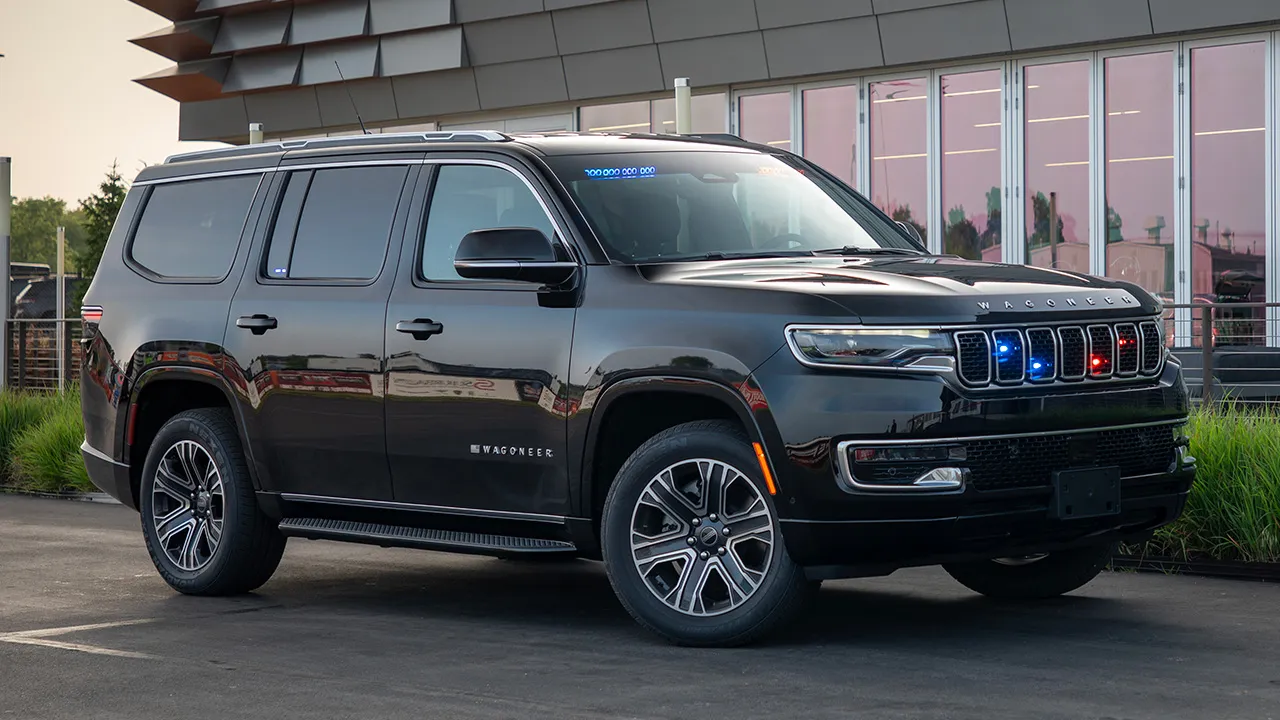
Campaign 26V326000 covered 59 examples of the 2026 Jeep Grand Wagoneer and Grand Wagoneer L. Per Stellantis’s own filing, the front camera wiring harness “may not be connected properly,” knocking out the display. The fix is a dealer inspection and a reseated connector, free of charge. Owner letters went out June 9.
Campaign 26V327000, filed the same day, covered just 16 vehicles across the Chrysler Pacifica, Ram 1500, Ram 2500 and Jeep Wrangler lineups. This time the cause was described differently: “contamination in the central vision processing module or improper programming.” The remedy is a software reflash, or a full module swap if that doesn’t clear it. Two campaigns, one calendar date, one federal standard, two unrelated root causes according to the company’s own paperwork, and a combined population smaller than a typical elementary school classroom.
Here’s the detail that got buried under this week’s headline number: campaign 26V327000 wasn’t done evolving. On July 14, 2026, Stellantis filed an amended Part 573 report on that same campaign, and NHTSA’s public defect record lists it directly alongside the original. An amendment usually means a number changed. This one didn’t. The amended filing still lists 16 vehicles total, with 100 percent of them presumed defective. Whatever eventually grew into the recall that reached Wall Street five weeks later did not grow out of this filing. It came from somewhere else entirely.
That “somewhere else” is the recall The Auto Wire already covered in detail: a radio software bug across nearly the entire 2026-27 Stellantis lineup, from the Pacifica minivan to the Ram ProMaster van to the Wrangler, adding up to roughly 900,000 U.S. vehicles and 955,000 worldwide. Three root causes, described three separate ways, inside three separate federal filings, over roughly ninety days, all producing the identical symptom on a dashboard: a black rectangle where the reverse camera used to be.
None of this is necessarily a cover-up or a sign of sloppy engineering. Federal law gives manufacturers as little as five business days to notify NHTSA once they’ve confirmed a safety defect exists, and it doesn’t require them to wait until they understand the full scope before filing. That pushes automakers toward reporting narrow, well-understood problems fast rather than delaying to assemble one tidy, comprehensive recall. A supplier’s bad wiring batch at one plant becomes one campaign. A validation miss on a shared vision-processing module becomes another. When a bigger pattern eventually surfaces, it tends to arrive as its own filing rather than a merger of the earlier ones, which appears to be exactly what happened here.
For owners, that fragmentation carries a real cost: knowing whether it’s actually your truck. A Wrangler owner who ran their VIN against campaign 26V327000 in June would have come back clean unless their specific vehicle was one of 16 built with a fouled vision module. That same owner still has no way of confirming whether their truck is one of the roughly 900,000 caught up in August’s software recall, because as of this week, that campaign hadn’t yet posted to NHTSA’s public database at all, even after it helped erase billions in Stellantis’s market value. The stock market found out before the government’s own recall lookup tool did.
Stellantis has run this fragmented playbook before. The Auto Wire has tracked the Ram 1500 through four separate wiring-related recalls since December, each one narrow enough to look unremarkable on its own. Jeep recalled just 641 Wranglers and Gladiators in early August over steel wheels that cracked instead of bending, a population so small it barely registered as news, yet it fit the same shape: a defect confirmed in a handful of units, reported fast, with no promise it stays that small. Small recalls aren’t automatically hiding anything. But stacked together, they describe a company finding defects in tightly bounded batches, one at a time, and struggling to hand the public one coherent number for any given problem before quietly revising it upward.
That’s the part the stock-price story missed. The Auto Wire’s own reporting on Monday’s 4 percent stock drop connected the reaction to Stellantis’s razor-thin 1.8 percent operating margin, and that’s real. But the paperwork trail matters just as much as the balance sheet. A company that reports the same defect three separate times, at three wildly different scales, in one calendar season, isn’t hiding a problem. It’s revealing that it doesn’t know the true size of its own problem until months after the first version reaches a federal database.
The number everyone quoted this week, 955,000 vehicles, wasn’t Stellantis’s first estimate of this defect’s reach. It was its third. The first two estimates, filed on the same afternoon in May, added up to 75 cars. A recall’s size, it turns out, isn’t a fact. It’s a running total, and Stellantis is still counting.
If you own a 2024-2026 Ram 1500, Ram 2500, Jeep Wrangler, Jeep Grand Wagoneer, or Chrysler Pacifica, running your VIN through NHTSA’s lookup tool is still worth the ninety seconds, and it’s free. Just don’t assume a clean result today rules out a very different letter in September.
Related: To Escape an Alleged Knife Attack, a Surrey Man Rode on the Outside of a Stranger’s Reversing Tesla