
There’s a particular kind of irony in watching a gig-economy workforce organize against automation. Fifteen years ago these same independent contractors were the disruption — the reason Atlanta’s medallion cab operators were furious. Now the drivers are on the receiving end of the exact same trick, and they’ve discovered what the cab companies discovered: the fight isn’t really with the technology. It’s with a statute.
On July 9, drivers gathered at Historic Fourth Ward Park under the banner of the Atlanta Rideshare Drivers Union, circulating a petition asking city and state officials to rein in Waymo’s growth here. The union describes itself as an organizing effort around driver pay and deactivations. The complaint is straightforward: fewer pings, worse pings, and a fleet that doesn’t sleep, doesn’t take breaks, and doesn’t quit.
The complaint is reasonable. The remedy they’re asking for is, under current Georgia law, close to impossible.
What’s Actually Deployed Here
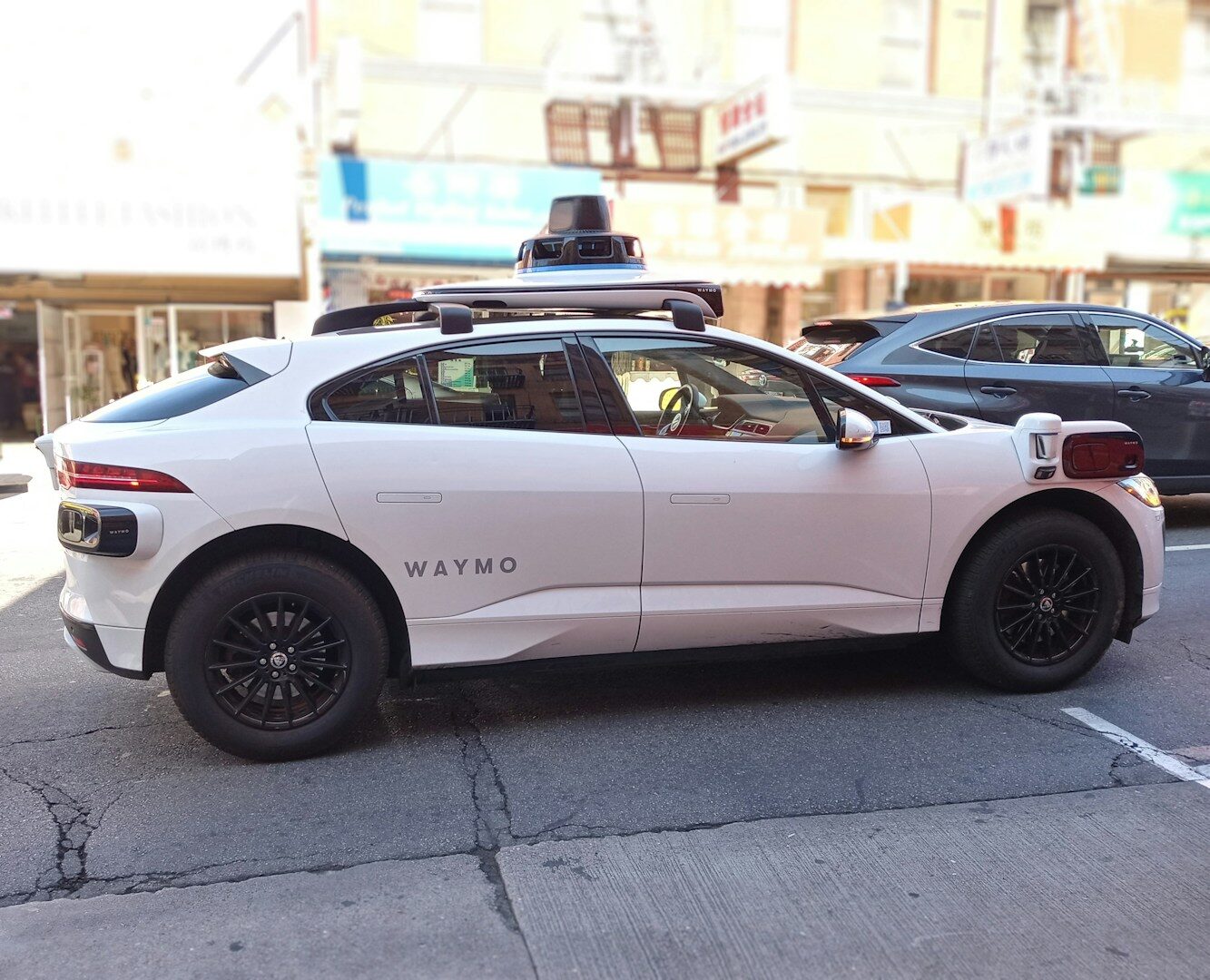
Waymo and Uber announced their expanded arrangement in September 2024, with Uber handling depot work — cleaning, repair, dispatch — while Waymo remains responsible for the Driver itself and rider support. Public service opened in Atlanta on June 24, 2025, exclusively through the Uber app, using all-electric Jaguar I-PACE vehicles.
Related Articles
- Senator Hawley Is Investigating Flock Safety’s 120,000 Cameras. Your License Plate Was Never the Point
- F1’s Engine Report Card Says Red Bull Is Winning. Even Red Bull Doesn’t Believe It.
The operational details matter more than the press-release language. Per Uber’s driver blog, the fleet covers roughly 65 square miles running from Downtown through Buckhead to Capitol View, operates 24 hours a day, and cannot take any trip that starts or ends outside that zone — including Hartsfield-Jackson.
Sit with that geometry for a second. A 65-square-mile box around the urban core, no airport runs, around the clock. That is not a fleet built to handle the long, high-value Sandy Springs-to-ATL slog. That is a fleet purpose-built to eat the dense, short, in-town hop. Which happens to be the fare class Atlanta drivers say they’re losing.
The Preemption Nobody Talks About
Here’s the part that should reorganize how you read this story. Georgia legalized fully driverless operation in 2017 through Senate Bill 219, now codified at § 40-8-11. Buried in subsection (c) is a sentence with enormous reach: no rules or regulations relating to the operation of fully autonomous vehicles may be adopted that limit the operating authority the Code section grants.
Translation: the Atlanta City Council cannot cap Waymo’s fleet size. It cannot impose a per-vehicle permit fee. It cannot require a local operating license the way it does for taxicabs. The General Assembly took that power off the table nine years ago, before a single robotaxi carried a paying passenger in this state.
This is not new behavior from the Gold Dome. Georgia pulled the same move on limousine carriers and again on transportation network companies in 2015, stripping municipalities of authority and centralizing everything in Atlanta — the capitol, not the city hall. Drivers petitioning the City Council are petitioning a body that was legally disarmed before the issue existed. And the General Assembly’s 2025–2026 session has already adjourned, meaning the earliest realistic vehicle for any change is the session convening in January.
The Insurance Gap Is The Real Story
Now for the thing almost nobody has connected, and the reason you should care even if you never open the Uber app.
When a human Uber driver in Georgia has accepted your ride request and is carrying you, § 33-1-24 requires a minimum of $1 million per occurrence for death, personal injury, and property damage, plus uninsured and underinsured motorist coverage on top.
A fully autonomous vehicle operating under § 40-8-11 is held to a different standard. The statute points to the limousine-carrier minimums in § 40-1-166, which for a vehicle carrying 12 or fewer passengers means $300,000 for all bodily injuries in one accident, capped at $100,000 per person, and $50,000 for property damage. A 250 percent multiplier applied to those limits, but it expired at the end of 2019.
So: same street, same passenger, same collision. Human driver, the statutory floor is a million. Driverless, the statutory floor is a fraction of that. Whether Waymo carries far more coverage than the minimum is a separate question — most sophisticated operators do — but the legislature’s stated floor for a car with nobody in it is lower than its floor for a car with somebody in it. If you get rear-ended by a robotaxi in Midtown and you’re carrying Georgia’s bare-minimum $25,000 in UM coverage, that asymmetry stops being an abstraction very quickly.
Practical takeaway for anyone driving in the service area: this is a decent argument for stacked uninsured/underinsured motorist coverage. It’s cheap, it follows you, and it does not care whether the thing that hit you had a human in it.
What Drivers Are Actually Losing
The economic squeeze isn’t only about lost fares — it’s about who absorbs vehicle cost. A full-time rideshare driver can put 50,000 to 60,000 miles a year on a personal car. At that rate, maintenance intervals that feel annual on a commuter car arrive every ten weeks. Tires get replaced two or three times a year. Brake fluid and transmission fluid come due on time-based schedules the driver blows past on a mileage basis. Depreciation on a high-mileage former livery vehicle is brutal, and disclosure of that use is patchy in the private-party market.
Related Articles
- A Belgian Chip Deal With BYD Reveals How EVs Really Get Sourced
- Corolla’s 60th Birthday Trim Is Four Different Cars Depending On Your Country
The I-PACE fleet has a structurally different cost curve. Regenerative braking means friction pads on an EV robotaxi can outlast the vehicle’s service life in the fleet. No oil changes, no spark plugs, no timing components, no transmission fluid. Consumables come down largely to tires, cabin filters, wiper blades, coolant for the battery pack, and the sensor stack. Those costs sit on a corporate balance sheet with fleet purchasing power behind them, not on an individual’s credit card.
That gap — not the software — is the actual competitive advantage. A robotaxi doesn’t out-drive a human. It out-amortizes one.
If You Tangle With One
Crashes involving automated driving systems fall under NHTSA’s Standing General Order on crash reporting, most recently revised by a third amendment effective June 16, 2025. Operators must report qualifying incidents where the system was engaged at any point within 30 seconds before the crash, with a five-day window for the less severe categories, and the summary data is published publicly.
If you’re ever involved, that reporting obligation is worth knowing exists. So is the fact that these vehicles run a continuous lidar, radar, and camera record of the scene. Photograph everything, get the vehicle’s identifiers, and file a police report — you are documenting an incident against a counterparty with a far better dataset than you have.
The drivers at Fourth Ward Park are asking the right question about a decade too late. The answer was written into the Code in 2017, and nobody was watching.