
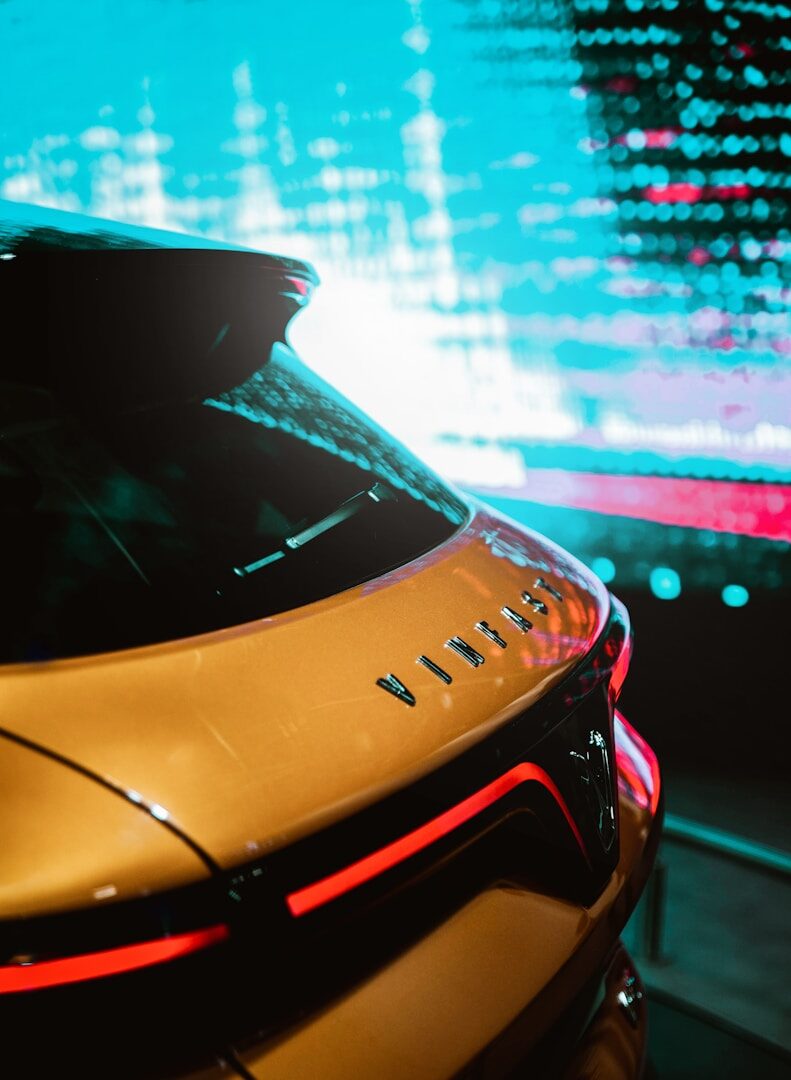
VinFast Spent The Week Explaining Its India Plans, And The Explanation Is The Story
Automakers do not issue clarifications about factories that are humming along fine. VinFast put out a statement this week confirming that assembly of the VF 6 and VF 7 at its Thoothukudi plant in Tamil Nadu has not been changed or suspended, that the two SUVs will continue to be built there from completely knocked-down kits, and that India remains part of its long-term manufacturing strategy. It also said future India models will be designed and developed specifically for the market rather than adapted from its global portfolio, and that it is working to increase sourcing from Indian suppliers.
Read that second half again. “Developed specifically for India with higher localisation” is not a restatement of the original plan. The original plan, as VinFast itself described it, was to take existing global products and build them locally. When pre-bookings opened in July 2025, the company said the VF 7 and VF 6 would be assembled at Thoothukudi as part of a long-term commitment to India as a future EV production hub. Announcing India-specific vehicles instead resets the development clock by years.
What a CKD line is, and what it isn’t
VinFast inaugurated the plant at the SIPCOT industrial park in August 2025, calling it its third operational plant and the first outside Vietnam. It launched the SUVs the following month. The site covers 400 acres with an initial capacity of 50,000 vehicles a year, scalable to 150,000.
Related Articles
- VW Supervisory Board Showdown: Four Plants, One Veto, and a Telling Word Change
- Ford Recalls 148,663 Mustangs Over a Wire That Can Kill the Engine and the Headlights at Once. The Fix Isn’t Coming Until March.
Here is the part that gets flattened in coverage. A plant with a body shop, a paint shop and an assembly line is not automatically a manufacturing operation in any meaningful sense. If the kits arrive from Haiphong containing the battery pack, motor, controller, wiring harness, seats, glass and closures, what happens in Tamil Nadu is fastening, sealing, filling, flashing software and rolling it out the door. The value added is real but thin, and every unit still carries ocean freight, kit packaging cost, import duty and full exposure to the dong-rupee exchange rate.
Localisation is what changes that math, and it is genuinely hard. Swapping an imported bracket for an Indian one is a spreadsheet exercise. Swapping anything structural, high-voltage or safety-relevant is a validation program: new tooling, PPAP sign-off, corrosion and durability testing, and for anything in the load path, crash re-validation. High-voltage components have to satisfy Indian AIS certification on their own terms, and a locally sourced cell or module means recalibrating the battery management system’s state-of-charge and thermal strategies rather than copying them across. That is why localisation on a new model runs on a two-to-three-year cadence at healthy companies, and why a supplier told to pause development does not simply resume where it left off.
India’s official definition of “made here”
If you want a benchmark for what localisation means to the Indian government rather than to a press release, the Ministry of Heavy Industries published one. Under the Scheme to Promote Manufacturing of Electric Passenger Cars in India, an approved applicant must invest a minimum of ₹4,150 crore, get a plant operational within three years, and hit 25% domestic value addition in that window, rising to 50% within five years. The scheme portal spells out the milestones; the ministry’s notified guidelines set the reward, which is the right to import a capped number of completely built electric cars at 15% customs duty instead of the punitive standard rates, backed by a bank guarantee covering the duty foregone.
That structure tells you everything about how India thinks. Import relief is rented, not granted, and the rent is paid in verified local content certified by an approved testing agency. Any manufacturer building a business case around Indian assembly is doing arithmetic against those percentages whether or not it applies to the scheme.
The numbers behind the caution
VinFast is a Nasdaq-listed company, which means the pressure it is operating under is a matter of public record rather than speculation. Its first-quarter filing for 2026 shows revenue of about $920.7 million against a gross loss of roughly $677 million, a gross margin of negative 73.6%, and a net loss near $1.12 billion for the quarter. Cash and cash equivalents stood at $219.3 million on March 31, with liquidity backstopped by an undrawn Vingroup credit line, remaining founder grants and a standby equity facility. Markets outside Vietnam accounted for about 8% of deliveries.
That same document contains the sentence that quietly governs this entire episode. VinFast said it regularly reviews its global expansion strategy and “retains flexibility to accelerate, moderate or otherwise adjust its distribution, manufacturing, assembly, marketing” and other market plans as conditions evolve. Investors were told, in advance and in writing, that plans could move.
The company also disclosed a suit filed in May by the North Carolina Department of Commerce against its US manufacturing subsidiary, alleging it missed construction and operational benchmarks tied to its Chatham County project and seeking ownership of the site plus damages. Whatever the merits, it is a useful reminder that announced capacity and delivered capacity are different quantities.
The volume picture is not bleak, which makes the cost problem sharper rather than softer. VinFast’s second-quarter update reported 128,662 EVs delivered globally in the first half of 2026, up 78% year over year, with the VF 3 among its two best-selling models at 15,644 units in the quarter. It also flagged that its Q2 financials were delayed while it completed the divestment of its Vietnamese manufacturing arm as part of a shift to an asset-light model at home. Selling cars was never the issue. Selling them above cost is.
What owners and would-be buyers should take from this
Nothing about VF 6 and VF 7 ownership changes today. Cars are being assembled, sold and supported. But a vehicle built from imported kits has an imported parts tail, and if a body panel, headlamp or high-voltage component has to come from Haiphong rather than a Tamil Nadu supplier park, that shows up as repair lead time after a collision, not as a headline. It is worth asking a dealer directly which parts are stocked in-country and what the standard wait looks like on a common damaged item before you sign.
Related Articles
- Breaking: Florida Didn’t Ban Flock’s Spy Cameras. It Just Evicted Them From the Shoulder
- Norway Found a Cure for China’s Bus ‘Kill Switch’ — Bringing Back the Diesel Engine
The VF 3 is the more interesting absence. A small, cheap, four-seat EV is the only shape that reaches real volume in India, and it is the product most dependent on aggressive local sourcing to hit a viable price. Announcing India-specific models instead of localising the existing ones means that product is further away than it looked twelve months ago.
VinFast has also committed publicly to a second phase in Thoothukudi, a $500 million tranche of its $2 billion India plan covering electric buses and e-scooters on roughly 500 additional acres allocated by the Tamil Nadu government. Two-wheelers are a shrewder bet for a company with a cost problem, since scooters localise faster, tool up cheaper and sell into a market that actually buys electric in volume.
The thing to watch is not whether the Thoothukudi line keeps running. It is what percentage of each car leaving it is Indian, and how quickly that number moves. Everything else is scenery.