
Read the headlines this week and you’d think Florida just switched off a surveillance network. Governor Ron DeSantis called the state’s license plate reader cameras “out of control,” Florida’s Department of Transportation fired off a memo, and by Monday night dozens of local news stations were running some version of “Flock cameras banned in Florida.” None of that is false. Almost none of it is the real story, either.
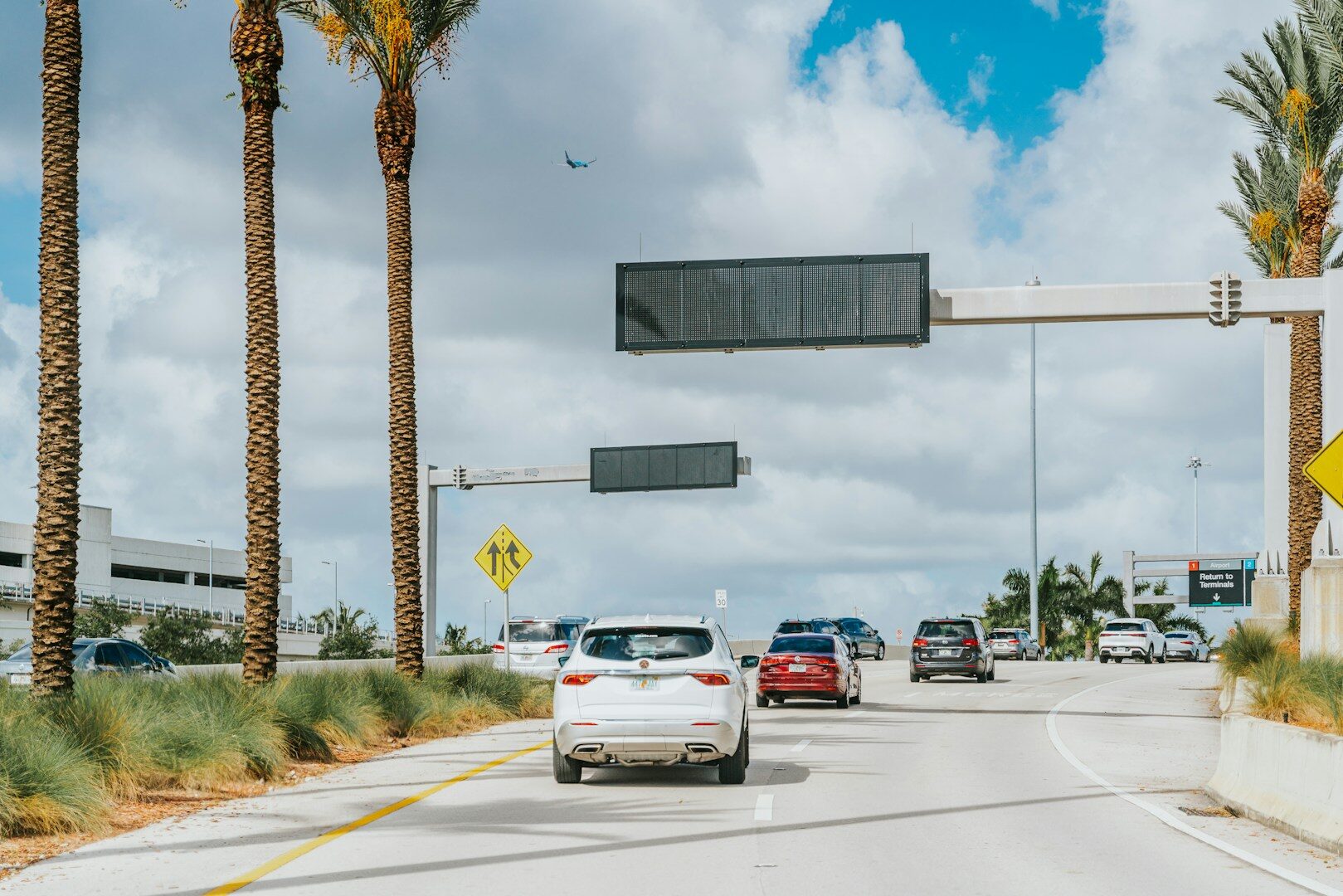
What FDOT actually did, laid out in Engineering and Operations Memorandum No. 26r-01, is revoke the general use permits it had issued to local police departments for automated license plate readers physically bolted within the right-of-way of state highways, the strip of government-owned land alongside the actual pavement. Agencies have 30 days to pull those cameras down themselves, at their own expense, or FDOT says it will remove them and stop approving new installations. That is the entire order.
Here’s the detail that got lost in the outrage cycle: FDOT does not have the authority to ban license plate readers, full stop. Its power comes from a single, narrow statute, and the statute’s own official title gives away the scope, governing installation within the rights-of-way of the State Highway System, not the technology itself. That’s a real-estate rule, not a technology rule. It decides where a camera can be bolted to a pole the state owns, not whether a city, county, HOA, shopping center, or private toll operator can run one.
Which means the overwhelming majority of Flock’s nationwide camera network, the units covering neighborhood entrances, county roads, downtown intersections, and parking lots, isn’t touched by this memo at all. Only the cameras sitting in state highway right-of-way have to move, and under the statute, the police department that requested the camera in the first place pays for taking it down. FDOT isn’t funding any of this. Neither is Flock.
None of this erases the misuse problems that actually got Tallahassee’s attention. A Haines City officer was arrested this year after investigators say he ran his estranged wife’s plate through Flock’s database more than 700 times. A Sumter County detective was fired and charged for using the same kind of access to track her husband’s ex. Florida officers using license plate databases to keep tabs on people they know isn’t a new problem, and Auto Wire has already covered departments elsewhere getting caught, from Georgia benching six employees after an audit to officers using these tools to stalk exes. What’s new is a governor using a property-line technicality to look like he’s solved it.
So the location fight, satisfying as it is for a press release, is mostly a jurisdictional footnote. The story that should actually worry car owners has nothing to do with where the pole is planted.
In late June, automotive journalist Joel Feder was leaving a Kohl’s in suburban Minnesota in a $155,000 Range Rover press loaner when four squad cars boxed him in, guns drawn. Police had been tracking the SUV for days on Flock cameras after it was flagged as carrying a stolen plate. It wasn’t. A Los Angeles dealership had reported a lost manufacturer plate using its full six-character format; whoever entered it into Flock’s system dropped the small middle digits that New Jersey uses on dealer and manufacturer tags. That truncated plate matched every other Jaguar Land Rover press car wearing the same numbering pattern, and the false match spread through Flock’s shared network to police departments Feder had never heard of, within days. He wasn’t the only press car flagged that week. He was just the first one officers caught up to.
That’s worth sitting with if you’ve ever driven anything wearing a dealer, manufacturer, transporter, or temporary tag: every new car buyer for a few weeks, every journalist testing a press loaner, every car hauled cross-country by a transport company. Those plates already use non-standard layouts that give optical character recognition more trouble than a normal passenger plate. One data-entry mistake, made two thousand miles away by someone you will never meet, can turn into an armed felony stop for you, in a town you don’t live in, over a car you don’t even own.
Flock has acknowledged the pattern is a problem, if not that specific case. In August the company said it was cutting its default data retention window from thirty days to seven, making its misuse-detection system mandatory for every police customer by year’s end, and letting cities block searches tied to immigration enforcement while still allowing them for stolen vehicles and missing people. Useful changes, and a long way from CEO Garrett Langley’s now-infamous comparison of banning his cameras to banning cars. None of the August changes fix an OCR model misreading a non-standard character stack, because that isn’t a policy problem. It’s an engineering one.
Florida didn’t turn off a surveillance network this week. It told part of it to take one step back off pavement the state happens to own, and left the rest of the network, and the underlying accuracy problem, exactly where they were.
That distinction matters more than the memo itself. DeSantis has already said the real fix has to come from the Legislature, not an agency memo, and he has called for a statewide AI bill of rights. Washington is circling too; Senator Josh Hawley opened his own inquiry into the size of Flock’s camera network earlier this month. Whatever comes out of either effort will decide who can search this data and for how long. It will not change how a plate gets read in the first place, and it will not change how many dealer, manufacturer, and transporter plates are rolling around on public roads at any given moment.
Until it does, the safest assumption for anyone driving on paper tags, dealer plates, or a manufacturer’s press fleet is this: somewhere in the country, a camera network you’ve never heard of already has an opinion about your car. Whether that opinion happens to be correct is still mostly a matter of luck.