
Every anti-stalking safeguard is built around an assumption about where a hidden tracker will end up: a jacket pocket, a purse, a duffel bag tossed in a trunk. Read Apple’s own troubleshooting instructions for finding a hidden AirTag, though, and one line stands out. Buried in the company’s official support guide is a suggestion to check “anything in your possession that could contain this device,” and the guide specifically calls out your vehicle as a likely spot. Apple already knows cars are one of the best hiding places for its own product. A lawsuit moving through federal court this year shows exactly why that matters, and why fixing it isn’t as simple as a software update.
A Texas woman named Rachel Fox filed suit against Apple Inc. in the U.S. District Court for the Eastern District of Texas, alleging she was secretly tracked for months by an AirTag hidden inside her own car. Her case is now folded into a consolidated federal proceeding, In re: Apple AirTag Marketing, Sales Practices, and Products Liability Litigation, MDL No. 3199, alongside related complaints filed in courts stretching from Arizona and Colorado to New York and Washington state. Court filings show Apple has formally opposed centralizing the litigation before a single judge, a procedural fight that is, in its own way, as telling as the underlying allegations.
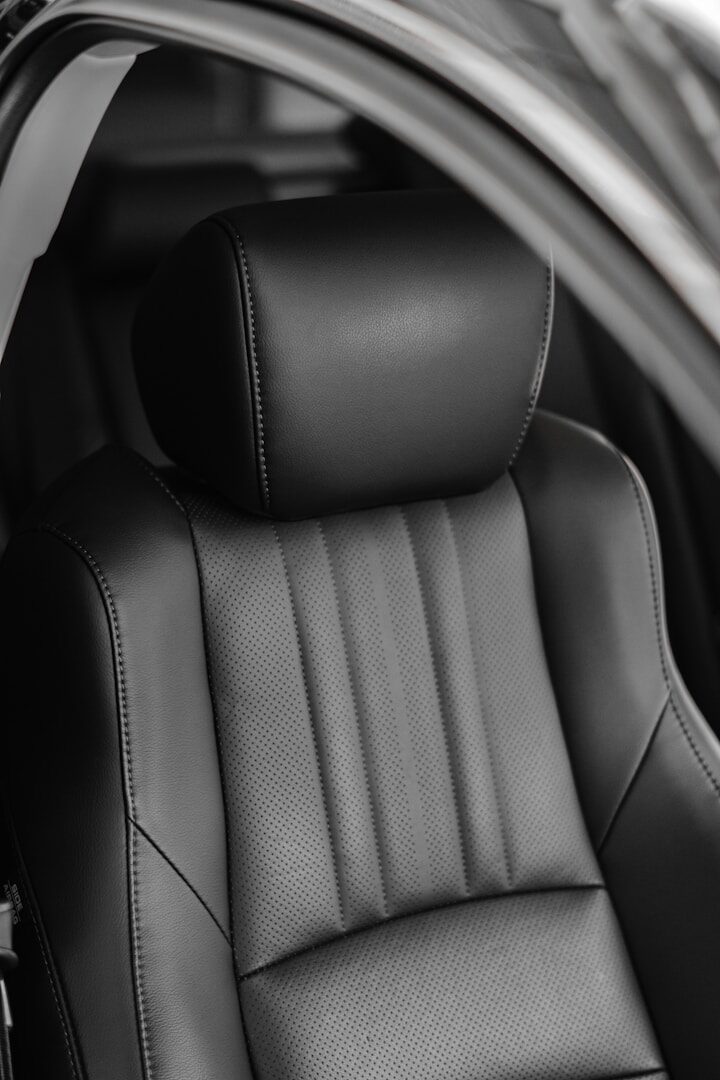
According to Fox’s complaint, her phone alerted her one night in August 2023, after dinner with friends, warning that an unknown AirTag had been traveling with her since she left the restaurant. She used her phone to make the hidden tracker chirp and traced the sound to somewhere in or on her car. A thorough search turned up nothing. Neither did a search by a responding police officer. Fox says she looked into remotely killing the tracker’s signal, learned that Apple’s system requires physically finding and disabling the device itself, and eventually bought an endoscopic camera and a stethoscope. About eight hours later, she found the AirTag hidden in the foam of her driver’s seat. She still doesn’t know who put it there, or how long it had been logging her movements before her phone finally caught it. Apple, according to the complaint, would not identify the device’s registered owner to police without further legal process.
That last detail is not a bug. It is the same privacy architecture that makes AirTag trustworthy for its intended job: finding lost keys without handing your location to a stranger. Apple’s Find My network is built so that even Apple cannot see where a given AirTag is; location pings are relayed anonymously between nearby devices and encrypted end-to-end. That is a good design when you have misplaced a backpack. It is a serious liability when the person carrying the “lost” item does not know they are carrying it, and the person who does know is hiding.
Here is what should worry car owners more than the headline: Apple’s own unwanted-tracking system has built-in blind spots that a parked car is unusually good at exploiting. To receive an alert at all, a phone needs Bluetooth, Location Services and Tracking Notifications switched on, along with a reasonably current version of iOS. Apple’s support documentation also notes that an AirTag’s Bluetooth identifier can rotate overnight, which can make a device look new to the network and effectively reset the detection clock. A car parked in a driveway all night is exactly the environment where that reset is most likely to happen, repeatedly, for months. Precision Finding, the feature that walks a user directly to a hidden AirTag using ultra-wideband radio, only works on newer iPhone models. Anyone with an older phone, an Android device, or the base version of Find My has to rely on sound alone, inside a cabin full of foam, plastic trim and sound-deadening material that swallows a coin-sized speaker’s chirp. Turning off your own phone’s Bluetooth or location settings, notably, does nothing to stop the hidden AirTag itself from continuing to report its location; only physically disabling the tracker ends the tracking.
None of that is a flaw unique to AirTag. It is a flaw built into the physical shape of the modern automobile. Seats are foam wrapped around steel frames, which happens to be a fine way to hide a disc the size of a stack of coins. Wheel wells, hitch receivers and the underside of a bumper fascia offer bare metal for a magnetic mount. A glovebox, a map pocket, an armrest bin: all cavities, all rarely emptied. Compare that to a handbag, which gets dumped out on a counter every time someone hunts for their keys. A car may be the single best piece of consumer property in America for concealing a tracker, and it was that way years before AirTag existed, back when a hidden tracking unit meant a bulky box wired into a fuse panel by a private investigator.
The Auto Wire has covered AirTag’s automotive angle before, but from the opposite direction. We’ve reported on a stolen BMW recovered quickly thanks to a hidden AirTag, and on a theft victim whose AirTag led her straight back to her stolen car. Those stories cast the little disc as the hero: a $29 accessory that outperforms a four-figure factory tracking package. Fox’s lawsuit is the same hardware working in reverse, placed by someone other than the owner, inside the one part of the car nobody thinks to check until a phone finally tells them to.
There is a business angle worth noting as well. Apple is not just fighting one lawsuit; it is fighting the consolidation of dozens of them into a single MDL, a procedural move that keeps discovery scattered across individual districts rather than centralized before one judge with authority over Apple’s internal safety testing. That is a defensible legal strategy. It also means the public will not get a clear picture of what Apple knew about vehicle concealment, and when, until well after this news cycle fades.
For anyone who owns, sells, services or rents out a car, the practical lesson has nothing to do with Apple’s litigation strategy. Detailers, dealership reconditioning teams and rental fleets already run checklists for loose change and forgotten phone chargers. Sweeping the seat foam, wheel wells and hitch area for an unfamiliar disc-shaped object is a five-minute addition to that same checklist, and it costs nothing. Owners who feel uneasy can also run Android’s built-in unknown-tracker scan or Apple’s free Tracker Detect app, neither of which requires owning an iPhone to check a car for someone else’s AirTag.
Apple built a genuinely clever privacy system for finding lost luggage. It just never fully reckoned with the fact that the most common hiding place for a small tracking disc, in this country, has four wheels and a trunk.
Top photo: Mark Chan on Unsplash.