
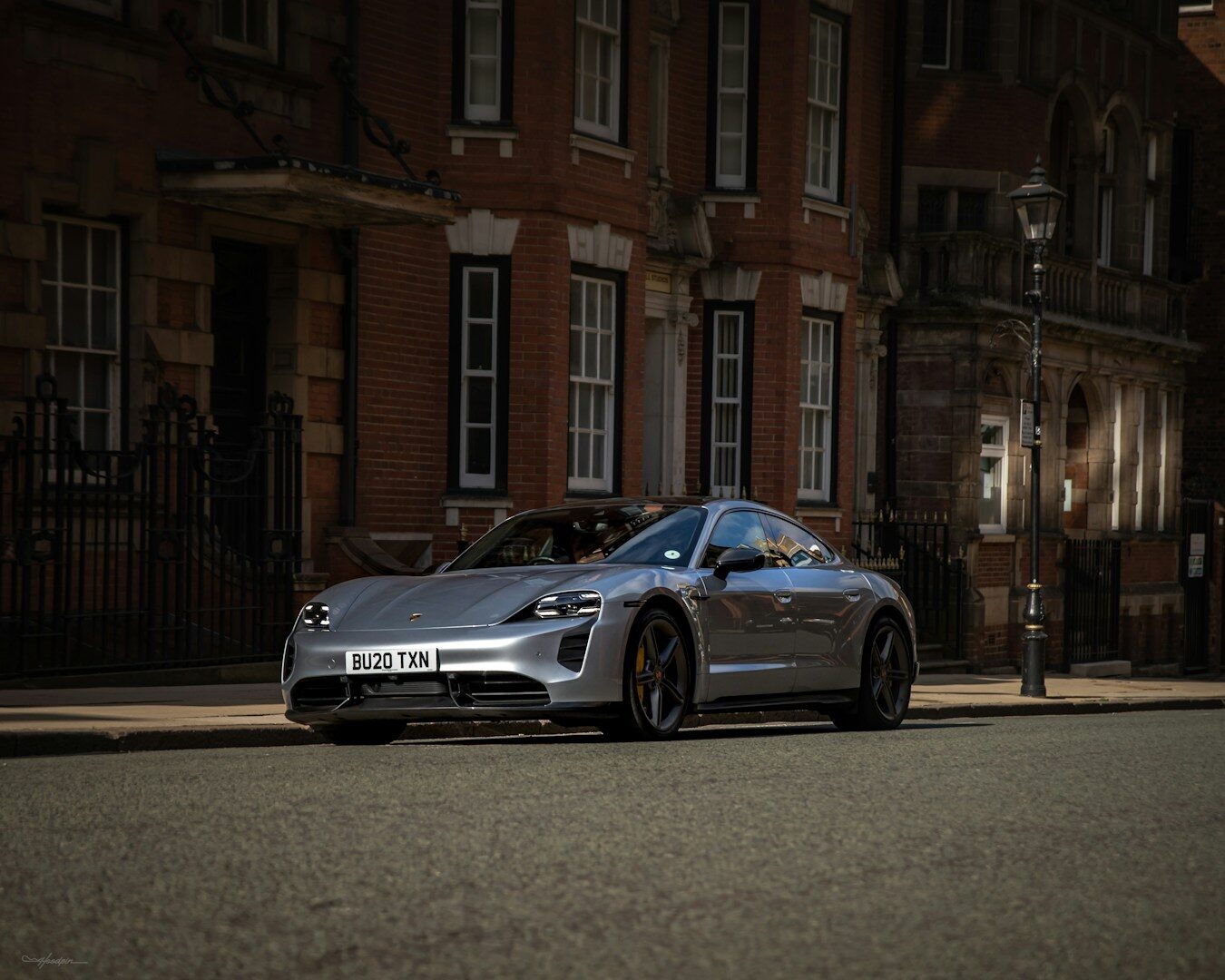
Porsche wanted this one to disappear quietly into arbitration. It didn’t work out that way.
A federal judge in Atlanta has refused to let Porsche Cars North America wriggle out of a proposed class action alleging that the Taycan’s 800-volt battery pack has a fire problem the automaker hasn’t actually fixed — despite three separate recalls aimed at doing exactly that. U.S. District Judge Eleanor Ross denied Porsche’s motion to compel arbitration and refused to dismiss the bulk of the class action, though she did trim a couple of claims without prejudice, meaning the plaintiffs get a chance to rewrite and refile them rather than losing them outright. CarComplaints
What’s Actually Being Alleged Here
The case, Kukrika et al. v. Porsche Cars N.A., Inc., was filed in the Northern District of Georgia by Gibbs Law Group on behalf of lead plaintiff Miodrag Kukrika, and it targets the 800-volt lithium-ion battery packs used across nearly the entire 2020-2024 Taycan lineup. Kukrika, a Pennsylvania resident, bought his 2020 Taycan 4S for $120,000 — not exactly pocket change — and the suit argues that owners like him got stuck with cars carrying a defect Porsche allegedly knew about for years before doing anything meaningful. Batteries NewsInjuryclaims
Related Articles
- Ford’s 17-Truck Recall, Diesel Past $6, and What Else Moved
- Today at The Auto Wire: Full Recap (September 14, 2026)
The alleged defect: the battery can lose power and, worse, short circuit, creating a fire risk. That’s not a minor annoyance like a glitchy infotainment screen — a high-voltage short circuit is the kind of failure that turns a driveway into a news story. Batteries News
Porsche’s response was twofold. First, argue that a chunk of the plaintiffs signed away their right to sue at all. The automaker filed a motion to compel arbitration, pointing to purchase agreements that supposedly bar customers from bringing class claims or class-wide arbitration. Second, argue the whole thing was moot because Porsche already fixed it via recall. In its motion to dismiss, Porsche contended the free recall repairs mooted the claims, and that plaintiffs were essentially trying to backseat-drive NHTSA’s approved remedy. CarComplaintsCarComplaints
Judge Ross wasn’t persuaded on either front. She denied the arbitration motion entirely and let nearly all the underlying claims proceed, dismissing only the express warranty claims and one plaintiff’s negligent misrepresentation claim — and even those were dismissed without prejudice, meaning it’s a redraft-and-resubmit situation, not a death sentence for those counts. CarComplaints
Why the Recalls Alone Aren’t a Slam-Dunk Defense
Here’s the part that should matter to anyone shopping a used Taycan: the “we already recalled it” defense is legally weaker than it sounds, because a recall doesn’t require proving a company got the fix right the first time — or the second, or the third.
NHTSA’s own recall filing on this shows Porsche has been chasing this issue for a while: recall 24V-732 explicitly supplements two earlier campaigns, 23V-840 and the pair 24V-215/24V-217, meaning this is recall number four in the chain if you count the sequence closely, not a one-and-done fix. The October 2024 expansion covered 27,527 Taycans, and Porsche’s own analysis pointed to a production issue at its battery cell supplier — LG, with cells assembled in Poland. Porsche stated there’s no advance warning system that flags an impending short circuit, which is a genuinely uncomfortable admission for a car company to put in writing: the battery can go bad with zero heads-up. OMB Control No.: 2127-0004 Part 573 Safety Recall Report 24V-732 +2
The interim remedy tells you how unresolved this actually was at the time. Owners were told to cap charging at 80% and wait for diagnostic software that wasn’t even ready yet, targeted for the first quarter of 2025. That’s not a repair — that’s a stopgap asking customers to babysit their own $100,000+ EV until engineering catches up. It’s a reasonable interim step from a safety standpoint, but it’s also exactly the kind of thing a plaintiffs’ attorney points to and says “see, they knew it wasn’t solved.” Green Car Reports
The Money Side Nobody’s Talking About
If you own or are considering a used Taycan from these model years, the mechanical reality is uglier than most recall notices let on. Independent shops warn that an out-of-warranty replacement of the entire high-voltage battery pack can run north of $50,000, with labor on 800-volt components alone exceeding $7,000 because it requires certified technicians and specialized tooling — this isn’t a job for your neighborhood mechanic with a floor jack and good intentions. That cost structure is a big part of why plaintiffs are pushing for buybacks or full battery swaps rather than accepting a diagnostic-and-monitor approach: if the fix eventually fails outside the recall window, owners are staring down a repair bill that can rival a new economy car. Go-Parts
Related Articles
- Automotive Cybersecurity Forecasts Are All Over the Map. Ransomware and Recalls Explain Why
- America’s Answer to the Chinese Kill Switch Has a Weight Limit. Buses Are Above It.
There’s an insurance angle here too, and it’s underappreciated. A documented, unresolved fire-risk defect with an open class action can complicate resale value and, in some states, may factor into how insurers underwrite or price coverage on affected VINs — carriers pay attention to litigation exposure tied to specific defect campaigns, especially ones involving thermal events. Buyers should run any used Taycan’s VIN through NHTSA’s recall lookup before signing anything, and confirm in writing which specific recall remedy — inspection, software update, or module replacement — was actually completed, not just “recall addressed.”
The Timing Couldn’t Be Worse for Porsche
This ruling lands while the Taycan is already Porsche’s biggest sales headache. Full-year 2025 deliveries fell to 16,339 units, down 22 percent, and the first half of 2026 saw Taycan deliveries drop another 25 percent to just 6,219 units, even as the 911 keeps setting records. German business weekly WirtschaftsWoche has reported that Porsche’s management and works council have reached an in-principle agreement to end Taycan production by 2030, though Porsche hasn’t confirmed that timeline publicly. A live class action alleging the flagship EV’s battery still isn’t fully sorted is not the kind of headline that helps reverse a sales slide — and it gives skittish buyers one more reason to wait for the next-generation battery chemistry rather than bet on a car already circling the drain in showroom terms. Porsche delivers 279,449 sports cars to customers in 2025 – Porsche Newsroom +2
The case now moves into discovery, where Porsche’s internal engineering communications about when it knew what will matter far more than any press statement.
Should Porsche have to face this lawsuit head-on instead of trying to dodge it? Let us know in the comments.
Related: Your Morning Automotive News Round-Up
Top photo: Mitch Kemp on Unsplash.