
Four recall campaigns from a single automaker went to federal regulators in one batch. We wrote about one of them. That is the normal shape of a news day: the item with the biggest number gets the story, and the items that explain it do not.
This is our automotive news roundup for the last 24 hours — the industry items we did not give a standalone story, with the part that actually matters called out in each. The stories we did report in full are linked throughout.
Recalls: Ford Filed Four. The Two Smallest Are the Ones Worth Reading
A 37-truck campaign for driveshaft separation carries more per-vehicle risk than most six-figure recalls.
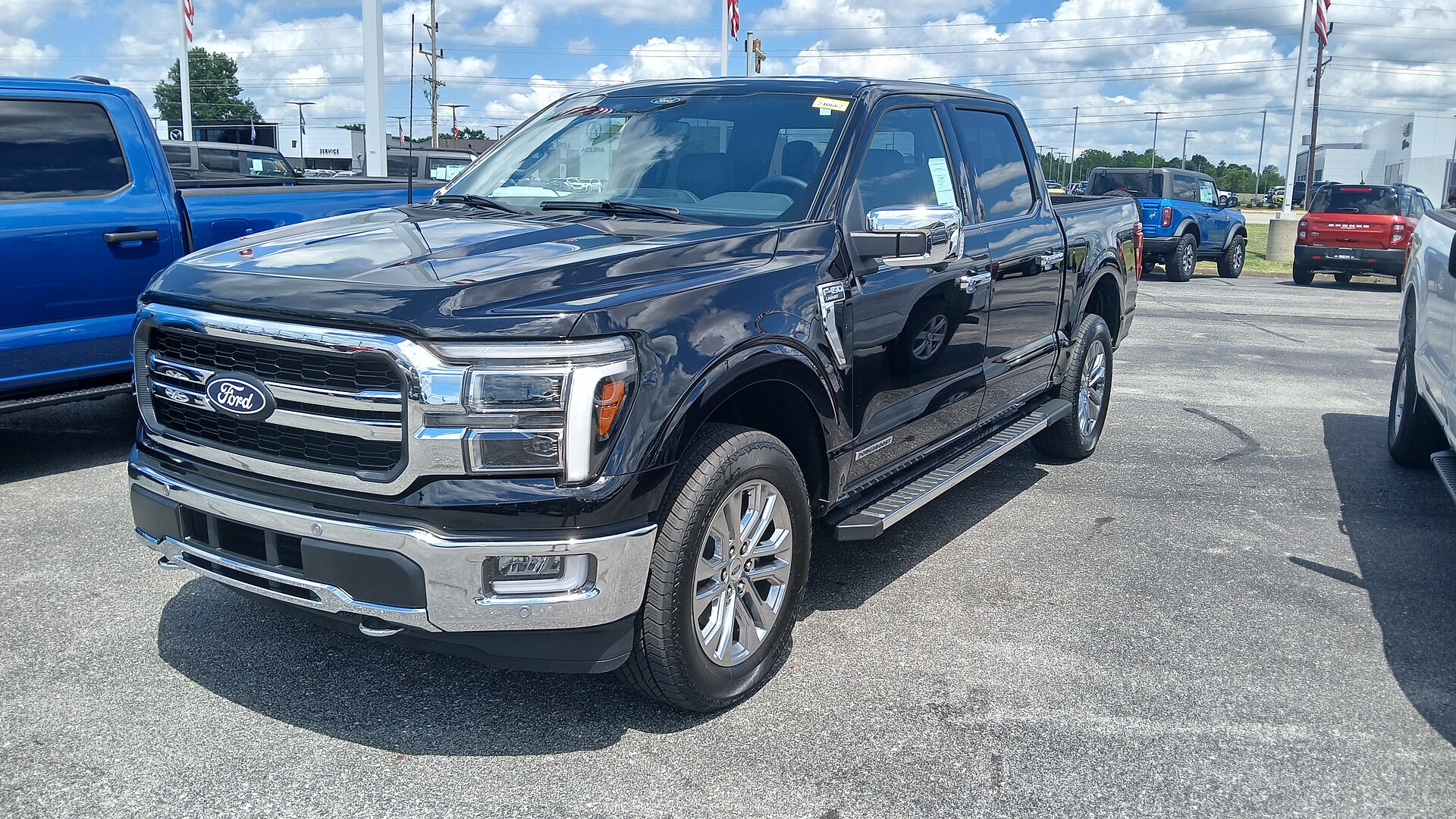
We covered the large one: 223,472 F-150s with fuel tanks that can leak or detach, a defect that took five model years to surface. Three more campaigns landed alongside it.
Campaign 26V576 covers 37 2026 F-150s built with incorrect rear axle tail bearings. The consequence language is the part to read: rear wheel lock-up, or driveshaft separation that can cause a loss of drive power or a rollaway if the truck is parked without the parking brake set. Dealers replace the bearing. Owner letters go out September 21, and the affected VINs became searchable on NHTSA.gov on September 14.
Campaign 26V577 covers 17 2026 F-150s whose rear stabilizer rod fasteners were not tightened properly on the line, which can let the rod shift and cost the driver handling control. Those owner letters were scheduled to mail today.
Campaign 26V579 is the largest of the three at 1,945 2026–2027 Transit vans, where the wireless seat belt reminder built into the rear buckles can fail to register a change in buckle status. The remedy is not ready. Ford is sending interim letters on September 21 to tell owners about the hazard, with a second letter to follow once a fix exists — anticipated in December.
Recall size measures how far a bad part travelled, not how dangerous it is. Seventeen vehicles means the manufacturer traced the problem to a specific lot, line or shift and caught it before it shipped at volume. That is containment working, and it is the outcome the reporting system is supposed to produce. The Transit campaign is the opposite shape: a known defect, a four-figure population, and a three-month gap between the warning and the repair. An interim letter is an admission that the company can identify the risk faster than it can retire it — the same structural gap we found in the F-150 fuel tank campaign, only disclosed up front instead of after five model years.
The Recall That Is Being Done a Third Time
2,404 Freightliners were already repaired under two earlier recalls. The repairs were done wrong.
Daimler Trucks North America is recalling 2,404 2020–2023 Freightliner Cascadia and 2022 Western Star 49X trucks that were, in the agency’s own words, previously repaired incorrectly under recall numbers 23V073 or 22V817. The underlying defect is corrosion in the front-axle brake modulator valves, which can make the truck pull to one side when electronic stability control or roll stability control initiates braking. Dealers will replace the valves. Owner letters are not scheduled until November 8.
Our last roundup made the point that “recalled” and “repaired” are separate columns in the safety data, and the gap between them is where the risk sits. This is a third column nobody tracks publicly: repaired, and repaired wrong. A completed-remedy rate counts this truck twice as fixed. It was not fixed either time, and the correction is arriving on a heavy vehicle whose stability system is the thing being asked to brake.
For contrast, in the same window BRP recalled 14,014 Can-Am motorcycles — Origin, Pulse, Canyon, Spyder RT and Spyder F3 — because touchscreen instrument clusters can reset, freeze or go blank, which puts them out of compliance with the federal standards governing motorcycle displays and brake systems. That fix goes out over the air. Set it beside the roughly 10,000 Toyota C-HRs from yesterday that each need a physical service appointment for a software fault, and you have the same defect class producing opposite logistics. Over-the-air capability is not a property of software problems. It is a property of the vehicle it happened to land in.
Fuel: Diesel Went Past $6 and It Is Not Behaving Like Gasoline
Diesel is up 58.5% year over year. In trucking, that delays fleet renewal instead of accelerating it.

The Energy Information Administration’s most recent published weekly average put on-highway diesel at $5.967 a gallon — up 36.8 cents in a single week and $2.20, or 58.5%, against the same week last year. Gasoline averaged $4.157, up 23.2% year over year. California diesel was $7.764. The next weekly release was due today, and daily trackers had already carried the national average across $6 for the first time on record.
The interesting part is what that is doing to truck buying, which is the reverse of what it does to car buying. Daimler Truck chief executive Karin Rådström described the squeeze as a timing problem rather than a cost problem: operators pay at the pump now and get reimbursed by customers later, so the cash flow tightens even when the money is eventually recovered. Stellantis’s European commercial vehicle head, Emanuele Cappellano, put the consequence plainly — fleets would rather slow down renewal than take a risk on a full-electric commercial vehicle.
The arithmetic behind that: fuel runs 25% to 35% of trucking operating cost, second only to labor, and battery-electric heavy trucks still cost two to three times a diesel equivalent up front. Electric is about 2% of newly registered commercial vehicles in Europe against a 35% target for 2030.
So a fuel spike splits the market in two directions at once. For households it moves consideration toward electric within a quarter, which is what the consideration data in yesterday’s roundup showed. For fleets it drains exactly the working capital that would have bought the replacement truck, and the greener truck is the expensive one. We covered the refinery mechanics behind this when six California pumps hit $9.999, and the household side of the same squeeze when new-car prices crossed $50,000 again. The resale market has been pricing this in for a while, which is why used EV values are climbing while diesel values slide.
IAA: The Range Problem Got Solved the Week the Money Got Harder
Scania is quoting 720 km of electric long-haul range to a room full of fleets that just postponed buying anything.

IAA Transportation opened in Hannover today after press days on Monday, and the electric announcements arrived in a block. Scania says its long-haul configuration now reaches up to 720 km on a charge. DAF completed its electric family with the XG and XG+ Electric. Mahle showed a range extender and its MCT motor. Bosch said it intends to double heavy-duty commercial vehicle sales by the mid-2030s. ElringKlinger brought battery and lightweighting hardware.
Seven hundred and twenty kilometres is the number that matters, because it is roughly a full day inside European drivers’ hours rules. The technical objection to electric long-haul — that the truck cannot cover a legal shift — is closing. What is not closing is the purchase price gap, and it is being asked to close in the same quarter diesel set a record and fleets told their suppliers they are deferring renewal. That is the same mismatch between built capacity and actual demand we traced when Volkswagen turned out to have built too many factories rather than too few EVs.
Autonomy: Waymo’s 15th City Already Has 7,000 Robotaxis Approved
Nevada authorized 7,000 autonomous vehicles in Clark County. Waymo launched with dozens.
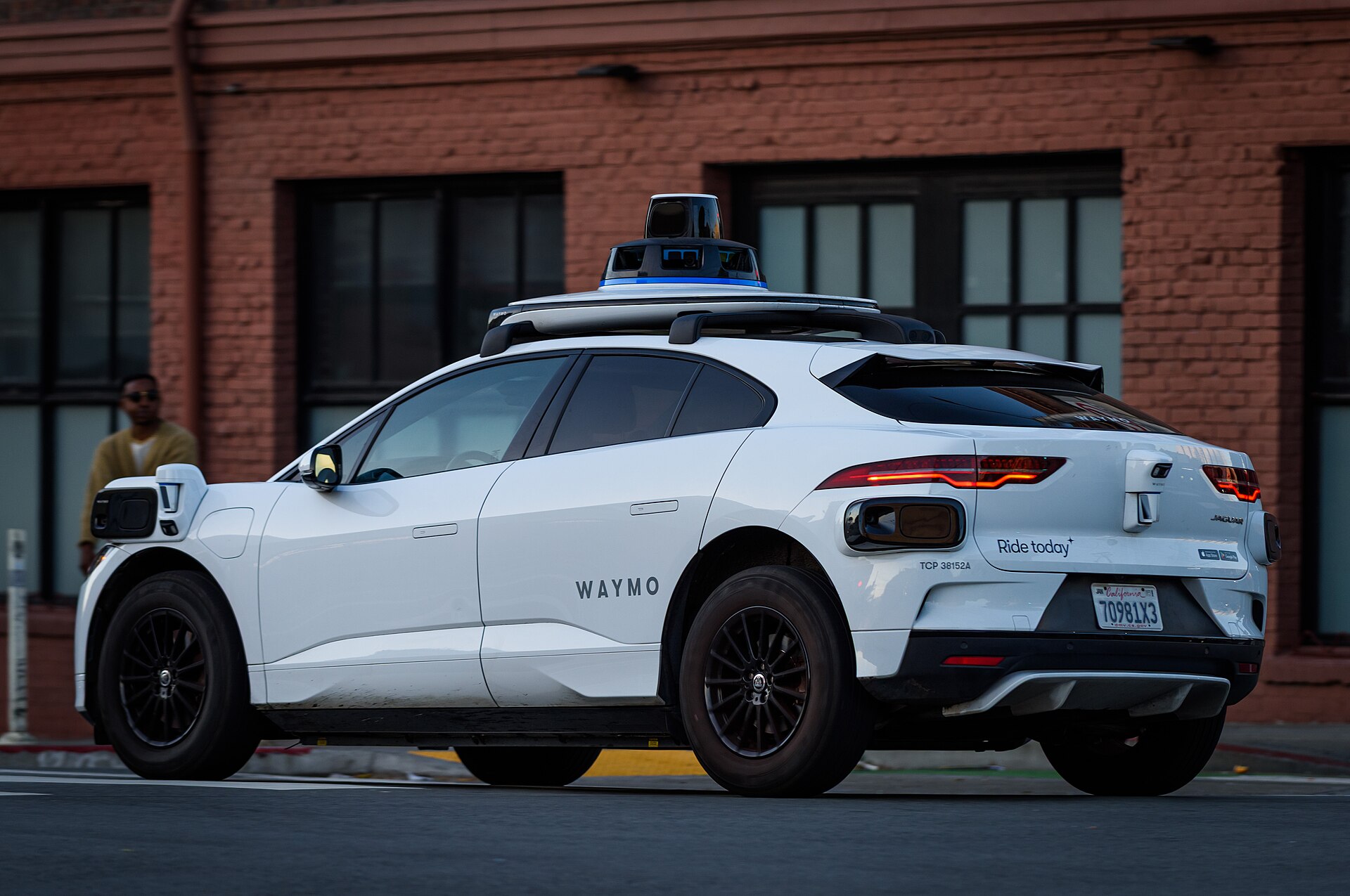
Waymo opened its robotaxi service to the public in Las Vegas on Monday, releasing access codes on a rolling basis. The service area covers the Strip south of Highway 589 and runs into Boulder Junction, starting with dozens of its new Ojai minivans. Waymo now operates more than 4,000 robotaxis across more than a dozen cities, and Las Vegas is its 15th commercial market.
The number worth keeping is not Waymo’s. Nevada’s Transportation Authority has already authorized up to 1,000 autonomous vehicles for Waymo in Clark County over the next year, 5,000 for Tesla and 1,000 for Uber through its Motional and Zoox partnerships. That is roughly 7,000 approved robotaxis for a metro of about 2.3 million people, granted before the vehicles exist.
Every other American market has worked the other way around: operators built fleets and then argued for permits, with the regulator as the binding constraint. Las Vegas inverts it. The ceiling is now far above deployed supply for three operators at once, which means the thing limiting robotaxi density in that city is fleet build rate and rider demand, not the state. It also means the largest single authorization in the country belongs to the operator whose self-certification process is currently under federal examination over the Cybercab.
Europe moved on the same day. WeRide and Uber received Spain’s first national Level 4 permit, and Pony.ai and Verne launched what they describe as Europe’s first fully driverless robotaxi service on public roads, in Zagreb.
Washington: The Criminal Penalty Safe Harbor Is Being Reinstated, and Nobody Commented
The provision that decides whether bad safety reporting is a filing error or a crime drew zero public comments.

NHTSA published notice today that it is sending the information collection behind its Criminal Penalty Safe Harbor Provision to the Office of Management and Budget for a three-year reinstatement. The agency had requested comment on the reinstatement back on May 29. It received none.
The safe harbor is the route by which a manufacturer that submitted false or misleading information to the agency can correct the record and avoid criminal exposure. It is, in other words, the paperwork that sorts a reporting failure into either a clerical problem or a prosecution. It is being renewed in the same week a truck maker filed a recall for 2,404 vehicles it had already repaired incorrectly under two prior campaigns, and it drew not one public comment — including from the safety groups and plaintiffs’ bar who litigate on exactly this question.
The EPA also closed out a quieter one. On Monday it finalized approval of revised motor vehicle emissions budgets for nitrogen oxides and volatile organic compounds in California’s San Joaquin Valley for 2026, 2029 and 2031, replacing budgets built on an older emissions model. Nothing about that changes a car in a driveway, but those budgets govern which transportation projects the region can approve going forward — the same class of downstream constraint we looked at when the EPA pulled its Scope 3 guidance and when the connected vehicle rule turned out to have a weight limit.
Quick Hits
- Tesla registered a subsidiary in Ho Chi Minh City with roughly $3 million in capital — a small filing, but the first formal step toward selling in Vietnam, which happens to be VinFast’s home market.
- Volkswagen’s Mission Efficiency prototype set three records: a 0.158 drag coefficient, the lowest of any road-approved vehicle; 6.48 kWh per 100 km under constant-speed conditions; and 6.89 kWh per 100 km across a 1,278 km run on a 54.9 kWh battery, finishing with 164 km of range left.
- Mercedes-Benz is reconfiguring its main plants for multi-fuel capability after production fell 8.5% to 1.8 million units in 2025.
- BMW’s new mapping system merges navigation and driver-assistance data into a single 3D view, one of the first production attempts to show the driver what the ADAS stack is actually seeing.
- The U.S. Transportation Secretary raised national security concerns about Ford’s technology partnerships with CATL and Geely — the same pressure that shaped the framing around Ford’s $1 billion Kentucky paint shop announcement.
- Daimler Truck’s North American operations account for close to half of group vehicle sales, which is why a U.S. diesel record shows up in a German earnings call.
That is the wire for the last 24 hours. Anything here that turns into a real story — a recall that expands, a remedy that slips, a permit ceiling that actually gets filled — we will follow on its own.
One thing we keep turning over: Ford narrowed two of these campaigns down to 37 trucks and 17 trucks, while Daimler is repairing 2,404 trucks that were already repaired twice. If you had to judge how seriously a manufacturer takes a defect, which of those numbers would tell you more — and would a 17-vehicle recall make you trust the company more, or worry about what else is coming?
Related: The Tesla Roadster That Flies Isn’t Approved for Public Roads, and Tesla’s Own Website Says So
Related: Ford Patented a Hood That Folds Into a Workbench. It Still Has to Crumple.