
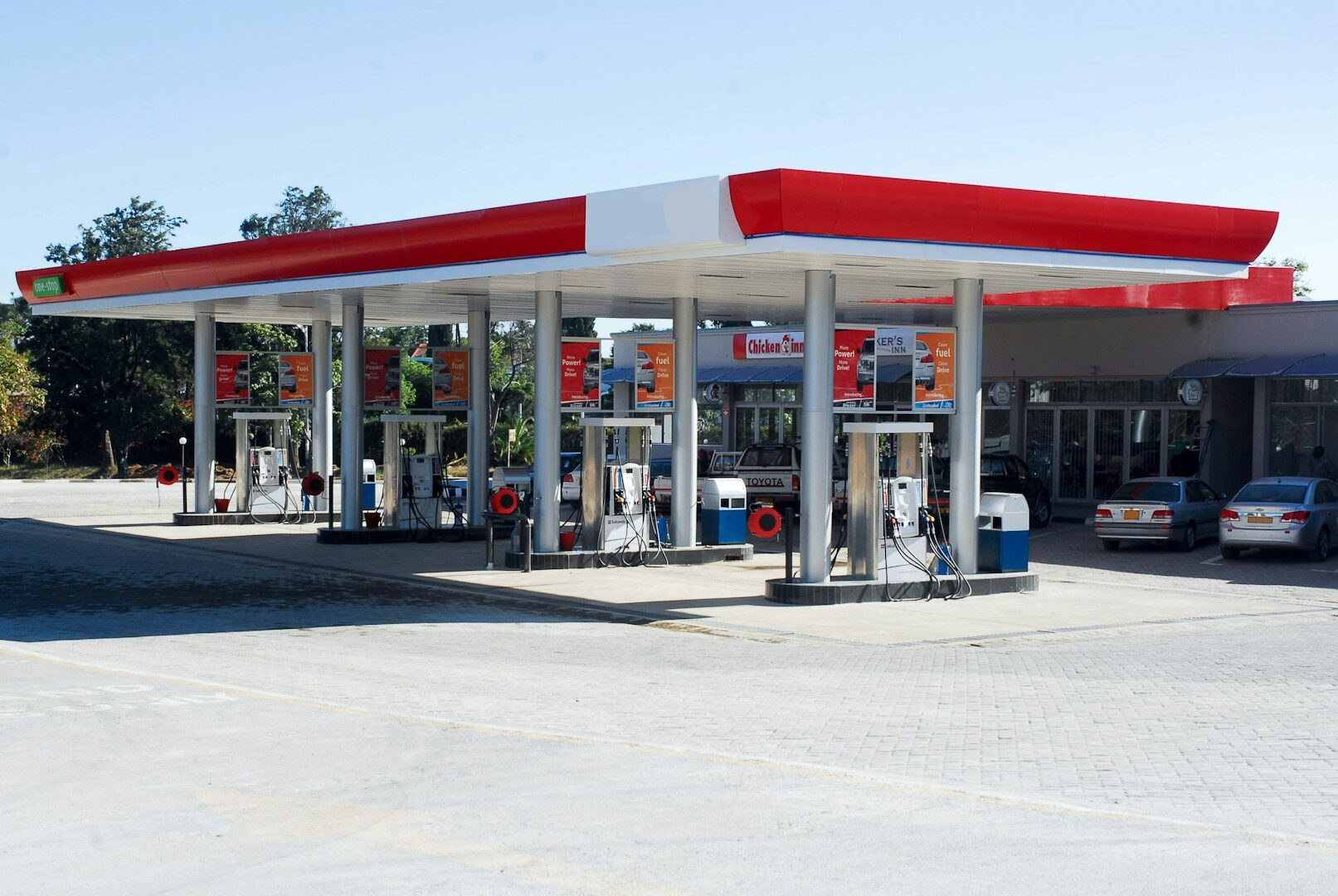
Somewhere in a product meeting decades ago, an engineer decided four digits would be plenty for the price of a gallon of fuel. Nine dollars, ninety-nine and nine-tenths cents. Nobody argued. It was a generous ceiling.
Six California stations have now found it.
Patrick De Haan, head of petroleum analysis at GasBuddy, says six stations in the state are posting diesel at $9.999 a gallon — the highest figure those dispensers are capable of displaying. The company has not identified the locations, and whether any fuel has actually changed hands at that number is unconfirmed. Treat it as a symptom, not a transaction.
Because the pumps that maxed out are not the story. The story is why the ordinary pump three miles down the road reads what it reads, and why the fuel that moves freight has quietly become the most punishing liquid in California’s economy while everyone was busy watching the gasoline sign.
California diesel prices are setting records while demand falls
The Energy Information Administration’s weekly survey for September 7, 2026 put on-highway diesel at $7.764 a gallon in California, $6.987 across the West Coast and $5.967 nationally. Twelve months earlier those same surveys sat near $4.96 in California and $3.77 nationally. That is $2.81 added in California and $2.20 added nationally in a year, with 36.8 cents of it arriving in a single week.
Regular gasoline in the same survey: $5.678 in California, $4.157 nationally. Diesel now carries a premium of roughly $2.09 a gallon over gasoline in California and $1.81 nationally. For most of the past decade, summer diesel traded near gasoline and often below it.
Now here is the figure that wrecks the usual explanation.
Diesel demand is going down.
EIA’s Weekly Petroleum Status Report for the week ending September 4, 2026 shows distillate product supplied — the closest thing the federal government publishes to a demand number — averaging 3.7 million barrels a day over four weeks, down 2.6 percent from a year earlier. Over the same stretch, U.S. refineries ran at 97.6 percent of operable capacity. Distillate inventories still finished the week at 106.3 million barrels, about 13 percent below the five-year average.
Consumption is falling. Refineries are running nearly flat out. The tank is emptying anyway.
You cannot solve that by running harder. There is no harder.
California diesel is a boutique fuel, and two of its factories just closed
Every state feels the national squeeze. California feels a version of it that cannot be fixed with a phone call to Texas.
California diesel is its own product. CARB’s diesel regulations cap aromatic hydrocarbons at 10 percent by volume, a limit in force since 1993, and sulfur at 15 parts per million since 2006. Federal ultra-low-sulfur diesel matches the sulfur figure and carries no aromatics cap at all. Since 2004, producers have also been able to certify proprietary blends as emission-equivalent under CARB’s Designated Equivalent Limits. Whichever path a refiner takes, a compliant barrel is a barrel somebody deliberately manufactured for one customer: California.
And it arrives by ship, because no pipeline carries refined product from the Gulf Coast into the state. Regional fuel plumbing sets regional fuel prices far more often than the crude headlines do, which is the same mechanism behind Georgia’s pump prices outrunning the national average this summer.
So when California loses a refinery, it is not losing a share of a fungible commodity. It is losing a factory for a fuel with a customer list of one.
It has lost two in under a year. Phillips 66 told investors it finished processing crude at its Los Angeles refinery on October 16, 2025, with the remaining units idled in phases through year-end; the California Energy Commission lists that plant at 139,000 barrels per day. Valero’s Benicia refinery — 145,000 barrels per day by the CEC’s count, 170,000 barrels of throughput by Valero’s own description — ceased refining by the end of April 2026. Valero’s plant page lists CARB diesel among its products, alongside 45 percent of Northern California’s asphalt supply.
The Energy Commission now counts 1,338,171 barrels a day of operating capacity across eleven facilities, with another 372,200 barrels a day sitting idle.
Here is the part that should have been the headline a year ago. When the EIA warned in September 2025 that national distillate inventories were heading for multiyear lows, it named those two California closures — 284,000 barrels a day combined — as one of the reasons.
Not California’s inventories. The country’s.
California taxes diesel as a percentage, and that changes everything
Most drivers assume fuel taxes are a fixed number of cents stapled to every gallon. For gasoline, largely true. For diesel in California, not remotely.
Per the California Department of Tax and Fee Administration, the state sales tax rate on diesel fuel is 13.00 percent plus applicable district taxes. On gasoline it is 2.25 percent plus district taxes. The excise tax actually runs the other way — 48.2 cents a gallon on diesel as of July 1, 2026, versus 63.4 cents on gasoline.
The excise tax is a number. The sales tax is a multiplier.
At 13 percent, every additional dollar on the diesel price adds roughly 13 cents of state sales tax before district taxes are layered on. Gasoline’s 2.25 percent adds about two. California’s diesel tax revenue per gallon has therefore climbed sharply over the past year without a single vote, a single bill, or a single press release. The price did the legislating.
There is a tell buried in that same rate table. Qualified agricultural diesel is taxed at 2.25 percent, not 13 percent. The state has already conceded, in writing, that when diesel is an unavoidable input rather than a consumer choice, the punitive rate stops making sense.
That concession covers the tractor. It does not cover the truck that hauls what the tractor grew.
A rewrite in the federal tax code quietly drained part of the diesel pool
Renewable diesel is the unsung load-bearing wall of California’s fuel supply. It is a hydrotreated hydrocarbon, chemically close enough to petroleum diesel to drop straight into the same tanks and the same injectors, and it is a primary compliance currency under the state’s Low Carbon Fuel Standard, which covers diesel and its substitutes alongside gasoline.
In 2025, Washington swapped the Blender’s Tax Credit — a dollar a gallon, paid on domestic and imported volumes alike — for the Section 45Z Clean Fuel Production Credit, which applies only to domestic production. The EIA’s accounting of what followed is blunt: renewable diesel imports fell from 33,000 barrels a day in the first half of 2024 to 5,000 barrels a day in the first half of 2025, the lowest first-half figure since 2012. Biodiesel imports collapsed from 35,000 barrels a day to 2,000.
Combined renewable diesel and biodiesel consumption dropped about 124,000 barrels a day, roughly 35 percent, and every one of those barrels had to be replaced out of a petroleum distillate pool that was already shrinking.
Put plainly: part of California’s diesel supply chain runs through the Internal Revenue Code. A paragraph changed, and the molecules stopped coming.
The state built an off-ramp from gasoline and a toll booth on diesel
That is the thesis, and it holds up under every number above.
For light-duty gasoline, California spent fifteen years building alternatives: purchase incentives, charging infrastructure, zero-emission vehicle requirements, a used-EV market and a public increasingly willing to buy one. A driver facing $5.68 gasoline has options, even if they are expensive and inconvenient.
For heavy-duty diesel, the substitution plan was the Advanced Clean Fleets regulation. CARB withdrew its Clean Air Act waiver request for that rule on January 13, 2025. The mandate meant to move fleets off diesel is gone. The cost structure that penalizes diesel is entirely intact.
The reach of California’s diesel rules is also wider than most drivers realize. CARB’s requirements extend beyond trucks to non-vehicular diesel, including stationary engines, locomotives and marine harbor craft. When CARB diesel gets expensive, it is not only freight that pays. It is rail, port equipment, agricultural machinery and the standby generators sitting behind hospitals and data centers.
None of those can switch fuels this quarter. Most cannot switch this decade. Federal emissions policy is still shaping what the next generation of diesel trucks will cost to buy and repair, which tells you how long the replacement cycle really runs.
Diesel is not a fuel choice. It is a fixed cost on nearly everything that reaches a shelf. Taxing it as though it were discretionary, while retiring the program designed to give buyers somewhere else to go, is a policy that only works while the fuel is cheap.
What $9.999 actually tells you
Retail fuel dispensers in California are governed by NIST Handbook 44, adopted into state regulation and enforced by the Division of Measurement Standards at the California Department of Food and Agriculture. Buried in Section 3.30 is a user requirement, UR.3.3, stating that a computing device may be used only for sales for which that device computes and displays the sales price.
Read that alongside a four-digit display and the implication gets sharp: a station that genuinely needed to charge more than its dispenser can show would not be permitted to sell through that dispenser at all. $9.999 is not merely where the hardware stops. It is where the law stops with it.
That is what makes those six pumps worth a paragraph. A display ceiling is a design document. It records what the people who built the equipment believed was the outer edge of a plausible future. Someone, at some point, decided ten dollars a gallon was a safe place to stop counting.
The EIA’s Short-Term Energy Outlook published September 9, 2026 raised its retail diesel forecast to $5.07 a gallon for 2026 and $4.40 for 2027, up from $4.85 and $4.07 the month before, with the distillate crack spread revised to $1.57 a gallon. It also expects national distillate inventories to drop below 100 million barrels and stay depressed through much of 2027.
That is the government’s measured case. It still has diesel expensive well into next year.
If you forget every figure in this article, keep one idea: gasoline prices are a household budget problem, and diesel prices are an everything problem. A driver can trade a thirsty V8 for a hybrid and change their exposure in an afternoon, and the math on which vehicles become financial anchors during a price spike is well understood. A grocery chain cannot trade its distribution network.
California built an off-ramp from gasoline and a toll booth on diesel. The pumps ran out of digits before anyone ran out of ways to explain it.
Top photo: Mehluli Hikwa on Unsplash.