
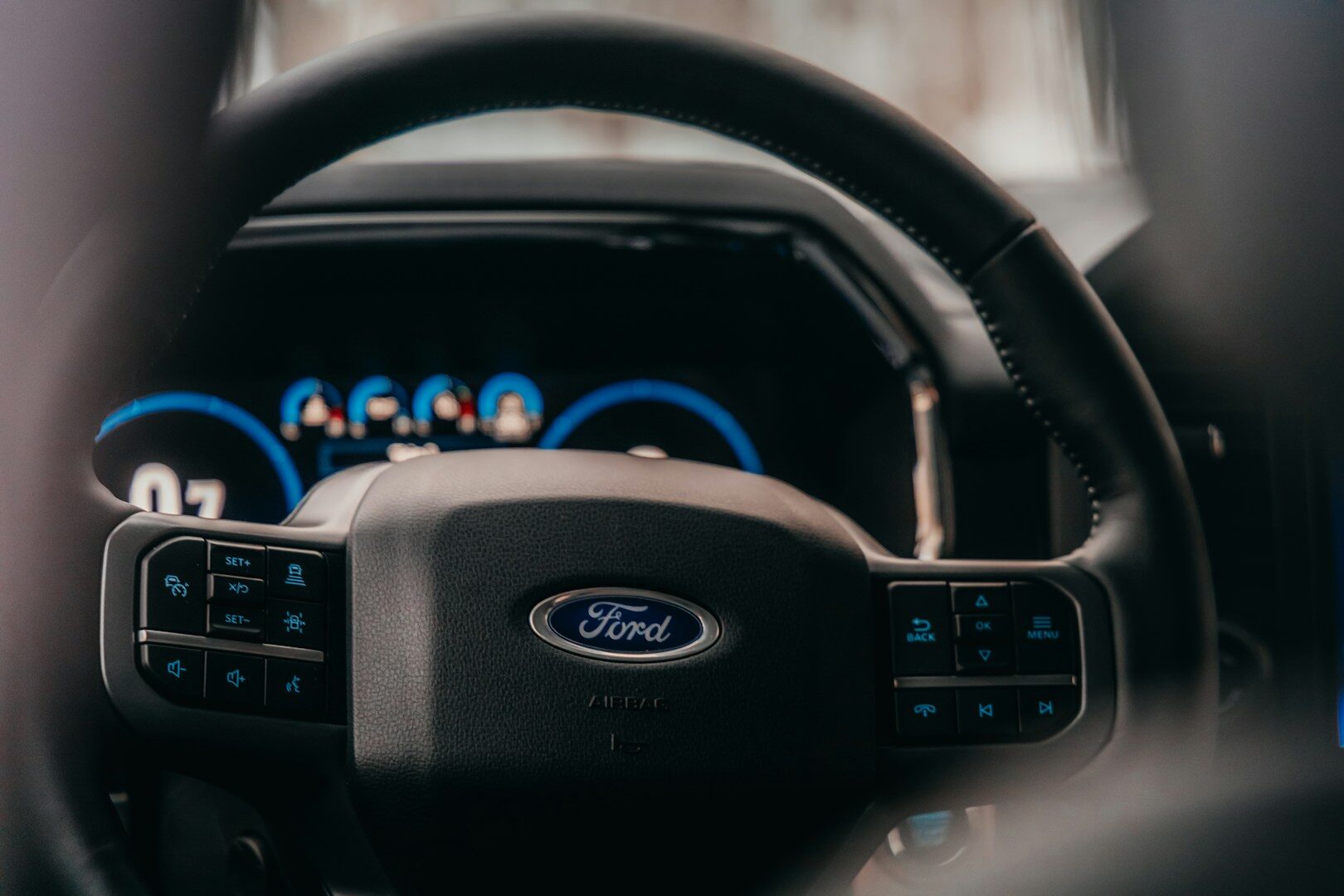
On Tuesday, the Department of Transportation published a letter scolding Ford over its business ties to Chinese companies. On Thursday, Ford announced it would spend $1 billion on a new paint shop at Kentucky Truck Plant. Read in that order, it looks like a company scrambling to wave a flag. The documents tell a less dramatic story, and a more interesting one.
What Ford Actually Committed To
According to Ford’s announcement, the new paint shop will replace the plant’s existing one, and construction should start by late this year. The governor’s office calls KTP Ford’s largest and most profitable U.S. plant, with a truck coming off the line every 45 seconds. Ford’s plant profile lists about 8,790 employees as of January, roughly 8,250 of them hourly. The plant builds the F-250 through F-550 Super Duty, the Expedition, and the Lincoln Navigator on a 500-acre site that opened in 1969.
Ford hasn’t given a completion date, and it hasn’t said how many jobs the project adds, if any. That’s a groundbreaking promise and a price tag, nothing more yet.
Buyer’s guide: Best Car Wash Soaps (2026)
The Receipts Predate the Scolding
This is the detail that undercuts the “Ford caves” storyline. Buried near the bottom of the governor’s release is a note that Kentucky’s economic development finance authority approved an amendment to Ford’s existing incentive agreement back in June. That agreement can deliver up to $578 million in performance-based tax incentives, tied to $7.55 billion in total Ford investment and a job target of up to 12,000 a year.
Related Articles
- Inside Toyota’s Paid GR Software: Prices, Warranty Gaps And Resale Traps
- A Sneeze Caused a Fatal Crash With an Amish Buggy in Wisconsin. The Real Question Is Whether Modern Safety Tech Would Have Even Seen It Coming
State incentive boards don’t amend agreements for projects someone sketched on a napkin over Labor Day weekend. Duffy’s letter itself is dated September 3. The Kentucky incentive paperwork was moving months earlier. Ford clearly chose when to announce, and nobody at the Glass House missed the timing. But the paint shop wasn’t invented as a rebuttal.
What the Letter Says, and What It Doesn’t
Duffy’s letter opens by expressing DOT’s “profound concern” about Ford’s direction. It then lays out five grievances. First is Ford’s licensed CATL battery technology at BlueOval Battery Park Michigan in Marshall. Second is a Ford-Geely joint venture in Spain. Third is Ford’s talks with BYD about hybrid components. Fourth is a framework Duffy says Farley floated at the Detroit Auto Show for Chinese joint ventures on U.S. soil. Fifth is Lincoln’s plan to reshore models like the Nautilus by 2030. The DOT press release adds that CATL sits on the Department of War’s list of banned companies.
Now look at what’s missing. The letter cites no regulation, sets no deadline, and threatens no penalty. It closes by urging Farley to reflect and adopt reasonable strategies. That’s a strongly worded letter, not an enforcement action.
The binding rules on Chinese automotive technology come from a different agency entirely. The Commerce Department’s connected-vehicle rule took effect in March 2025. It restricts Chinese- and Russian-linked vehicle connectivity and automated-driving software starting with the 2027 model year, and the related hardware starting with model year 2030. A battery technology license in Michigan isn’t what that rule targets.
It gets stranger. On August 31, a White House release celebrated the same Marshall plant as a $3 billion investment creating 1,700 jobs. Three days later, a cabinet secretary signed a letter calling it a national-security concern. One administration, two opinions, one battery plant.
Ford’s Answer, and Its Gaps
Ford’s statement called the letter a headline grab. It stressed that Marshall is Ford-owned and Ford-operated with about 1,700 workers, and it described the CATL deal as a limited licensing and services arrangement, not a joint venture. On the Detroit Auto Show claim, Ford was blunt: “Ford has not proposed a joint-venture framework as described in the letter.” It also complained that Duffy went to the press before calling the company.
Notice what Ford skipped. The statement never mentions Geely or BYD. It answers the two charges Ford can win outright and moves past the ones that take longer to explain.
On Lincoln, Ford pointed to its August 12 Lincoln announcement. That plan grows U.S. Lincoln production starting in 2030 and phases out Chinese imports for the U.S. market. The same release notes that the Navigator is already built at KTP, and that Ford assembled more than 2 million vehicles in the U.S. last year with about 56,300 hourly workers. So the new paint shop will be painting Navigators, the Lincoln that’s already made in America.
Why a Paint Shop Costs a Billion Dollars
Enthusiasts obsess over body shops and engine plants. Paint shops are where the money and the energy actually go. EPA’s Energy Star data puts paint booths at 30 to 50 percent of an assembly plant’s energy use, with fuel burned mainly for heating and curing ovens.
Here’s why. A body passes through pretreatment baths, gets dipped in an electrocoat primer that reaches inside closed box sections, gets sealed, and then goes through primer, basecoat, and clearcoat. Oven cycles happen along the way, and the booth air has to stay temperature- and humidity-controlled the entire time. Every one of those steps runs at the speed of the line. At a plant rolling out a truck every 45 seconds, there’s no slack.
KTP’s products add another challenge. Ford specifies a military-grade aluminum body for Super Duty over high-strength steel frames. Aluminum doesn’t red-rust, but it still needs pretreatment chemistry matched to the metal, because poor coating adhesion can let a threadlike corrosion creep under the paint. Better pretreatment and more even film builds are what “improved quality” means in paint-shop terms. You notice it years later at rock chips and panel seams, not on the showroom floor.
Most people don’t know this: KTP already has two paint shops. A DOE case study shows Ford started building a second shop there in 2014. It moved the Expedition and Navigator into their own premium paint line and freed capacity for Super Duty in the original shop. Ford reported a 27 percent energy savings per vehicle from that project. Ford’s new announcement says it’s replacing “the existing paint shop” without specifying which one. My read is that the target is the older building painting Super Duty, but Ford hasn’t confirmed that.
There’s a regulatory side, too. Automotive paint lines at major pollution sources fall under EPA’s air toxics standard for automobile and light-duty truck coating. That standard targets solvents including toluene, xylene, glycol ethers, and MIBK. The federal rule treats new, reconstructed, and existing coating operations differently, so a replacement shop also means a fresh round of air permitting before the first truck gets sprayed.
Then there’s the cutover. You can’t shut down your most profitable plant for a year to swap paint shops. The usual playbook is to build the new facility alongside the old one and switch over during a planned shutdown. Ford hasn’t said how it will handle this transition.
What It Means if You Own or Buy One
For trucks already on the road, nothing changes. This shop won’t paint anything for years. If you’re shopping now, you’re buying a finish from the existing lines, so inspect the paint carefully at delivery and report any defects while the bumper-to-bumper warranty still covers them.
Owners of aluminum-bodied Super Dutys should remember that collision repair is its own specialty. Shops need dedicated aluminum tools and workspaces, and factory ovens cure paint at temperatures a body shop can’t use on a finished truck full of wiring and plastic. Expect a repaired panel to be a close match, not an identical one, and ask your insurer whether its preferred shops are certified for aluminum work.
Related Articles
- Dallas Turned Its Garbage Trucks Into A Surveillance Fleet, And The Real Trick Was Doing It For Almost Nothing
- Every New Car Was Supposed To Stop Drunk Drivers By Now. Nobody Told The Cars.
The “built in Kentucky” label also has real tax value right now. The IRS says buyers can deduct up to $10,000 a year in loan interest on new, personal-use vehicles with final U.S. assembly and a gross vehicle weight rating under 14,000 pounds, for 2025 through 2028. The deduction phases out above $100,000 in modified adjusted gross income, or $200,000 for joint filers. If you’re speccing the heavy end of the Super Duty range, check the GVWR on the door-jamb label before you count on that deduction.
The Bigger Picture
Add it all up and Ford now has about $5 billion committed in Kentucky. That includes this paint shop, roughly $2 billion to turn Louisville Assembly into the home of the Fathom midsize electric pickup in 2027 with about 2,200 jobs, and roughly $2 billion to convert the Glendale site into Ford Energy. That operation is expected to build battery storage systems with at least 20 gigawatt-hours of annual capacity and at least 2,100 jobs, starting in late 2027.
So the week went like this. Washington praised Marshall, then scolded it. Ford answered with a press release on Tuesday and a paint shop on Thursday. Only one of those will still matter when the first Super Duty rolls out of the new booth.
Does “built in America” still factor into what you drive, or has price beaten patriotism at this point? And what would it actually take for a plant investment like this one to earn your next truck purchase?
Top photo: Hans on Unsplash.