
Every personal finance guide ever written points you toward the same milestone: a paid-off car. Kill the loan, stop the interest, keep driving it. It is good advice, and Americans are following it longer than ever. It is also the moment your car quietly changes legal categories, and nobody hands you a pamphlet explaining what it changes into.
While a lender holds the lien, your car is somebody else’s collateral, and an entire body of law governs how that somebody is allowed to take it back. Once the lien clears, the car becomes something different: a titled, registered, insured, publicly identifiable asset sitting in a known location with your name attached to it. Your banker calls that equity. A stranger holding a court judgment against you calls it the easiest thing you own to take.
A Massachusetts case that closed this week shows how far that idea can be pushed before anyone stops it.
What the Commonwealth actually shut down
Attorney General Andrea Joy Campbell’s office announced a consent judgment resolving its case against Judgment Acquisitions Unlimited, Champion Funding Inc., and owner Andrew Metcalf. The terms: roughly $52 million in debt relief for more than 6,000 Massachusetts consumers, and a permanent bar on buying, selling, transferring, assigning, or collecting any debt allegedly owed by a Massachusetts consumer. The defendants can never hold a Massachusetts debt collector license, and cannot run collection activity from inside the Commonwealth even against people who live somewhere else. A $650,000 penalty sits suspended, payable if they break the deal or if the state determines their claimed inability to pay was untrue.
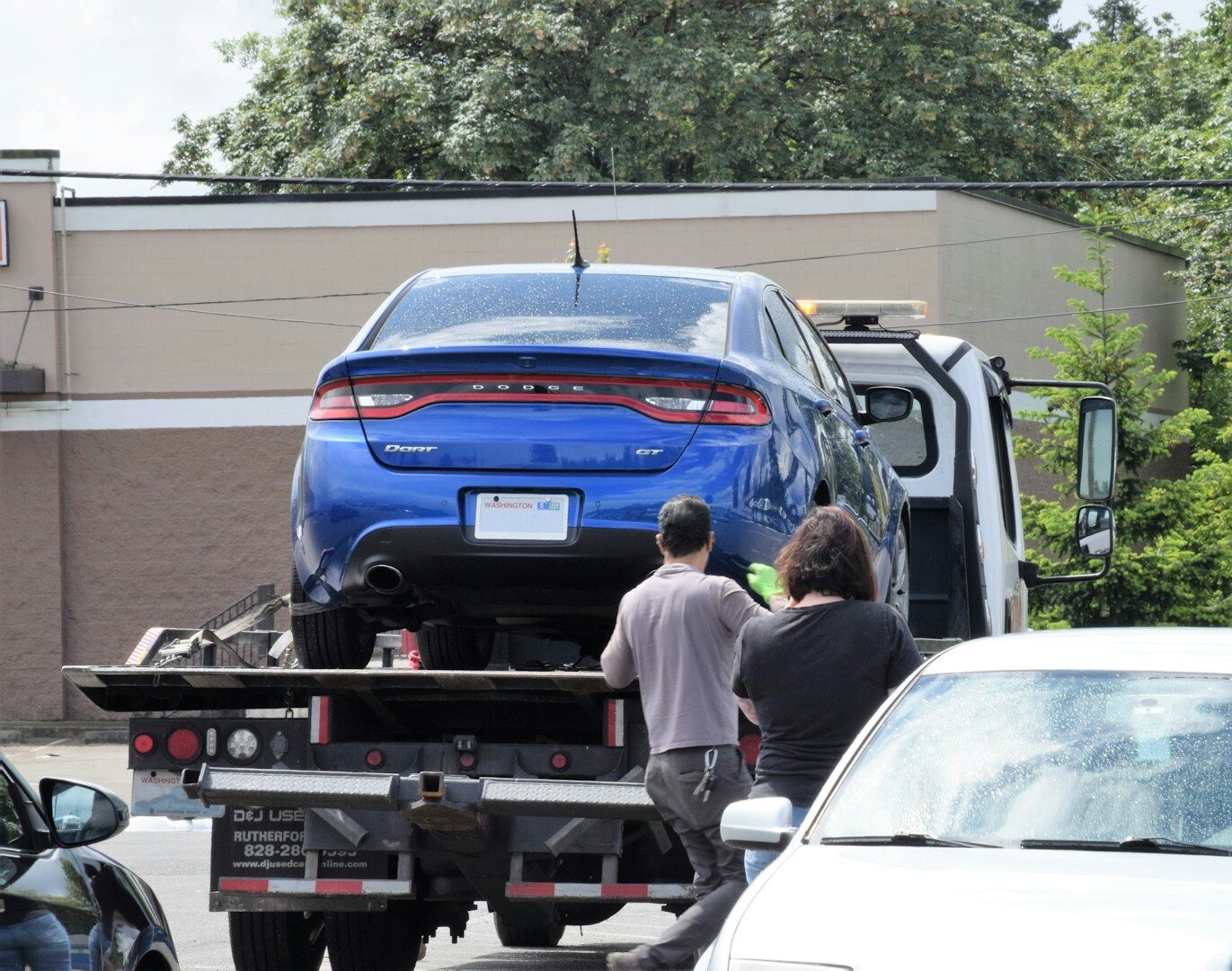
The office drew one distinction carefully, and it is the distinction that turns this into an automotive story rather than a finance story: these were not repossessions. The state alleges the defendants seized consumers’ vehicles that had nothing to do with any car loan, in order to pressure people into paying unrelated debts. In many cases the vehicle was the person’s only way to get to work. In many cases it was worth so little that Massachusetts law already declared it off limits.
The Commonwealth sued in February 2024 and won two preliminary injunctions along the way, one of which sought the return of every seized Massachusetts vehicle within ten days. Worth noting: the announcement says nothing about how the 6,000-plus affected consumers are supposed to find out they are among them.
Why a debt buyer wants a paid-off car, specifically
To understand why cars, you have to understand what these portfolios cost.
The Federal Trade Commission’s study of the debt buying industry, built from more than 5,000 portfolios containing nearly 90 million consumer accounts with a combined face value of $143 billion, found that buyers paid an average of about four cents per dollar of face value. Older accounts sold for less.
Nobody has said what these particular defendants paid, and that FTC benchmark is an industry average rather than a fact about this case. But hold it next to the headline number anyway. At four cents on the dollar, $52 million in face value is roughly a $2 million acquisition. That reframes what “debt relief” means here. The thing being surrendered was bought for pennies.
Now run the same arithmetic from the collector’s side. If a $4,000 judgment cost you $160, a car is not a modest recovery. A car is a return several times your basis, parked outdoors, unguarded, on four wheels that make it trivially easy to remove.
Except the resale value was never really the point, and the state’s own description says so. If you were taking cars in order to liquidate them, you would not target vehicles cheap enough to fall below the exemption floor. You take those cars precisely because the owner cannot replace them, and a paid-off car with a clean title is the cleanest target of all. A garnished paycheck still leaves a person able to work. A missing car does not.
That is not collateral. That is leverage. And it is the same reason legislatures reach for vehicles when they want a penalty to sting, as South Carolina’s new street takeover law demonstrated this month.
The $7,500 fence that gets shorter every year
Massachusetts already protects the family car from creditors. The sixteenth clause of Chapter 235, Section 34 exempts “an automobile necessary for the debtor’s personal transportation or to secure or maintain employment, not exceeding $7,500 of wholesale resale value.” Debtors who are 60 or older, or handicapped, get up to $15,000.
Read that phrase again: wholesale resale value. Not the windshield price at a dealership. Roughly what the car brings at auction, which means the exemption already shelters less vehicle than the number sounds like it does.
Here is the part almost nobody mentions. That $7,500 figure took effect in January 2011 and has not moved since. The used vehicle market has. The Bureau of Labor Statistics index for used cars and trucks stood at 146.478 in January 2011 and 180.965 in August 2026, about 23.5 percent higher. Freeze the protection, let the market climb, and the fence gets shorter every single year without anyone voting on it. Matching the used-car buying power of the 2011 exemption would take roughly $9,270 today.
A number set during the Obama administration is deciding, in 2026 dollars, whose car is worth protecting, while used car prices keep setting records. Every year that gap widens, more working vehicles fall out from under the shelter, and the pool of cars a judgment creditor can legally take grows. No bill required.
The protections you think you have assume the wrong villain
Here is the asymmetry every car owner should sit with for a minute.
If you finance a car in Massachusetts and fall behind, the Motor Vehicle Installment Sales Act puts real speed bumps in the lender’s path. The creditor has to wait at least ten days after default, then deliver a right-to-cure notice carrying a specific statutory heading, then wait 21 more days before accelerating the loan, suing, or repossessing. After a repossession you get a 20-day window to recover the car by paying the balance plus reasonable expenses.
Federally, the Fair Debt Collection Practices Act bars a collector from taking nonjudicial action to dispossess property when there is no enforceable security interest, no present intent to take the property, or when the property is exempt by law.
Every one of those protections was built on the assumption that the person coming for your car is the person who financed your car.
None of it was written with a stranger holding a judgment over a seven-year-old credit card balance in mind.
The rules that do apply were not missing, either. The Attorney General’s own debt collection regulations already prohibit seizing property that falls under a statutory exemption, and restrict threatening seizure at all. So this was never a loophole story. It is an enforcement story. The rule existed the whole time, and it still took a February 2024 lawsuit, two injunctions, and two and a half years to shut the practice down for good.
Twenty years is a long time to stay findable
One more piece of Massachusetts law sets the clock on all of this: a general execution on a judgment is returnable within twenty years. A judgment entered when gas was two dollars a gallon can still reach a car you bought last year.
Twenty years is a long exposure window for any asset, and a paid-off car sits in that window with nothing between it and a stranger’s judgment. It is an extraordinarily long one for the only major asset most households own that broadcasts a unique identifier, in public, from both ends, every time it moves. The infrastructure for locating a specific plate on a specific street has gotten dramatically cheaper and dramatically more capable over the past decade, as the fight over private license plate camera networks keeps demonstrating.
The legal exposure has not gotten shorter. The ability to find a car has improved enormously. Those two curves move in opposite directions, and your driveway is where they cross.
What to remember about a paid-off car
Forget the dollar figures. Forget the company names, which are replaceable and will be replaced.
The idea worth keeping is this. A car loan is a leash, but it is also a fence. Paying it off cuts the leash and takes down the fence in the same motion. A paid-off car is not a safer car. It is an available one.
Massachusetts closed one operation. Everything that made the operation work survived the settlement untouched, and not just in Massachusetts: judgments that trade for pennies, exemption floors written years ago and never indexed, decades-long enforcement windows, and a vehicle that is easier to find today than at any point in automotive history. The Commonwealth removed one operator. It did not remove the opportunity.
So here is the argument worth having. Should the household car be flatly off limits to any creditor who did not finance it, whatever the car is worth? Or does a blanket shield just hand a free pass to people who genuinely owe the money? Tell us where you land in the comments.
Did you know a paid-off car could be seized over a debt that has nothing to do with it? Share your thoughts in the comments.