
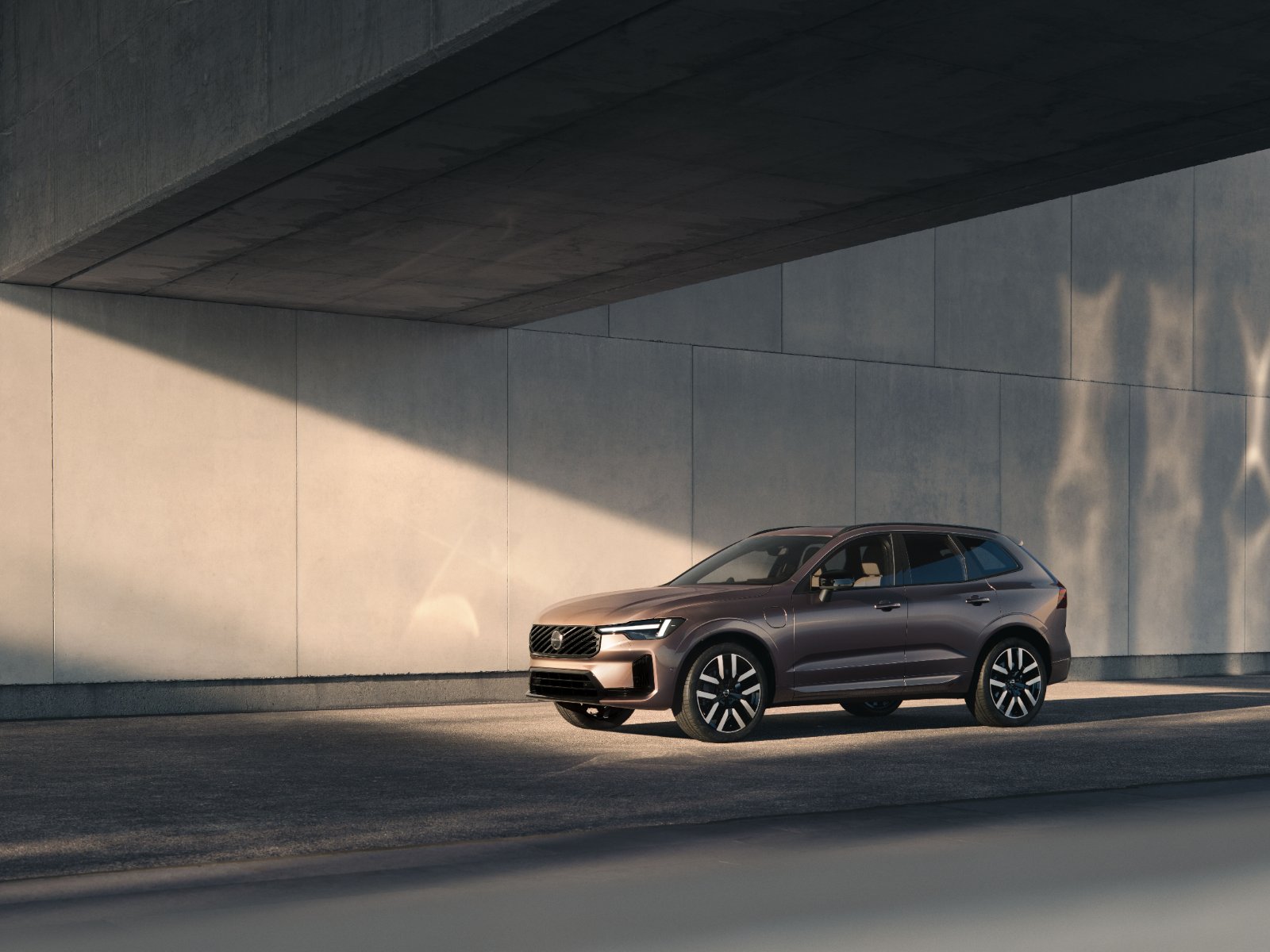
The number Volvo wants you to notice is 200. That is how far the new XC60 plug-in hybrid can travel on battery alone, in kilometers, on Europe’s WLTP cycle. The XC90 manages 160. Both figures are roughly two and a half times what the current cars deliver, and Volvo describes them as “paradigm-shifting.”
The number that actually explains this car is 3.5.
That is the multiple by which Europe’s plug-in hybrids overshot their own laboratory CO2 figures once real customers got hold of them. According to the European Commission’s own analysis of onboard fuel-consumption monitoring data, plug-in hybrids registered in 2021 emitted an average of 139.4 grams of CO2 per kilometer in the real world. On the official test, the same cars emitted 39.5.
Volvo did not build a 200-kilometer plug-in hybrid because customers begged for one. It built one because the exam changed, and a very large battery is the only way left to pass it.
What Volvo announced
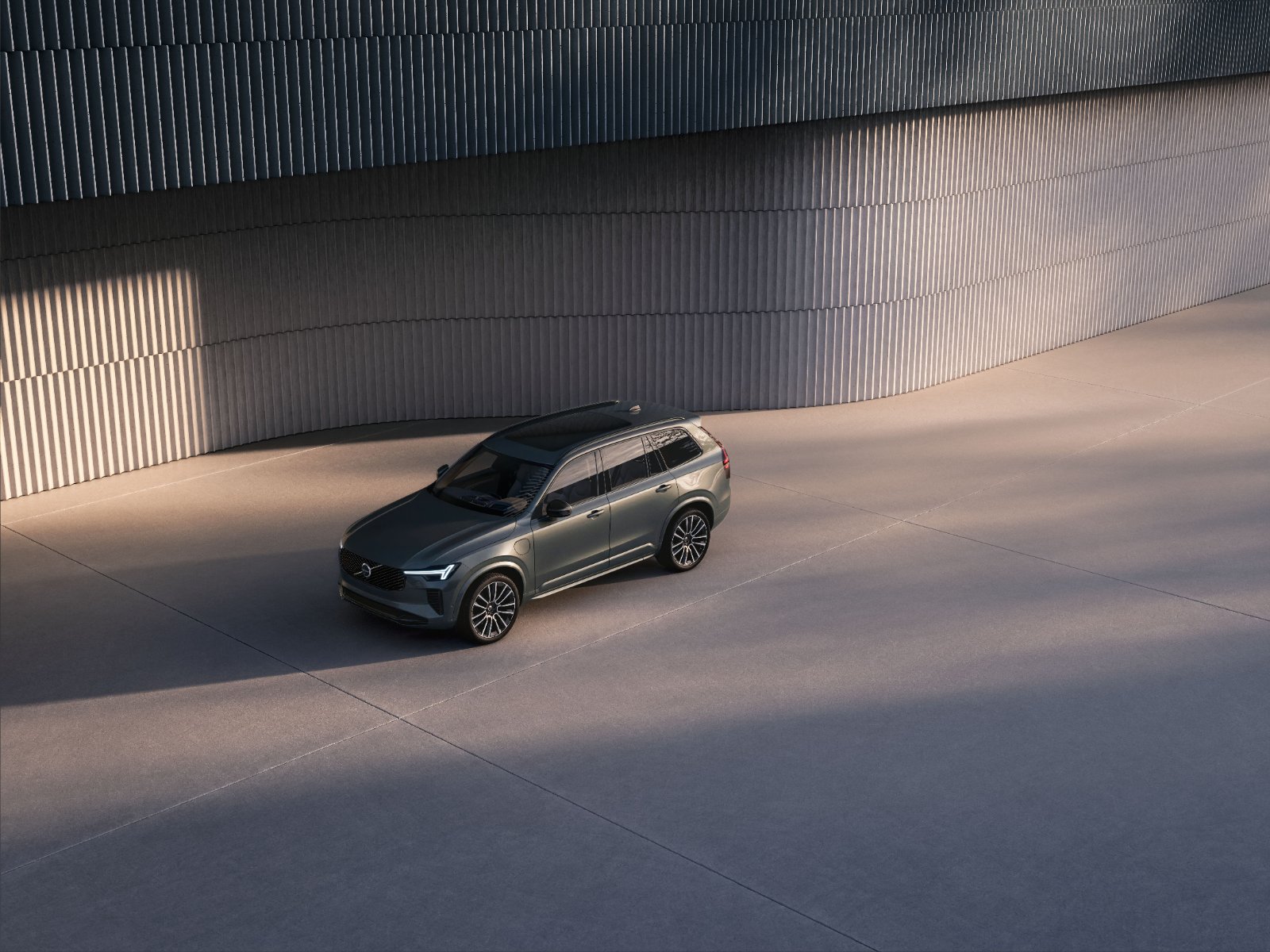
The announcement itself is straightforward. Volvo’s two most important SUVs get long-range plug-in hybrid variants for Europe and the United States, built around what the company calls a “new, larger-capacity, floor-integrated battery” and a more powerful electric motor. The XC60 also gets a comprehensive design refresh, new headlights, a revised interior, an upgraded sensor set and Google’s Gemini assistant. Mild hybrid versions stay on sale. Order books opened today; production starts later this autumn.
Read on its own, it looks like a mid-life update with a bigger battery. Read against the rulebook Volvo has to sell these cars under, it looks like something closer to a survival plan.
The utility factor: the most consequential number nobody advertises
Here is the piece of regulatory machinery that decides whether a plug-in hybrid is worth building.
A plug-in hybrid has two personalities. Driven on a full battery, it emits nothing from the tailpipe. Driven on an empty one, it is a heavy car hauling a gasoline engine, a fuel tank and a dead battery around. Its official CO2 figure is a blend of those two states, and the blending ratio is set by something called the utility factor: the regulator’s estimate of what share of a typical car’s mileage happens on electricity. The utility factor is derived almost entirely from the car’s certified electric range.
For most of the past decade, that estimate was generous. A plug-in hybrid with 50 or 60 kilometers of range was credited with doing the large majority of its driving on battery power, which produced showroom CO2 numbers low enough to slash company-car tax bills across Europe and to drag manufacturer fleet averages down toward their targets. Whether owners actually plugged the cars in was, from the test’s point of view, beside the point.
The Commission’s monitoring data settled that question. Its finding was that plug-in hybrids were “charged and driven in electric mode much less than how they were expected to be used,” with the gap for gasoline plug-in hybrids averaging 238 percent and running as high as 345 percent at some manufacturers.
So the rules were rewritten. Commission Regulation (EU) 2023/443 revises the utility factors in two stages, one landing in 2025 and a harsher one in 2027, the second calibrated on real-world data from the monitoring devices now fitted to every new car sold in the bloc. Nothing about the car changes. The assumption about the driver does, and the official CO2 number rises accordingly.
Which leaves exactly one engineering lever. If you cannot change how often people plug in, you change how far a single plug-in goes. Range is now the only input a manufacturer controls that moves the utility factor back in its favor.
That is what 200 kilometers is for.
Do the arithmetic and the battery gets uncomfortable
Volvo has not published the new pack’s capacity. It does not have to; the existing spec sheets do the work.
The current XC60 plug-in hybrid carries a 19 kWh nominal battery and is certified at up to 47 to 49 miles on WLTP, depending on variant. Call it about 79 kilometers from 19 kWh, or roughly 4.2 kilometers per kWh. Hold that efficiency steady and 200 kilometers requires something in the neighborhood of 45 to 48 kWh. Assume the new motor and the updated body claw back some efficiency and you can argue it down into the low 40s. You cannot argue it down much further, because a bigger battery is also a heavier one.
For scale: the entry-level Volvo EX30, a fully electric car with no engine at all, uses a 51 kWh battery.
So the XC60 plug-in hybrid is about to carry something close to an entire electric car’s worth of battery, plus a four-cylinder engine, plus a fuel tank, plus an exhaust system, plus an eight-speed automatic. That is not a compromise powertrain. That is two complete powertrains, both sized to work alone.
It also explains the styling update. Volvo describes the pack as floor-integrated, which on a platform that has been in production since the mid-2010s is not a drop-in change. It means new floor pressings, revised crash structure, reworked seating geometry and a redesigned rear end to make the numbers work. The new grille is the part you notice. The floor is the part that cost money.
The ownership catch nobody puts in a press release
A long-range plug-in hybrid is a superb car for one specific person: someone with a driveway charger, a commute under 100 miles, and a genuine need to tow or road-trip without planning around chargers. For that buyer, this is close to an ideal machine, and it is the reason Volvo keeps calling plug-in hybrids a bridge.
For everyone else, the maths inverts. An owner who never plugs in has bought several hundred kilograms of dormant lithium, paid for it at purchase, and will pay for it again in fuel consumption, tire wear and eventual depreciation. The regulation that pushed Volvo toward a bigger battery does nothing to make that owner charge it. It only makes the car that punishes them heavier.
There is a repair dimension too. Moving the cells from a protected central spine into the floor puts the most expensive single component in the car into the zone most likely to meet a curb, a deep pothole or road debris. Underbody strikes on high-voltage packs are already one of the quieter drivers of total-loss decisions on electric cars, and a plug-in hybrid with a 45 kWh pack now shares that exposure while still carrying everything that can go wrong with an internal combustion engine. Prospective buyers should ask what pack replacement costs before they ask about the Bowers and Wilkins stereo.
American buyers, read the small print twice
The United States does not use WLTP, and the gap is not trivial. Volvo certifies today’s XC60 T8 at 47.2 miles of electric range in the UK and 35 miles with the EPA. That is roughly a quarter knocked off the same car for the same reason: the American test is less forgiving.
Apply that haircut to 200 kilometers, which is about 124 miles, and a realistic EPA expectation lands somewhere near 90. Still an extraordinary figure for a plug-in hybrid. Just not 124. Volvo’s own footnote calls the range figures preliminary.
The regulatory backdrop is different too, and harsher. There is no American utility-factor reform driving this car. What there is instead is the absence of a subsidy: the IRS now states plainly that the New Clean Vehicle Credit “is not available for vehicles acquired after Sept. 30, 2025.” We covered what that did to the market when the credit expired and again when EV sales fell off a cliff the following month. A long-range plug-in hybrid arriving in American showrooms in 2027 will be sold on its merits, at full price, to buyers who get nothing back at tax time.
Which makes the timing of the other half of Volvo’s American plan worth noticing. In July 2025 the company announced that XC60 production would move to its Ridgeville, South Carolina plant starting in late 2026, plug-in hybrid variants included. Volvo’s own figures put the XC60 at 33 percent of its US sales, with a quarter of those XC60s already plug-in hybrids.
So the long-range plug-in hybrid reaches America at almost precisely the moment the XC60 stops being an import. That is not a coincidence. It is the same tariff arithmetic that pushed Volvo and GM to shift production onto American soil in the first place, applied to the single highest-volume car in the company’s catalogue.
The part that changes everything: the bridge got an extension
Volvo has been calling plug-in hybrids a bridge to full electrification since it abandoned its 2030 all-electric deadline two years ago. Today’s release uses the word again, twice.
Bridges end. This one may not.
On 16 December 2025, the European Commission’s automotive package proposed replacing the 2035 requirement for a 100 percent cut in tailpipe CO2 with a 90 percent cut, the remaining tenth offset through low-carbon steel, e-fuels or biofuels produced inside the EU. The Commission’s own framing is explicit: plug-in hybrids, range extenders, mild hybrids and combustion vehicles can “still play a role beyond 2035.”
Read those two regulatory moves together and Volvo’s decision snaps into focus. Brussels is simultaneously making short-range plug-in hybrids unviable and making long-range ones permanently legal. A 60-kilometer plug-in hybrid is a dead product walking. A 200-kilometer one is a car that can be sold in Europe in 2036.
There is one more piece of timing worth flagging. The Commission has granted manufacturers a three-year averaging window covering 2025 to 2027, letting a bad year be offset by a good one against the 93.6 g/km fleet target. That relief expires in exactly the same year the tougher utility factor arrives. The runway and the wall show up together, and this car has to be on sale before both.
Why Volvo needs this to work
The business context is not comfortable. Volvo’s second-quarter 2026 results showed revenue of SEK 77.7 billion against SEK 93.5 billion a year earlier, an operating margin of 1.1 percent, roughly 3,000 positions eliminated, and a 35 percent collapse in Chinese sales. The company delivered SEK 5 billion in cost savings six months ahead of schedule, which is the sort of achievement a company announces when the top line is not cooperating.
In that environment, new plug-in hybrid variants of the two best-selling models in company history are the cheapest meaningful product action available. No new platform. No new factory. No new nameplate to market from scratch. Volvo’s own release describes them as “efficient investments in the company’s existing line-up,” which is corporate for: we needed something new to sell and we could not afford to invent it.
Note the date, too. Volvo has a strategy update scheduled for 17 September 2026 — two days after this launch. Product first, strategy second, is a sequence worth watching.
Who wins, who loses
Volvo wins, provided the utility-factor recalculation lands where its engineers expect. Dealers win, because they get a genuinely refreshed XC60 without waiting for a new architecture. Buyers with home charging and one parking space win outright.
The awkward loser is the EX60, Volvo’s new electric mid-size SUV, which now has to explain to showroom visitors why they should accept charging constraints when the XC60 parked beside it can cover most of a week on electricity and still cross a continent on gasoline. Volvo says the pair gives customers “a path to full electrification for every customer.” It also gives them a very persuasive reason to postpone the trip.
What to remember
Forget the 200. Forget the 160. Forget the kilowatt-hours, which Volvo has not published anyway.
Remember this instead: battery capacity used to be a marketing decision. Regulators just turned it into a legal one. For twenty years, carmakers chose how much battery to install by asking what customers would pay for. Now they choose by asking what the test will believe.
The plug-in hybrid did not get dramatically better because engineers suddenly got ambitious. It got better because regulators stopped being generous. That is a less flattering story than the press release tells, and a far more useful one for understanding every plug-in hybrid announcement you will read between now and 2035.
If a plug-in hybrid could handle your entire week on electricity and still road-trip on gasoline, would that keep you out of a full EV for another five years — or does hauling two complete powertrains around make it the worst of both worlds? Weigh in below.
Would a bigger battery make you more likely to buy a plug-in hybrid? Tell us in the comments.