
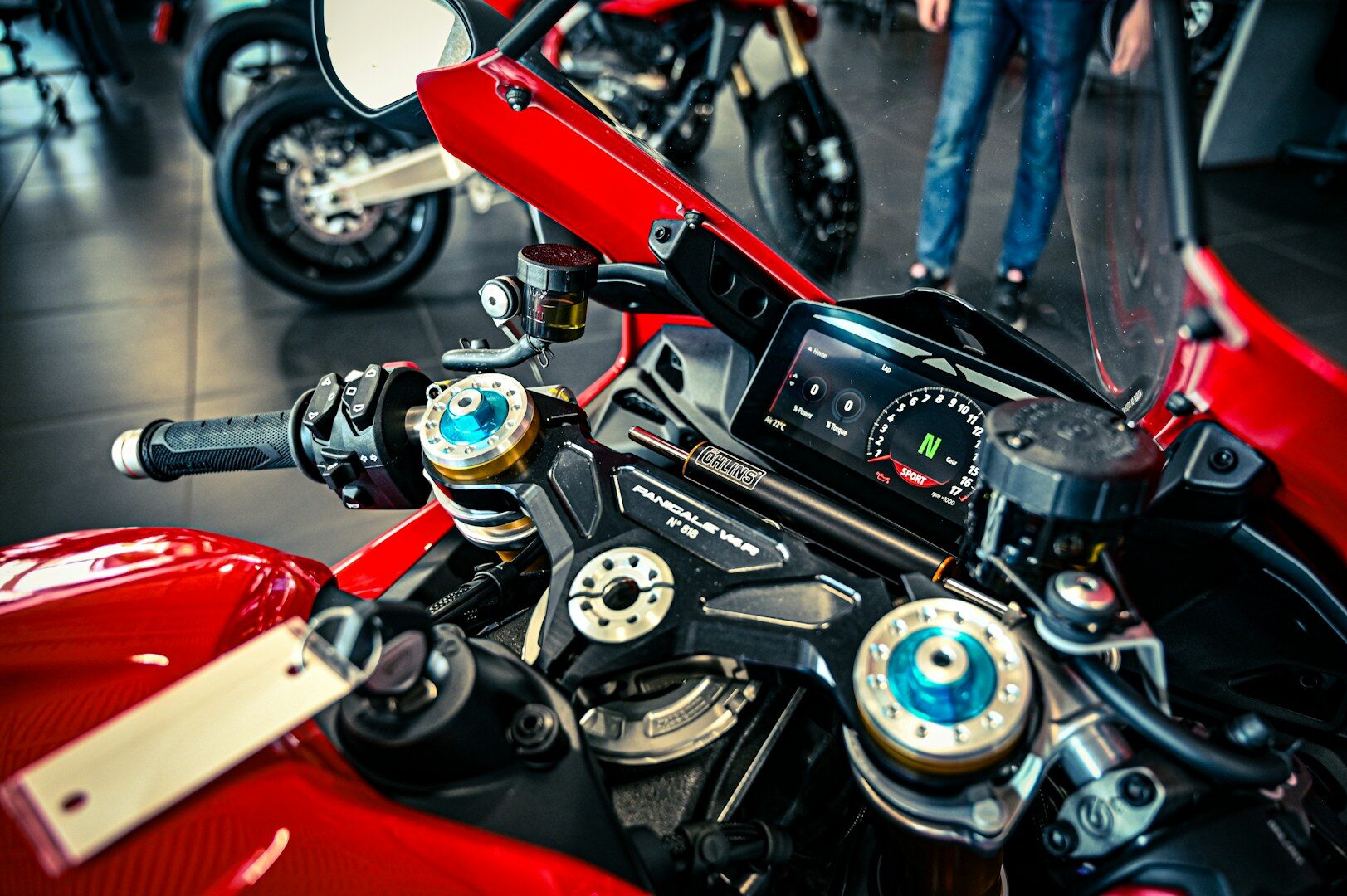
The motorcycle you buy in a few years may have less to tell you about horsepower and more to tell your insurer, your dealer, and the manufacturer’s server farm. That’s the real story tucked inside a new market forecast that, on its face, is just a growth number.
According to a new report from MarketsandMarkets, the global connected motorcycle market is projected to grow from $0.52 billion in 2026 to $3.30 billion by 2033, a 30.3% annual growth rate. That growth isn’t coming from aftermarket GPS trackers or phone-mount navigation apps. It’s coming from telematics hardware built directly into the motorcycle at the factory. BMW Motorrad is the industry’s clearest example: its connectivity equipment is wired straight into the bike’s TFT display, its Connected App, and its rider-communication systems, and BMW has confirmed the hardware is factory-fitted only. It cannot be added later.
That distinction, tethered-and-integrated versus bolt-on, is the part worth understanding, because it’s a business decision dressed up as an engineering one. Wiring a telematics control unit, GNSS module, eSIM, and battery-management system directly into a motorcycle’s electrical architecture does simplify packaging and cut wiring complexity. But it also hands the manufacturer permanent, exclusive control over the data pipeline: what gets collected, who can access it, and which features get switched on or off after you’ve already paid for the bike. A dongle can be unplugged. A factory-soldered system can’t, which means the manufacturer, not the owner, decides how long the connected part of a connected motorcycle stays connected.
Cars taught manufacturers how to keep billing owners long after the sale was final. Motorcycles are next in line.
Car buyers have already lived through this shift. A recent Auto Wire report showed how factory telematics quietly became a pipeline to insurance companies, often without owners realizing their driving data had a second customer. Regulators are still catching up: one Lexus executive in Australia has publicly called for car data rules as strict as safety standards, which is itself an admission that no such rules exist yet. Motorcycles are simply running the same playbook about a decade behind cars, factory-integrated hardware first, monetization and policy fights later.
None of this makes connectivity a bad thing. Remote diagnostics and theft tracking are genuine safety upgrades, and electric motorcycles raise the stakes further: battery state of charge, range, and charging status all need monitoring that a phone app alone can’t reliably provide. But it does mean shopping for a connected motorcycle is no longer just about which apps it supports. It’s about who owns the relationship after the sale, and whether that relationship comes with a bill.
Would you pay extra for a motorcycle that stays in constant contact with its manufacturer, or would you rather ride something that can’t talk back?