
Most tech funding rounds follow a familiar script. Venture firms write the checks, and the startup goes hunting for customers. STELLA Automotive AI skipped a step. One of its customers wrote the lead check.
The Tampa company closed a $22.1 million Series B in early August, led by Maroone USA, the dealer group headed by veteran retailer Michael Maroone. Maroone is not a passive backer. His dealerships use STELLA’s software. His group’s chief operating officer, William Knowles, sits on STELLA’s board. Mike Maroone sits on its dealer advisory board. And the showcase case study on STELLA’s own website is a Maroone campaign.
There’s nothing improper about it. It’s just the most interesting part of the deal.
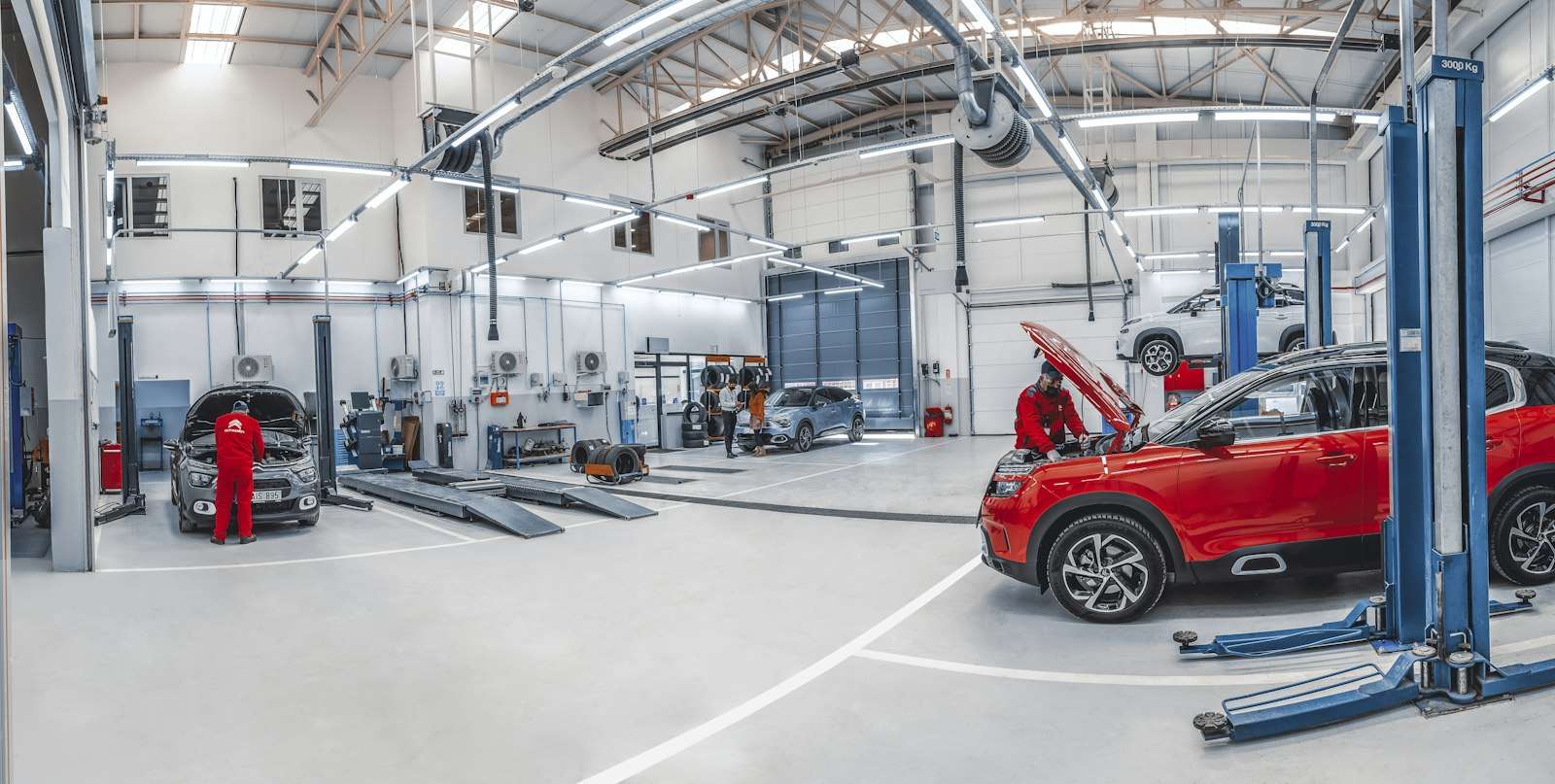
Car dealers are building the tool they wanted, and they’re aiming it at the part of the store that keeps earning long after the sale: the service drive.
What STELLA actually sells
STELLA builds AI agents that answer dealership phones, book service appointments directly into the store’s scheduler, follow up on sales leads and, through a newer product called Catalyst, place outbound calls and texts on the dealer’s behalf. The company says its software connects to the dealer management and CRM systems stores already run, including Tekion, CDK and Reynolds & Reynolds. Its product list also includes agents built for lead follow-up, lapsed-customer recovery and open-recall outreach.
According to the August announcement, the round combined fresh capital with earlier convertible notes that converted into equity. The money is earmarked for commercial expansion, go-to-market work and product development.
The federal paperwork is more revealing than the press release. STELLA’s Form D, filed with the SEC on June 17, shows the offering opened June 1 with a ceiling of just under $26 million. By filing day, the company had sold about $22 million to 29 investors, every one of them accredited, and paid $209,870 in sales commissions. Under revenue, STELLA checked “Decline to Disclose.” That is routine for a private company, and it is also a good reminder to read every growth claim in this category as a claim, not a number.
Three years earlier, it was the same story. STELLA’s 2023 Form D shows a fully subscribed $4 million round of debt securities sold to 12 investors. The seed announcement named the backers: Maroone USA, Pohanka Automotive Group, Czubay Family Enterprises and The Presidio Group, the boutique bank that advised on this round too. Presidio CEO Brodie Cobb now sits on STELLA’s board. Geoffrey Pohanka sits on its dealer advisory board. From its first dollar, this company has been financed by the people who use it.
Why a dealer would bankroll its own vendor
Think about the phone from the dealer’s side.
NADA’s 2025 Annual Financial Profile counts 16,990 franchised new-car dealerships in the United States. Together they wrote 276,128,228 repair orders in 2025 and booked about $164.6 billion in service and parts sales. Do the division and the average store opens more than 16,000 repair orders a year. A big share of those begin with somebody trying to get an appointment.
Those same stores employ an average of 16 technicians apiece, 278,424 in all. Technicians fix cars. They do not answer phones. That job falls to service advisors and business-development staff who are also greeting customers in the lane, writing repair orders and chasing repair approvals. When the drive gets busy, the ringing phone is the first thing to lose.
The showroom sells you a car once. The service drive sells to you for as long as you own it, provided somebody picks up.
That is why dealer money matters here. An outside venture fund has to take a startup’s word on results. A dealer group can look at its own appointment book. When an operator with that data doubles down and puts its COO in the boardroom, it says more than any quote in a press release.
The rest of the board roster points the same direction. Sidney Haider, senior vice president of corporate development at Reynolds & Reynolds, one of the big dealer-software companies whose systems STELLA has to plug into, is a director. For a product that lives or dies on integration, that is a useful seat to have filled.
Then there is FordDirect, the joint venture between Ford and its franchised dealers, which named STELLA a strategic vendor in August for Ford and Lincoln stores. So a channel partly owned by dealers picked a vendor financed by dealers. Retail is building its own AI supply chain instead of waiting for a tech giant to sell it one.
The math behind the pitch
STELLA’s Maroone case study describes a 30-day Catalyst campaign aimed at 1,000 consenting contacts. It generated $22,000 in service revenue at an average repair order of $250, for what STELLA calls a 15x revenue yield.
Work it backward. At $250 a ticket, $22,000 is 88 repair orders, so roughly one in every 11 customers contacted came back through the door. If “yield” means revenue divided by what the dealer paid, the campaign cost somewhere around $1,500. STELLA does not publish pricing, and one vendor-published case study is not an audit. Still, the logic holds: answering the phone captures demand that already exists. Calling people creates it. That is why the newest product is the outbound one.
The most important word in the case study is “consenting”
That word carries a lot of weight.
In February 2024, the Federal Communications Commission ruled that AI-generated voices count as “artificial” voices under the Telephone Consumer Protection Act. Under the FCC’s TCPA rules, an artificial-voice call to a cell phone generally requires the recipient’s prior express consent, and one that includes an advertisement or counts as telemarketing requires prior express written consent. The FCC also noted that such calls must identify the business responsible at the start and, when they are telemarketing, give people a way to opt out.
A friendly voice calling to say your car is due for service and offering a Tuesday slot feels like a courtesy. Legally, it can look a lot like a telemarketing call made with an artificial voice. So the value of outbound dealership AI does not depend only on how human it sounds. It depends on whether the dealer can prove you said yes.
STELLA says Catalyst runs “compliant voice and SMS outbound campaigns.” Software can follow the rules. The consent still has to exist in the dealer’s records first. Phone-rule liability is not theoretical in the car business, as O’Reilly’s TCPA settlement showed parts retailers this summer.
The strongest case for this technology is sitting on STELLA’s own product list: recall outreach. Every open recall is a known defect sitting in a driveway, and new campaigns keep landing every week. If a tireless AI caller gets more of those vehicles into a service bay, that is a better use of the tool than pushing tire rotations. Owners who don’t want to wait for the call can check their VIN anytime at NHTSA.gov/recalls.
Who wins, and who doesn’t
Dealers win if the pitch holds: more booked appointments without more headcount. Customers win something too. A scheduler that answers on the first ring at 11 p.m. beats voicemail at 11 a.m.
The losers are easier to spot in STELLA’s older paperwork than its newer marketing. In the 2023 seed announcement, a Presidio managing director said STELLA’s first product “replaces a labor-intensive process” and lets dealers redeploy staff. Redeploy is a gentle word. The call-center and business-development jobs that dealers have staffed for decades are exactly what this software is built to absorb, the same pressure showing up on factory floors.
Who’s really calling
The next time your dealer calls with a service reminder and the voice on the line is patient, polite and awake at 9 p.m., know who paid for it. Not a Silicon Valley fund chasing the next chatbot. Dealers, the same businesses that have spent years losing customers to unanswered phones and full voicemail boxes.
The robot isn’t mainly there to replace the service advisor. It’s there so an unanswered phone is never the reason you took your car somewhere else.
Would you rather book your next service appointment with an AI that answers instantly at midnight, or wait on hold for a human? Where do you draw the line?