
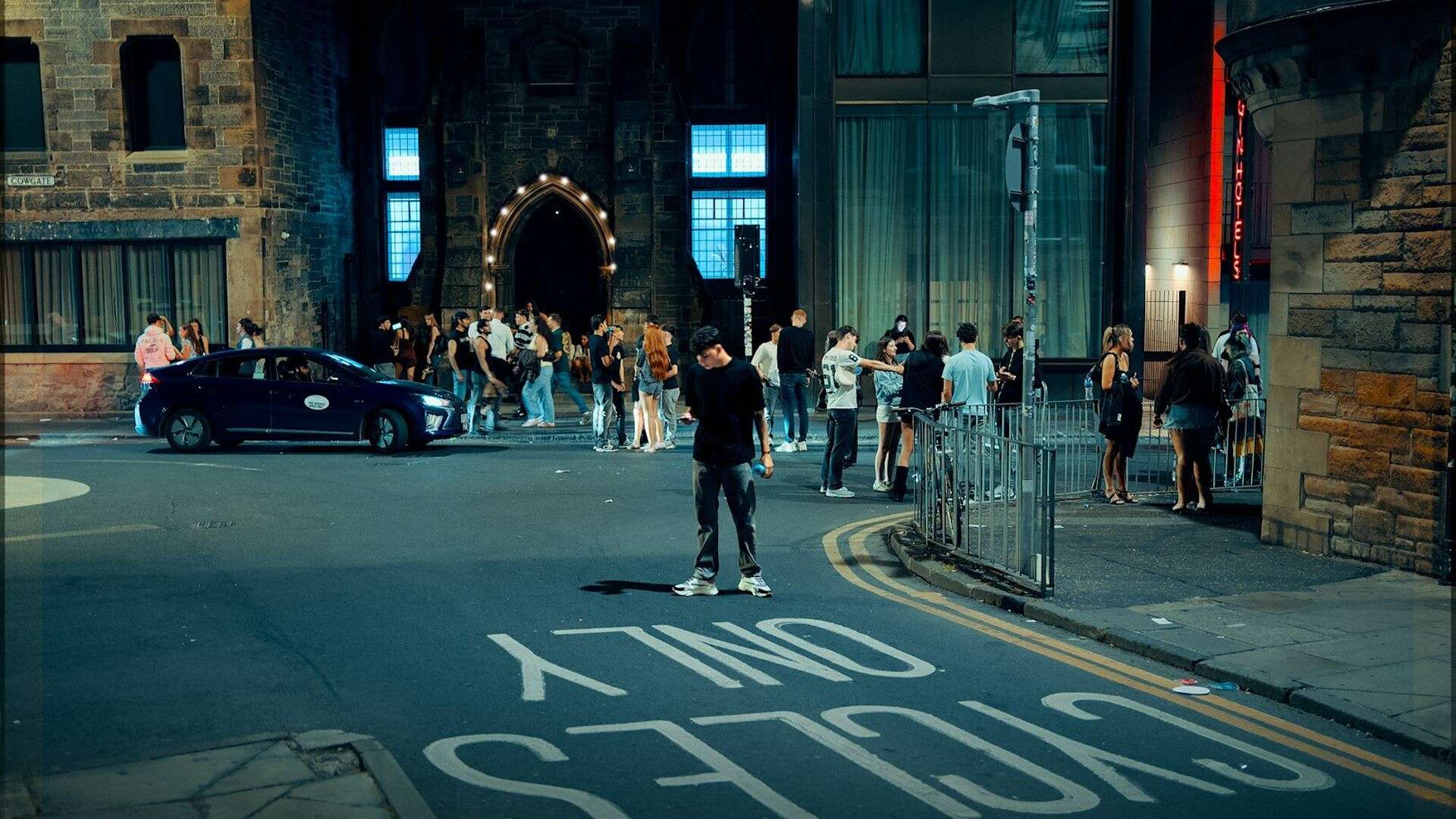
Portland City Council voted 11-1 on September 23 to accept $207,411.35 to fight street takeovers. According to the city’s ordinance, that money covers police work between July 8 and September 30, 2026. So the city formally added the money to its budget with one week left before it expired.
That sounds like bureaucratic slapstick, and partly it is. It also shows how traffic-safety money actually moves. Anyone who has watched a Charger fishtail through a crowd of phone-wielding spectators on a Saturday night will want to know how the response works, so here is where the money goes, what it is supposed to accomplish, and what the law now says if you’re the one holding the wheel.
It’s NHTSA Money Wearing an ODOT Jacket
The check comes from the Oregon Department of Transportation’s Transportation Safety Office, but most of it starts in Washington. The grant agreement lists $200,000.96 in federal funds from NHTSA, passed through ODOT under federal assistance listing 20.616. That federal origin comes with conditions attached. Anything bought with the money has to comply with Buy America rules, the city owns the equipment but pays to maintain it, and the gear has to stay in use for the program it was bought for.
Related Articles
- Ford’s Wet Timing Belt Case Went From 44 Complaints to 1,299. The Part That Clogs Can’t Be Reached Without Pulling the Engine.
- The New Fuel Economy Rules Carry a $0 Fine. The Part That Actually Matters Is Buried 700 Pages Deep.
The grant also pays only after the fact. ODOT reimburses Portland for eligible costs incurred after the agreement took effect, and the city has to file claims and quarterly reports to get paid. Portland Police Bureau Lieutenant Greg Moore and Sergeant Mike Currier signed the agreement on June 23. The city administrator signed on July 7, and the agreement took effect July 8. The council vote in September was the city giving itself legal authority to spend and book the money. Councilor Sameer Kanal added an emergency clause so the ordinance took effect immediately instead of after the usual waiting period, and that amendment passed unanimously.
There’s a detail buried in the agreement that makes the timing even tighter. Any request to extend the grant period has to be filed at least six weeks before the period ends. Six weeks before September 30 was mid-August, which is roughly a month before the full council held its first reading on September 16.
Where the Dollars Actually Land
This isn’t a gadget budget. The line items in the project budget break down like this:
- $147,403.00 for personnel
- $25,789.71 for benefits
- $34,218.64 for equipment
- $0 for printing, contracts, or overhead
People account for about 83.5 percent of the grant. PPB adds a $50,000 match from its General Fund, all of it for personnel. That brings the total to roughly $257,000 for four planned missions, or about $64,000 per operation. That’s expensive until you look at what a mission involves. The bureau says it will use its own ground and air fleet, sworn officers, dispatchers, and public information officers. The Multnomah and Clackamas county sheriffs, Oregon State Police, Gresham police, and Port of Portland police are all expected to take part, and none of them are paid from this grant.
The equipment line covers “takeover site static mounted cameras” plus vehicle and body camera accessories. The bureau says that gear is meant to support both the missions and follow-on prosecution. That second purpose matters more than it might seem. Breaking up a takeover ends one night of trouble, but video of an identifiable car burning rubber in a blocked intersection is what makes the forfeiture laws below actually usable in court.
Whether any cameras could be bought, federally compliant and properly procured, in the seven days between the vote and the deadline is a fair question. Nothing in the city’s paperwork answers it.
The Scorecard Grades on a Generous Curve
Every grant like this includes an evaluation plan, and this one is surprisingly specific. PPB has to run four focused missions and support each one with media releases before and after. The headline goal is this: during at least two of the four missions, officers must restore unrestricted traffic flow within one hour of detecting a takeover.
So the passing grade is half. In most classrooms 50 percent is an F, but here it counts as success. That’s less cynical than it sounds. Clearing an intersection full of cars, drivers, and a four-figure crowd without starting a stampede or a pursuit is not simple work. It’s notable that the grant file includes an International Association of Chiefs of Police reference document on vehicle pursuits among its attachments.
The accountability piece has a set deadline. A final evaluation report is due within 35 days after the grant ends, which puts it in early November. It has to say whether the four missions happened, whether two of them met the one-hour target, and, if not, why not. If you want to know whether this money did anything, that report is the document to request.
Why Portland Says It’s Worth It
The city’s case rests on numbers from its grant application. Portland counted 139 street racing events in 2023. Three of them were multi-day gatherings that drew around a thousand people. Those events generated 238 calls for service and resulted in four vehicle-related deaths. The city attributes 12 homicides to takeover events since 2021. At a large event in April 2024, three pedestrian spectators were hit by cars doing burnouts in an intersection.
The broader trend is moving in the right direction. Portland traffic deaths fell from 69 in 2023 to 57 in 2024 and 39 in 2025. The bureau partly credits the rebuilt traffic team and dedicated enforcement missions. Speed was involved in 41 percent of the 2025 deaths.
On the oversight side, Kanal’s other amendment moved $10,370.57, equal to 5 percent of the grant, to the Office of Community Based Police Accountability to satisfy a charter requirement. That money came from the city’s General Fund contingency, not from the grant. The amendment passed 8-4. Council Vice President Olivia Clark was the only no vote on the final ordinance.
What the Law Now Says About Your Car
This is the section car owners should read twice.
State law changed in 2023. Oregon’s Senate Bill 615 rewrote the offense of organizing a speed racing event. It now covers anyone who blocks or barricades a highway, or helps someone else do it, to help others race or do burnouts. A first offense is a Class A misdemeanor. A second conviction within five years is a Class C felony.
SB 615 also expanded reckless driving. Breaking your rear tires loose, or spinning them continuously so they leave marks, in front of two or more people gathered to watch is now reckless driving and a Class A misdemeanor. That version of reckless driving was also added to Oregon’s criminal forfeiture list. In practice, that means the state can go after the car itself, not just the driver.
Portland has its own ordinance on top of that. City code section 14A.30.080 makes it an offense to knowingly drive in an unpermitted, coordinated event that shows off a vehicle’s power or handling in curves or circles, including by breaking traction. It separately makes it an offense to use a vehicle or other obstacle to block an intersection for such an event. The penalty is up to 30 days in jail and a $500 fine. First-time offenders may be offered diversion unless someone other than the defendant was hurt or killed.
Related Articles
- One Rusty Bolt Has VW Recalling 2.86 Million Cars Worldwide. Here Are the 208,724 in America.
- Kentucky Wants Street Racers to Watch Their Cars Get Crushed. The Bill Keeps Dying Anyway.
The clause that should worry anyone who lends out a car is the towing provision. Officers can tow a vehicle as evidence “without respect to the person’s ownership” if they have probable cause to believe the driver committed either offense. The owner can then try to get the car back through the normal legal process.
What that means in practice:
- Parking can count as participating. Leaving your car across a lane to help set up a circle fits the staging offense in the city code, and it can also fit organizing under state law.
- Lending your car is a real risk. If a friend takes your car to a takeover, your name is on the title of a vehicle that can be towed as evidence and, under state law, possibly forfeited.
- Expect insurance consequences. A misdemeanor reckless driving conviction is exactly the kind of record underwriters look for. Before you assume your policy would cover damage from a takeover, check whether it excludes racing or speed contests.
- Your car pays too. Sustained burnouts and donuts are hard on tires, clutches, differentials, and cooling systems. A sanctioned drift day or autocross costs less than a forfeited car and puts you on a surface built for it.
- There is a legal route. State law exempts events that have a permit from the road authority. That’s harder to arrange than posting a location on social media, but it’s the version that doesn’t end in court.
The Real Test Arrives in November
A $207,000 grant spread over four missions isn’t going to end takeover culture in a metro area this size, and the city’s own filing says the work will continue only as funding allows. What this round does produce is a paper trail: mission data logged under case numbers, arrest, citation, and seizure counts included in media releases, and a final report that has to say plainly whether police cleared at least two takeovers within an hour.
If the report shows missions consistently hitting that one-hour mark and forfeiture cases getting through court, Portland will have a template other cities will copy. If it comes back with “why not” answers, it will show how hard it is to fight a problem that happens on Saturday nights with a grant process built around quarterly reports.
Top photo: Bruno BD via Unsplash.