
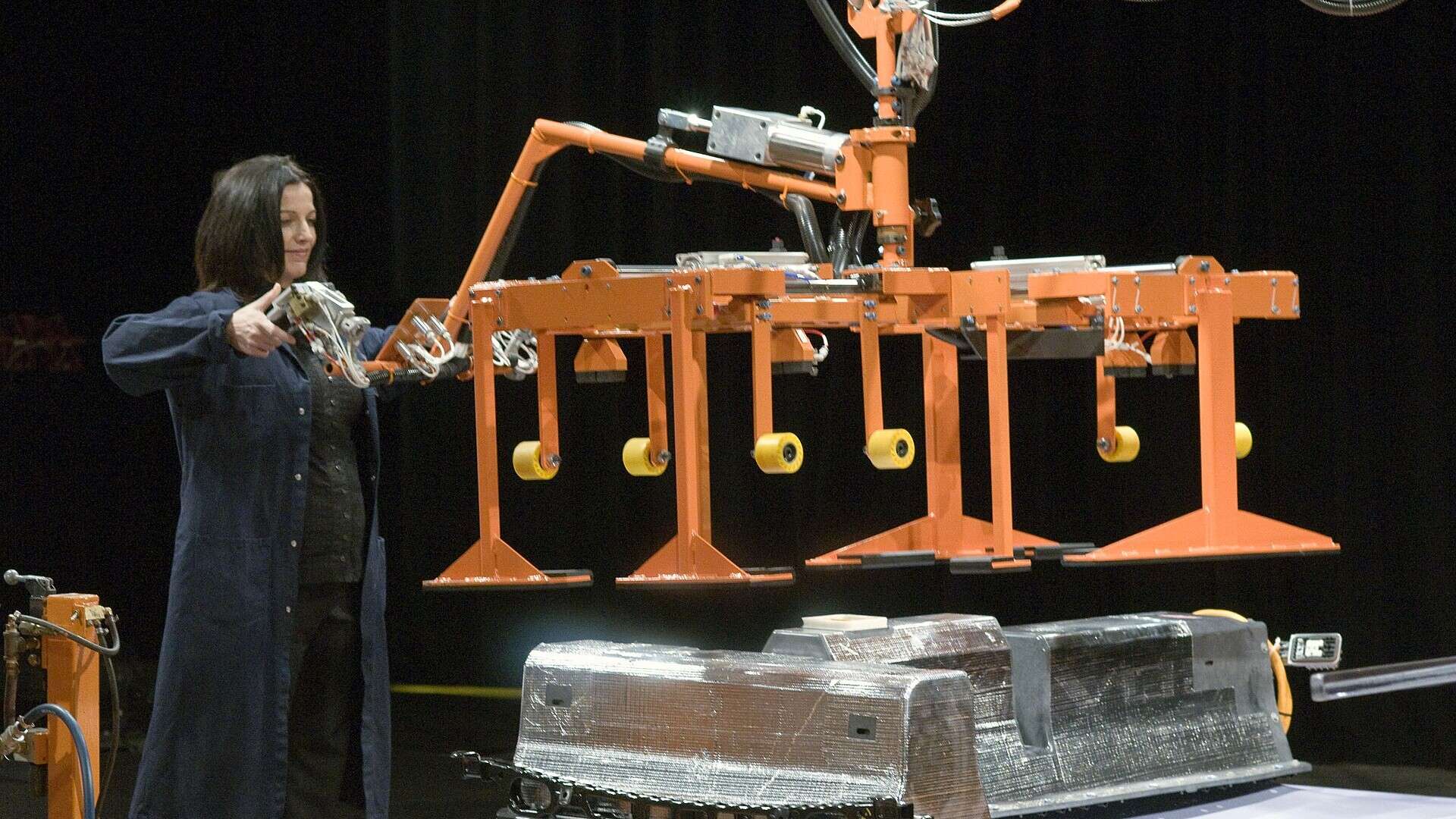
On Jan. 7, 2010, General Motors rolled the first Chevrolet Volt battery pack off a new assembly line in Brownstown Township, Michigan, while its CEO, the governor and the U.S. Energy Secretary watched. GM called it the first lithium-ion battery pack plant in the country run by a major automaker. It was also a rental. GM’s original $43 million plan in 2009 covered renovating and leasing an empty building.
Sixteen years later, GM is letting that lease run out. The company has confirmed it will close Brownstown Battery Assembly, and Automotive News, which first reported the closure, says the plant will be decommissioned by summer 2027, when the lease ends.
News of the closure landed the same week GM reported third-quarter results and announced that its board had authorized a new $20 billion share repurchase program. That is about 465 times what GM said it would spend to get Brownstown running.
GM says this isn’t about EVs
A GM spokesperson told TechCrunch that the closure “is not related to GM’s electric vehicle strategy,” and said the site’s lease was nearing its end. Employees and work will move to other GM facilities, the spokesperson said, without naming them.
The staffing numbers are harder to separate from that strategy. According to Automotive News, Brownstown employed about 300 people at its peak and is down to fewer than a dozen after GM cut output in response to weaker-than-expected EV demand. Affected workers were notified earlier this year and offered jobs at other area plants, according to the report.
The building, meanwhile, grew. The 160,000-square-foot Volt plant of 2009 is now listed at 480,000 square feet. Split among fewer than a dozen remaining employees, that works out to more than 40,000 square feet apiece, or roughly the footprint of a midsize supermarket per person.
What Brownstown builds now
Brownstown’s recent customers are two of GM’s lowest-volume, highest-priced electrified models. It has assembled battery packs for the hand-built Cadillac Celestiq, and batteries and electric drive units for the hybrid Corvettes, beginning with the E-Ray and continuing with the newer Grand Sport X and the ZR1X, which are assembled at GM’s Bowling Green, Kentucky, plant.
GM has not said publicly where that work goes. The enthusiast site Corvette Blogger, citing contacts at Chevrolet, reports that drive-unit production for the hybrid Corvettes is moving to GM’s Rochester Operations plant in New York and battery production to Factory Zero in Detroit. GM also hasn’t said which facility will supply service and replacement packs for the Celestiq and the Corvette hybrids once Brownstown is empty. For owners of six-figure cars built in small numbers, that question matters more than where the next new pack is made.
The week in numbers
By most measures, GM’s quarter was strong. According to its third-quarter release, revenue rose 2.9% to $50.0 billion, net income attributable to stockholders more than doubled to $3.3 billion, and EBIT-adjusted climbed 21.6% to $4.1 billion. The company raised its forecast for adjusted automotive free cash flow to $11.5 billion to $12.5 billion.
It also narrowed its full-year profit forecasts, and the stock went the other way. Adjusted EPS guidance is now $12.75 to $13.75, a range whose $13.25 midpoint sits below the $13.41 analysts expected, according to LSEG data cited by Reuters. GM shares fell about 6% in trading on Oct. 20.
GM says it has finished the $6 billion repurchase program it announced in January, and its share count has dropped from 904 million at the end of 2025 to 849 million as of Sept. 30. The new $20 billion authorization has no expiration date. On the earnings call, CEO Mary Barra declined to give it a timeline: “We will be opportunistic as we have been over the last several years.”
The same release shows what GM’s EV retreat has cost so far: $238 million in “EV strategic realignment” charges in the third quarter and $3.59 billion over the first nine months of 2026. GM leaves those out of its adjusted earnings. On the call, CFO Paul Jacobson said the company had “substantially completed the material cash charges we expect to incur” in that restructuring.
One lease ends, another one begins
Brownstown wasn’t only a battery building. In 2017, GM and Honda set up their fuel-cell manufacturing joint venture inside it, and part of the building served as that venture’s headquarters. That partnership has since been dissolved.
GM’s other hydrogen site is in Detroit, where it had planned to build fuel-cell systems with supplier Piston Automotive in a 300,000-square-foot plant, backed by a $55 million investment and 150 planned jobs. GM has since abandoned that program. According to Automotive News, GM recently took over the building’s long-term lease from Piston and is weighing other uses for it, with no decision announced.
So GM is walking away from the leased building where its electric future started while holding a new long-term lease on a building whose original purpose it has already canceled.
GM may be right that Brownstown’s closure comes down to a calendar, not a strategy. Leases end. In 2009, GM made this building the starting line for its electric push, on a lease. In 2026, with $20 billion set aside to buy back its own stock, it is letting that lease lapse.
Hybrid Corvette and Celestiq owners: has anyone told you where your replacement battery pack will come from after summer 2027?
Top photo: GM Brownstown Battery plant operations manager Marisol McCormick delivers the first Chevrolet Volt battery pack off the line on Jan. 7, 2010. Photo: Steve Fecht for General Motors, via U.S. Department of Energy / Wikimedia Commons (public domain)