
For now, getting a speeding ticket on two roads in Northeast Tacoma works less like traffic enforcement and more like a raffle. In their first four weeks, the city’s two newest speed cameras flagged close to 400,000 drivers over the 40 mph limit. Tacoma says it will mail tickets to 100 of them per camera per day.
Which drivers get the $145 citation is up to software that picks at random from each day’s pool of violators, with the odds tilted against the fastest ones. “The system itself will just randomly select of the available speeders which one gets citations,” Eric Huseby, the city’s automated enforcement program manager, told KOMO News. More serious violators, he said, are weighted more heavily.
Two cameras, one month, a lot of mail
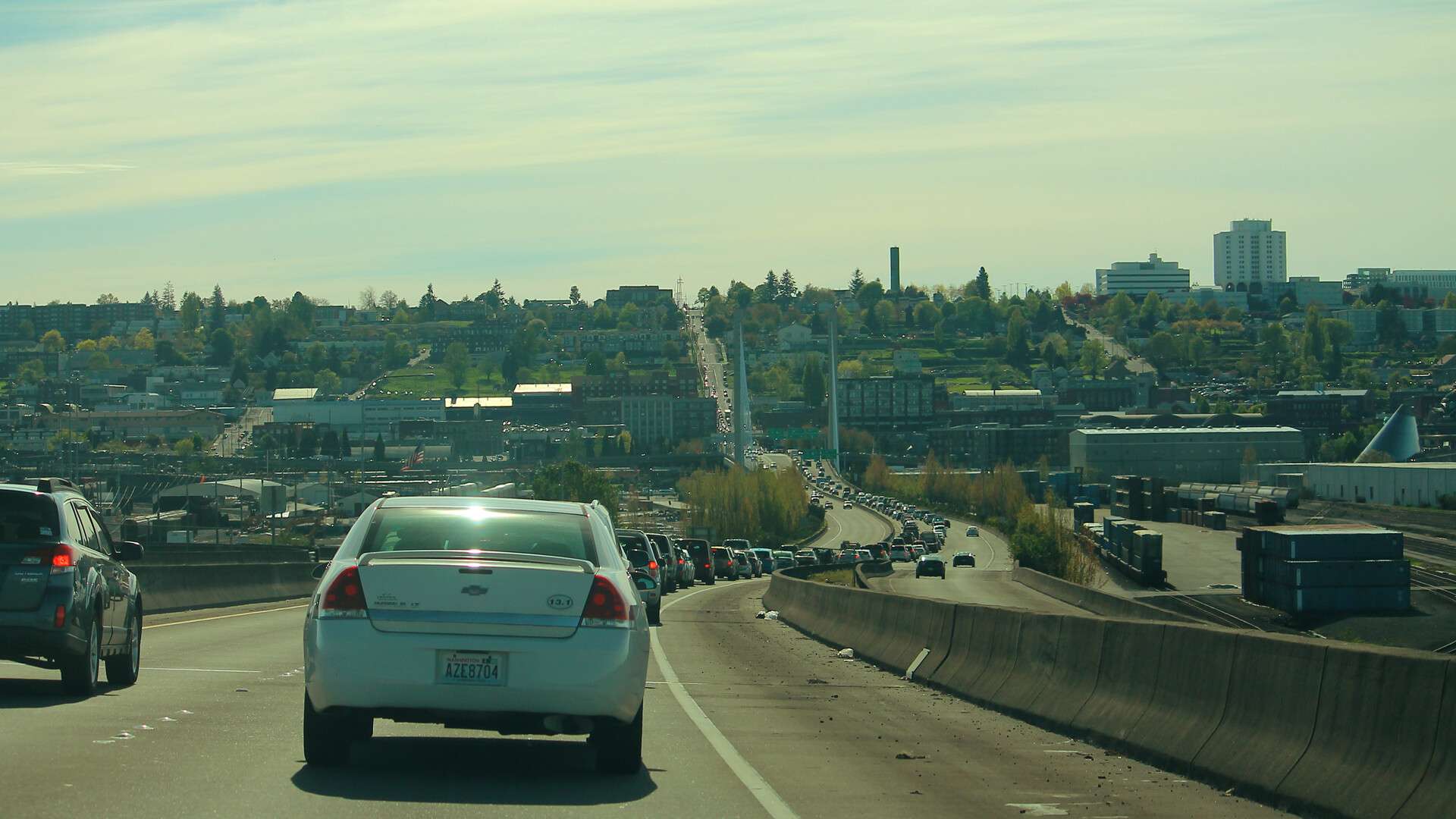
One camera sits on Norpoint Way NE and the other on Marine View Drive, the stretch that carries State Route 509 through Northeast Tacoma. Each watches one direction of traffic. The city announced both in an Aug. 14 news release, switched them on Sept. 14, and gave drivers a one-month warning period in which speeders got a notice instead of a bill.
The warning notices had no trouble finding recipients. Between Sept. 14 and Oct. 11, about 515,000 vehicles passed the cameras and roughly 77% were over the limit, according to city data reported by The News Tribune. That works out to a little over 14,000 speeders a day. Huseby’s own estimate to KOMO was “about three-quarters.” One driver was clocked at 88.8 mph, according to city figures reported by KING 5.
The odds of a 100-ticket day
Real citations began Oct. 14. If warning-period traffic held, each camera would log about 7,000 violations a day and issue 100 tickets. That’s roughly a 1-in-70 chance for any given speeder on any given trip, before the weighting kicks in. The city says speeding has already dropped 12% at the Norpoint Way camera and 20% at Marine View Drive, KOMO reported, which improves the odds a little for whoever is still speeding.
There is also a cutoff before the drawing. City officials told FOX 13 they apply a speed threshold to screen violations, and they won’t say what it is. The reason, according to that report, is to keep drivers from treating the number as a free buffer over the limit.
The scale is new for Tacoma. Until September the city had one fixed speed camera, on Bay Street (SR 167). It produced 28,933 speed citations in all of 2025, according to the city’s 2025 automated enforcement annual report. The two new cameras logged about 14 times that many violations in four weeks. Every camera in the city’s program combined, counting speed, school zone and red light, generated 50,011 citations last year.
Even with the cap, 200 tickets a day across two cameras works out to about 73,000 a year, more than the whole program issued in 2025.
Why Tacoma can’t just mail them all
City officials told The News Tribune the limit comes from the company that runs the cameras. Tacoma’s program page names that vendor as NovoaGlobal, which supplies “the systems, equipment, and software.” City representatives also told FOX 13 that processing every violation would be financially prohibitive, and officials told KOMO that citing everyone would overwhelm city resources and the court system.
Every ticket also needs a person. Under the city’s process, camera evidence goes to a Tacoma police officer who reviews the photos and video before a citation is mailed, according to the city’s automated enforcement page. At 14,000 violations a day, that would be one review every six seconds, around the clock.
The backlog can’t be worked off later, either. Washington’s camera law, RCW 46.63.220, requires the notice of infraction to be mailed to the registered owner “within 14 days of the violation.” A violation that misses that window can’t become a ticket.
The same law caps the fine at $145, controls how the money can be spent and bars cities from paying vendors a share of fine revenue. Its text does not say a city has to cite every violation a camera records. Whether a randomly chosen ticket holds up in a contested hearing is a question Tacoma Municipal Court may end up answering. Drivers can ask for a contested or mitigation hearing, and have 30 days from the citation date to pay or request one (33 if it was mailed).
Why these two roads
Tacoma’s August release says the corridors were picked for high levels of speeding, serious crashes or both. City data cited by KOMO counts 232 crashes in the corridor over the past decade, including two fatalities and five serious-injury crashes.
A 77% violation rate also raises a familiar question: when three out of four drivers exceed a limit, is the problem the drivers or the number on the sign? American speed limits are often set using how fast drivers already go, a practice with its own problems. Malibu ran into the same question this month after its PCH cameras logged 100,000 violations in nine days; the city is now running a traffic study to evaluate existing limits in Eastern Malibu. Tacoma hasn’t announced anything similar.
What it means if your plate comes up
- The fine is $145. Per the city’s fact sheet, camera tickets are civil infractions that aren’t reported to the Department of Licensing or to insurers.
- People who receive public assistance or take part in WIC can request a 50% reduction.
- The ticket goes to the registered owner, not necessarily whoever was driving, and the cameras capture only the vehicle and plate.
More cameras are coming. Six more speed cameras go live in phases starting in January 2027, two each on South Sprague Avenue, Pacific Avenue and Portland Avenue. The city hasn’t said publicly whether those will come with daily caps too.
Speed enforcement has always worked a bit like this. A trooper with a radar gun on a busy road pulls over one car while dozens of others go by. Tacoma has simply written its version down: 200 tickets a day, and the faster you go, the more entries you get.
If you knew roughly 1 in 70 speeders on Marine View Drive gets a ticket, would you slow down or take your chances?
Top photo: Traffic on State Route 509 in Tacoma, Washington. Photo: formulanone via Wikimedia Commons, CC BY-SA 2.0
