
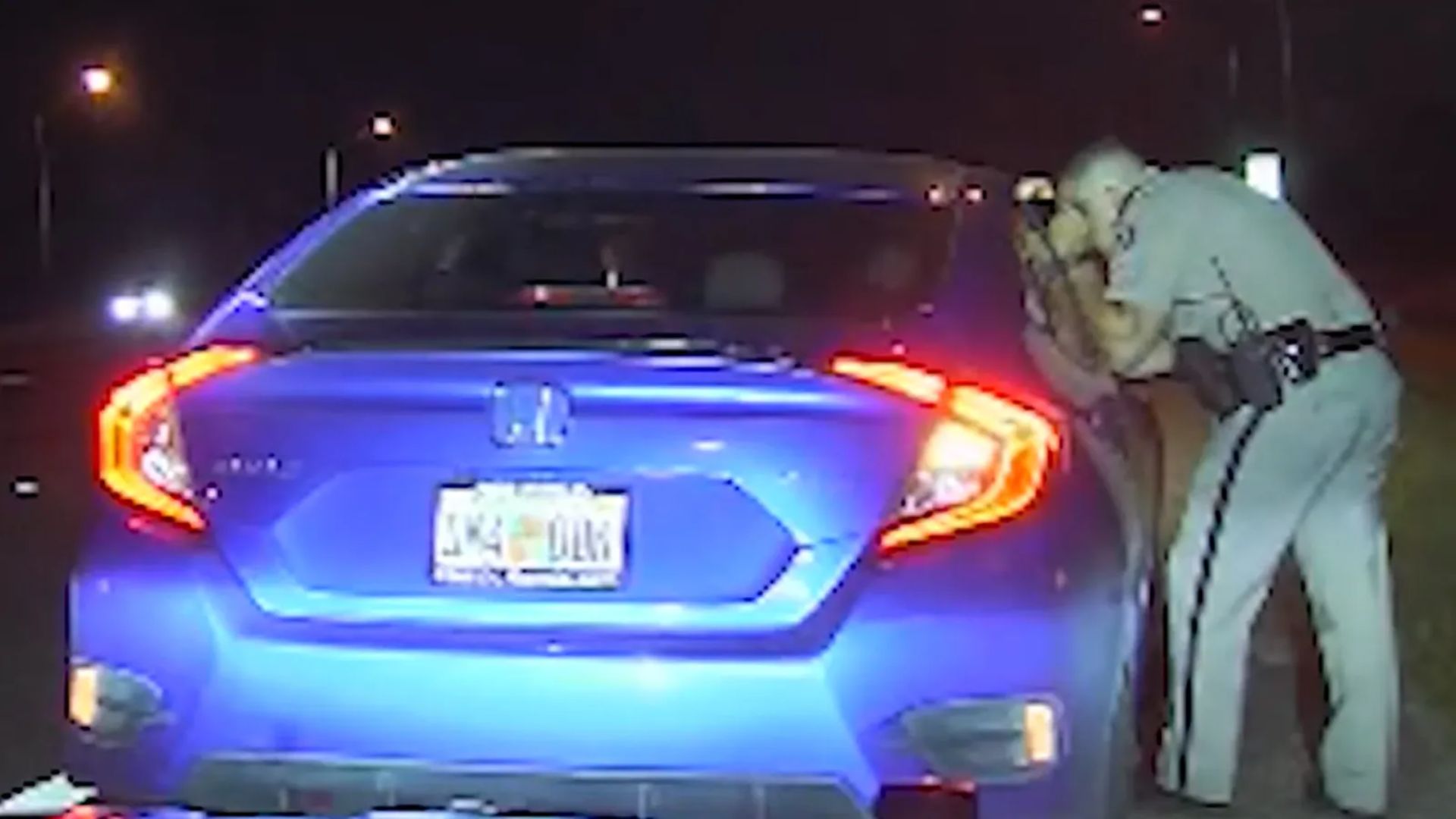
The AAA Foundation for Traffic Safety just spent eight focus groups and a survey of roughly 16,500 drivers confirming what your commute already told you. Seven in 10 American drivers say they routinely watch other people blow past them on the highway. Three in 10 will tell you flatly that “no one actually drives the speed limit, speeding is just the norm nowadays.”
Read that as a story about bad drivers and you will miss the interesting part.
What those drivers described — a road where the real speed is whatever everyone else is doing, and the number on the sign is a suggestion calibrated to it — is not a breakdown of the system. It is, almost exactly, how the system was built to work.
The Speed Limit Is A Mirror, Not A Rule
For most of the last century, the standard American method for posting a speed limit has been the 85th percentile rule. Engineers measure free-flowing traffic on a stretch of road, find the speed at or below which 85 percent of vehicles are traveling, and post a limit near that number. The reasoning is defensible. Most drivers pick a speed the road appears to support, and a limit that feels arbitrary gets ignored, which turns enforcement into a lottery.
But say the mechanism out loud and the flaw is obvious. If the posted limit is derived from how fast people already drive, then driving faster is not a violation of the process. It is an input to it. Speed up enough, for long enough, and the sign eventually agrees with you.
Washington has been quietly backing away from this for years. The Federal Highway Administration’s own Speed Limit Setting Handbook now states that “the 85th-percentile speed should not be used as the sole consideration in setting speed limits,” and pushes engineers toward crash history, roadway context, and a Safe System framework built around what a human body survives rather than what traffic prefers. The 11th edition of the Manual on Uniform Traffic Control Devices went further, emphasizing that the 85th percentile “rule” was never federal law in the first place. Guidance is not practice, though. Thousands of American speed limits standing today are still the product of a survey of speeders.
Which makes AAA’s finding that 49 percent of drivers believe it is safer to keep up with traffic than to obey the limit less an indictment of drivers than an accidental peer review. They are reciting the methodology back to the people who wrote it.
The Insurance Institute for Highway Safety has already priced the loop. Charles Farmer’s analysis of 1993 through 2017 tied 36,760 additional traffic deaths to rising speed limits over that quarter century, roughly 1,900 of them in 2017 alone. Every 5 mph bump in a maximum limit was associated with an 8 percent increase in the fatality rate on interstates. The payoff for that trade is about six and a half minutes on a 100-mile trip.
Everybody Is Watching The Wrong Road
Here is the number in the AAA data that should reorganize how you think about all of this.
Seventy-four percent of respondents said they often or always see vehicles moving much faster than traffic on highways. Only 45 percent said the same about residential streets.
Now open NHTSA’s Speeding: 2024 Data fact sheet. Speeding was a factor in 11,288 deaths in 2024, or 29 percent of all traffic fatalities. And 87 percent of those deaths happened somewhere other than an interstate: 52 percent on non-interstate urban roads, 36 percent on non-interstate rural roads.
The speeding Americans notice most is happening on the roads where speeding kills the fewest people. The speeding that actually fills the coroner’s log is on the four-lane arterial by the high school and the two-lane county road with no shoulder, and fewer than half of us register it as a problem at all.
That gap explains most of why speed enforcement politics are such a mess. Highway speeding is visible, social, and largely survivable in a modern car. Arterial speeding is invisible, routine, and the thing that turns a pedestrian into a statistic. We legislate the one we can see.
The Car Got Faster Than The Argument
There is a hardware story here that almost nobody tells alongside these surveys.
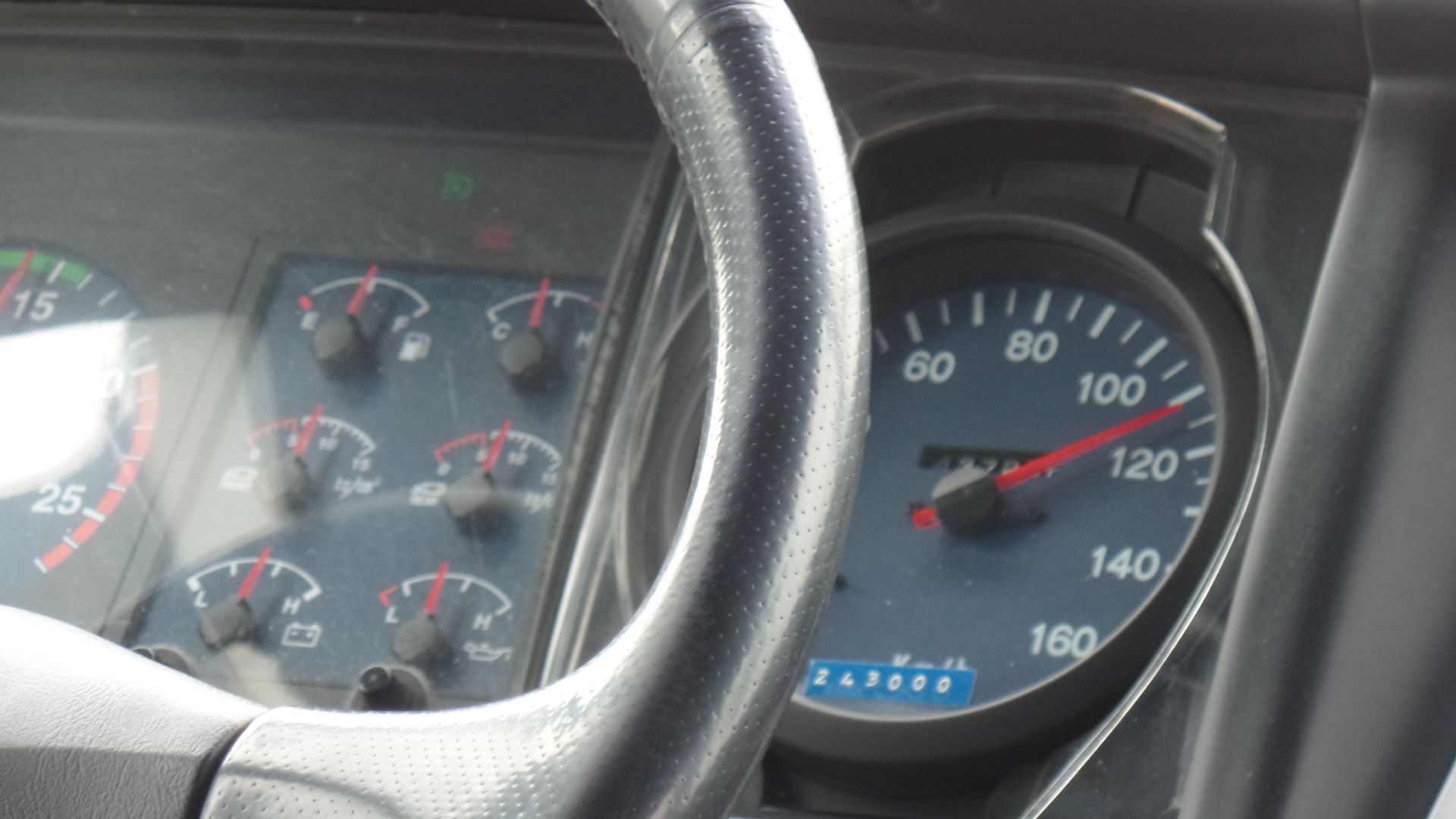
Per the EPA’s Automotive Trends Report, the average new vehicle sold in the United States in model year 2024 made 267 horsepower, weighed 4,419 pounds, and reached 60 mph in about 7.4 seconds. In 1980 the average was 104 horsepower. The average crossover sitting in a school pickup line right now would have humiliated most of what Detroit sold as performance during the Malaise era, and it does it while the people inside hold a conversation at normal volume.
That last part is the problem. Kinetic energy scales with the square of velocity, so a 4,400-pound vehicle at 85 mph carries about 47 percent more energy into whatever it hits than the same vehicle at 70. Nothing in the cabin communicates that. Sound deadening, active noise cancellation, eight- and ten-speed transmissions loafing below 2,000 rpm, and suspensions tuned for isolation have collectively engineered the sensation of speed out of the product.
We did not just normalize speeding culturally. We built a fleet that hides velocity from the person controlling it, then acted surprised when the survey came back.
The Technology Drivers Say They Want Is Already Installed
AAA found that 51 percent of drivers want advisory Intelligent Speed Assistance in their own vehicle, meaning a chime or a warning when they exceed the limit. Support drops sharply for a system that physically holds the car back, at least when it is their car. But 82 percent supported requiring exactly that hardware for drivers with a record of serious speeding offenses. We flagged the chime years ago, and it is closer than most owners think.
Because the “new” technology is already in your dashboard.
The European Union’s General Safety Regulation, Regulation (EU) 2019/2144, made Intelligent Speed Assistance mandatory equipment on every new car sold in Europe as of July 7, 2024. Automakers do not develop a separate forward camera, a separate map database, and a separate ECU for the American market. The camera that reads speed limit signs, the navigation data carrying posted limits, and the software comparing the two against your actual speed are already riding along in U.S.-market vehicles. Plenty of them display the limit in the cluster right now.
Every new car sold in America already knows the speed limit. It just isn’t allowed to care.
NHTSA has spent the interval studying. In its April 2024 response to a stack of NTSB recommendations, the agency said it had two ISA research projects underway and would decide later about adding ISA to the New Car Assessment Program. It also told the NTSB it was not aware of commonly available aftermarket ISA interlocks in the United States. Then in September 2025 it pushed already-announced NCAP updates for blind spot warning, lane keeping, and pedestrian automatic emergency braking back to model year 2027 after the Alliance for Automotive Innovation asked for more time. ISA is still not on the scorecard at all.
The States Stopped Waiting
While the federal process researches, the enforcement version of ISA is already running.
Virginia’s Intelligent Speed Assistance Program, Virginia Code § 46.2-507, took effect July 1, 2026, roughly six weeks before AAA published this survey. A judge can order a convicted driver into a device that limits the vehicle “based on the applicable speed limit” as a condition of a restricted license. The driver pays for installation and maintenance. Bypass attempts are reported to the state within 24 hours. Tampering is a Class 1 misdemeanor. Washington, D.C. passed the first such law in 2024, and Washington state followed.
So the 82 percent of AAA respondents who said they would support limiters for serious offenders were endorsing a program that already exists. Public opinion caught up to the statute, not the other way around.
The consumer-car version is a harder sell, and California proved it. SB 961 would have required new vehicles sold in the state to beep at drivers exceeding the limit by more than 10 mph starting with model year 2030. Governor Gavin Newsom vetoed it in September 2024, warning that state-specific rules would create a patchwork that undermines NHTSA’s federal framework. That is, functionally, the auto industry’s argument, delivered from the governor’s desk.
Who This Actually Helps
Automakers, first. Advisory ISA costs them close to nothing because Europe already forced the engineering and the sensors are amortized across a global platform. Switching it on in North America is a software decision and a marketing bullet point, and it gives the industry a voluntary safety feature to point at every time somebody proposes a mandate.
Insurers are next in line. The pipeline from your car to your carrier is already plumbed, and speed relative to the posted limit is a far cleaner underwriting variable than the crude hard-braking counts telematics programs have leaned on for a decade. A car that knows the limit knows exactly how much you exceeded it, on what road, at what hour.
Enforcement changes shape too. Cameras that catch you even if you stand on the brakes and plate readers now drawing constitutional scrutiny do not need a trooper sitting in a median, and they do not get tired at 2 a.m.
The people who lose are the ones who liked the ambiguity. That unwritten 10-over cushion most drivers believe in exists only because enforcement is human and discretionary. Software is neither. The same risky-driving surveys that keep showing us the gap between what drivers say and what drivers do are exactly the evidence regulators will cite when they close it.
What To Remember
Speeding did not become normal because Americans got worse at driving. It became normal because we set limits by measuring the behavior we wanted to regulate, built cars that hide velocity from the person controlling it, and let enforcement thin out until the odds favored the speeder. Every one of those was a decision. None of them were accidents.
And the fix half of drivers say they would accept has been riding along in the dashboard the entire time, waiting for somebody to give it permission.