
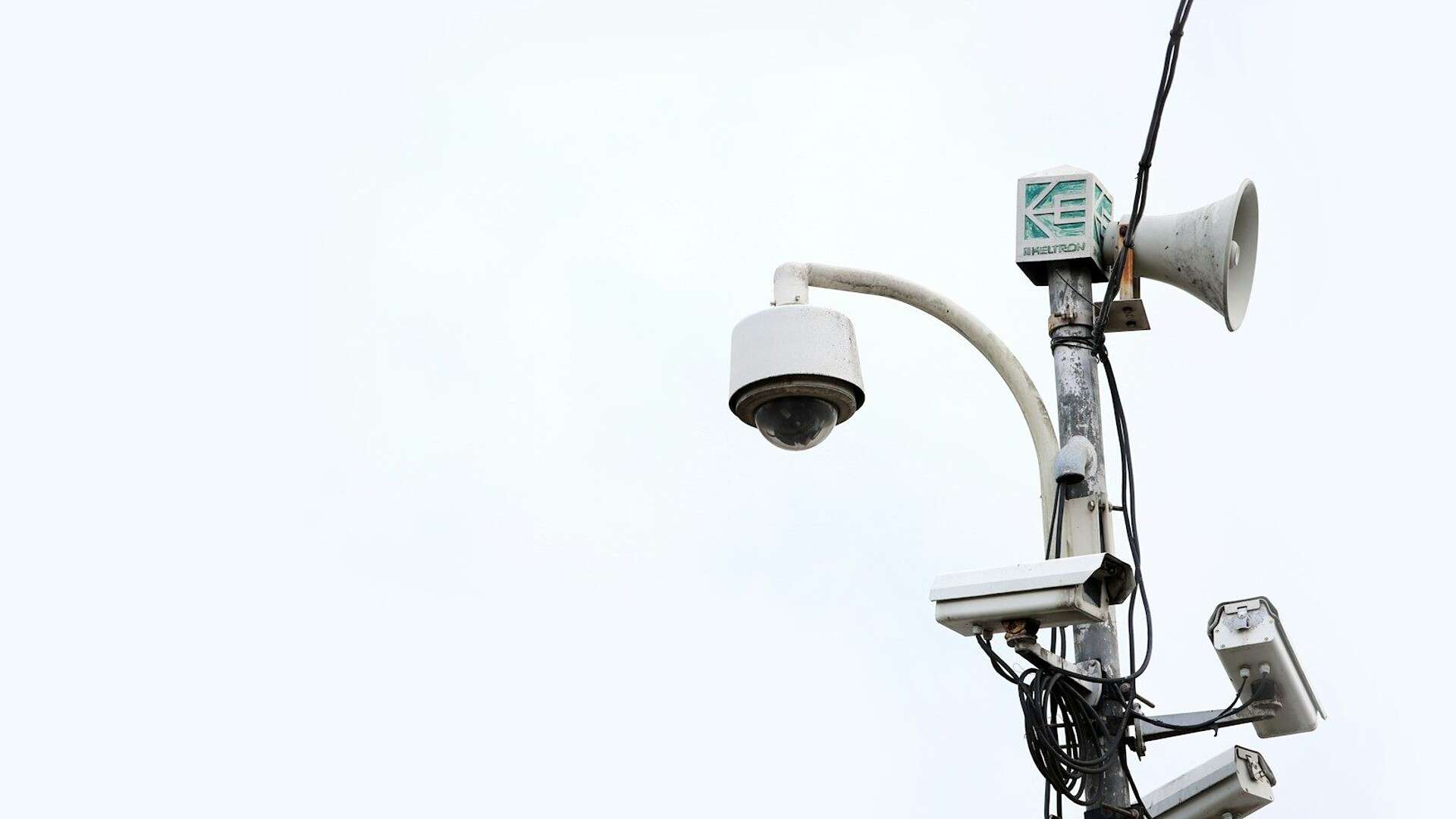
If you drive in Fairfax County, a camera has almost certainly read your plate this month. The question in front of the Board of Supervisors isn’t whether that happens. It’s whose box does the reading, and who else gets a look.
On Sept. 15, Chairman Jeff McKay’s board matter cited “hundreds of emails from residents” and froze installation of any new stationary Flock cameras until the Safety and Security Committee could take up the issue on Oct. 20, told police to evaluate other options, and sent a letter to Flock’s CEO. The bar it set was blunt: Flock should “demonstrate—not merely assert—” that county data is safe. The pause covered new installs only. The existing 84 stayed on.
On Oct. 20, the committee got two answers: a police presentation and Flock’s reply.
The hardware math nobody’s yelling about
Start with the count, because it isn’t the one on the protest signs. Police operate 84 Flock cameras, private owners run another 120, and the department operates 714 Axon Fleet 3 readers mounted on cruisers. The brand drawing the protest signs makes up roughly a tenth of the county’s police-run readers. Fire Flock tomorrow, and the patrol car behind you at a red light still logs your tag.
Related Articles
- GM Says Its Warranty Covers the 2025 Traverse Brake Problem. Also, It Doesn’t. A Federal Judge Asked: ‘Which One Is It?’
- Two Red Mustangs Hit 120 MPH on I-4. The Trooper Says They ‘Appeared’ to Be Racing. Florida Law Wants More Than That
None of this is new. Fairfax started using plate readers in 2008, and retention was cut from one year to 30 days, now 21. That 21-day number isn’t a courtesy. Virginia Code requires the data be purged after 21 days so that neither the vendor nor the police can recover it.
What the cameras actually see
Set the politics aside for a second. Here’s what the box actually sees. Flock says its cameras are motion-activated and take still images, not live video, and that none of its products use facial recognition. But its machine learning identifies vehicle type, make and color, and its FreeForm tool accepts plain-language searches. Flock’s own example is “blue Honda with a bike rack.”
So a tinted plate cover or a missing front plate does not make your car anonymous. If a bike rack can be searched, the distinctive build is the fingerprint, whether that’s a wrap, a lift kit or a mismatched fender. The more a car stands out, the easier it is to find in a description search.
The pitch police are making
The department counts 1,647 cases helped as of Oct. 12, 2026, including 573 stolen vehicles recovered with more than $9 million in recovery value. McKay’s September filing counted 555 stolen vehicles recovered through Sept. 4. That works out to about 18 more cars returned in roughly five weeks. For owners, how fast a stolen car turns up is a big part of what condition it comes back in, and that is the argument police are leaning on.
Flock’s answers, and the fine print
Flock says customers own their data, nothing is shared by default, Virginia agencies are hidden from federal and out-of-state users, and a statewide filter blocks searches that look tied to immigration enforcement. It says it trains its models on under 1% of stripped images from customers who opted in, and that by its reading of state law no Virginia data is used.
The attached legal-demand policy deserves a second read. Flock says it will notify affected customers and give them seven calendar days to challenge a demand. It also says it will comply with a final court decision and may respond right away to emergency requests. That is not sinister. It’s how subpoenas work everywhere. It does mean the real protection is the state-mandated 21-day purge, not anything in a company letter.
Related Articles
- Auto Debt Just Hit $1.71 Trillion. It’s Not Crashing. It’s Squeezing Used-Car Buyers Instead
- Savannah Police Swear ICE Isn’t on Their Flock Network. They Just Fired an Officer for Sharing Her Login With Her ICE-Agent Husband
Police have tightened their own side too. The number of people who can run plate searches dropped from 821 to 296, and no one above the rank of major has Flock access. Flock says every search will need a case code starting Jan. 1, 2027.
Three doors
Police laid out three options. First, keep the program as it is, at no added cost. Second, keep it while testing other vendors that can meet state law and FCPD policy. Third, switch to a closed network that shares no data outside Fairfax but keeps access to privately owned cameras, with a review after one year. Police warned the third option would hurt cross-border investigations.
Look closely at the third option. Closing the county network would still let police tap privately owned cameras, and McKay’s own filing acknowledged that homeowners’ associations and commercial property owners run these on private property without county approval. The cameras the board controls least would remain part of the system.
The full board’s next meeting is Oct. 27. That session includes public comment. Whatever the board decides, the vote is about the vendor, how far data can travel, and who checks the logs. Plate reading itself isn’t going anywhere.
If it were your county, which of the three options would you pick? And does swapping vendors mean much while 714 cruiser cameras keep reading plates?