
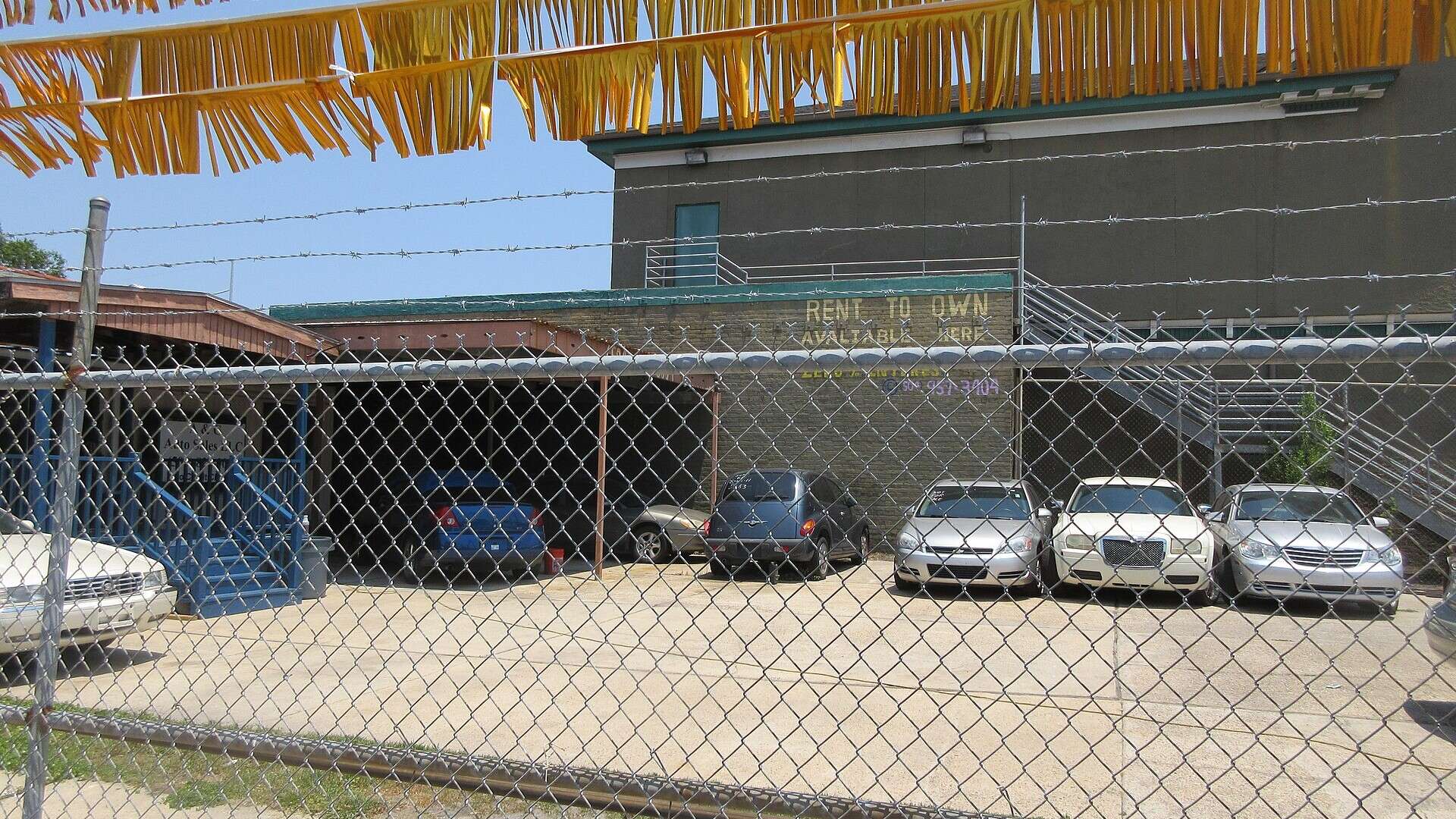
From January 2010 until at least April 2014, debt collectors at Westlake Financial set their caller ID to read “Pizza Delivery” or “Flower Shop,” then posed as those businesses to find out where borrowers and their cars were, according to a 2015 consent order from the Consumer Financial Protection Bureau. On Sept. 17, 2026, Credit Acceptance Corp. settled with state attorneys general in a deal New York values at $700 million, ending a lawsuit in which the state said the company’s average loan carried an annual interest rate of more than 38%.
I read the government files on seven auto lenders covering 2015 through this fall: federal consent orders, state settlements and the lenders’ own SEC filings. The penalties run from about $1.7 million to $3.7 billion, and the companies range from used-car specialists to a Toyota subsidiary and Wells Fargo. The same three problems show up again and again. Lenders approved loans with little reason to believe the borrower could pay. Add-on products inflated the price or were never refunded. Collections and repossessions crossed legal lines. Every company settled, and in the settlements that address it, the lender admits nothing.
That repetition matters more this year than it did five years ago. In 2025 the CFPB pulled out of one of these cases and canceled the order in another, so the job of policing car loans now falls mostly to state attorneys general. A borrower’s protection now depends heavily on which state they live in.
Credit Acceptance agrees to waive $634 million in balances
Credit Acceptance’s Form 8-K filed with the SEC lays out the terms. The Southfield, Michigan, lender entered consent judgments with the attorneys general of 40 states and the District of Columbia. It will pay $60 million into a trust to compensate borrowers and $15.5 million to the states. It will also waive every outstanding balance for certain customers whose accounts were open as of Dec. 1, 2025, a waiver the company estimates at $634 million. Changes to its collection practices run for five years and disclosure requirements for seven. The filing says the company “has made no admission of wrongdoing or liability.”
The New York attorney general’s announcement adds what the state alleged: some loans carried rates above 100%, and nearly half of borrowers had their vehicles repossessed during their loans. Under the settlement, if certain at-risk borrowers default within 12 or 18 months and their cars are repossessed and sold, Credit Acceptance must forgive 95% of what they still owe. The company must also contact buyers away from the dealership about any add-on products and give them a way to cancel those products and keep the car. “While their customers struggled to make payments, CAC made millions,” Attorney General Letitia James said.
Chief Executive Vinayak Hegde said in the company’s press release, “This resolution provides certainty for our business, our dealer partners and the customers we serve.” The same release says the non-monetary terms do not fundamentally change its business model and do not require material changes to its operations. Our earlier piece covers who qualifies for the debt relief.
New York did not start the case alone. The CFPB co-filed it on Jan. 4, 2023, in federal court in Manhattan (case 1:23-cv-00038), and the Bureau’s announcement at the time called Credit Acceptance “a predatory auto lender.” According to the CFPB’s case page, the Bureau moved to withdraw as a plaintiff on April 24, 2025, and the court granted the motion five days later. New York’s release says the CFPB dropped the case “getting nothing in return.”
How Credit Acceptance pays the dealers who write its loans
The company’s own filings explain how its loans work. Under what its annual report for 2021 calls the Portfolio Program, the dealer gets the buyer’s down payment and a cash advance from Credit Acceptance when the contract is signed. The money the borrower pays afterward is grouped with the dealer’s other loans and paid out in a fixed order. Credit Acceptance first recovers certain collection costs. Next it takes a servicing fee that the report says “generally equals 20% of collections.” Then it recovers its advance. Only after that does the dealer start receiving what the company calls Dealer Holdback.
In 2021, 67.9% of the loans Credit Acceptance took in by unit volume came through that program, and 91.0% went to buyers with FICO scores below 650 or no score at all. The lender gets paid back before the dealer sees any back-end money, and the dealer already has the down payment and the advance. When a loan goes bad, the borrower takes the biggest loss: the car is repossessed and sold at auction, and the borrower can still be billed for the remaining balance, called a deficiency. We explained how that leftover debt follows borrowers last month.
That is why the 95% forgiveness term is the most important part of the settlement. My reading of it: a loan that fails within 12 or 18 months has gone wrong from the start, and the settlement takes away nearly all of what Credit Acceptance could have collected afterward. It costs the lender the most in exactly the cases that look worst.
Santander and Exeter cases turned on whether borrowers could pay
In May 2020, Santander Consumer USA agreed to a settlement worth about $550 million with a coalition of more than 30 attorneys general. Pennsylvania’s announcement of the deal says the states alleged that Santander knowingly put buyers into loans its own credit-scoring models said were likely to default. The states also alleged that Santander ignored dealers who inflated buyers’ income and expenses on credit applications. Most of the relief, about $433 million, came from canceling loans Santander still held.
Massachusetts made a similar claim against Exeter Finance. In an April 8, 2019 settlement worth more than $5.5 million, the state’s attorney general alleged that Exeter made loans without a sound basis for believing borrowers could repay them, and that it mishandled servicing and collections.
These cases were built on general consumer-protection law because car loans have nothing like the federal ability-to-repay rule for mortgages. That rule, written after the 2008 housing crash, requires a home lender to check that the borrower can afford the loan. No federal rule requires the same of a car lender. So states have to argue, one case at a time, that knowingly making a loan likely to fail is an unfair practice under their own laws.
GAP coverage figures in the cases against four of the seven lenders
Guaranteed asset protection, or GAP, covers the difference between what an insurer pays on a totaled car and what the owner still owes on the loan. The finance office sells it, and the price is usually rolled into the loan. That is where it got four of these lenders in trouble.
In March 2016, Massachusetts settled with American Credit Acceptance and Westlake for $7.4 million combined. The attorney general alleged that GAP fees pushed the effective interest rate on some loans above the state’s 21% cap. Under that theory, a financed add-on counts as part of the cost of borrowing. The lenders agreed to eliminate interest on those loans and refund interest already paid, which came to about $3,000 on average for more than 2,000 borrowers.
Toyota Motor Credit’s problem came at the end of the loan. Under a $60 million CFPB order dated Nov. 20, 2023, about $32 million of the $48 million in redress covered unearned GAP and similar insurance-type premiums that were not refunded when borrowers paid off early. The Bureau said customers who called to cancel bundled products were sent to a retention hotline, which got more than 118,000 calls from 2016 to 2021. It said some refunds were applied to the loan balance instead of paid to the borrower, and that Toyota reported false delinquencies on leased cars that had already been returned. Then-Director Rohit Chopra said the company “illegally withheld refunds, made borrowers run through obstacle courses to cancel unwanted services.” The Bureau put the cost of the bundled products at $700 to $2,500 per loan.
Toyota’s order did not last. On May 12, 2025, the CFPB filed an order terminating it under 12 U.S.C. § 5563(b)(3). The order waived “any alleged noncompliance” and gave no other reason. Bloomberg Law reported that the termination released Toyota from about $42 million in redress and that it was unclear how much had already reached customers.
Wells Fargo is the fourth lender with a GAP problem. Among the auto-loan findings in the CFPB’s Dec. 20, 2022 action, the bank failed to refund fees borrowers had paid dealers up front for GAP when the loans ended early. The same order found misapplied payments, wrong fees and interest charges, and wrongful repossessions. The full order also covered mortgages and deposit accounts and totaled more than $2 billion in redress plus a $1.7 billion penalty.
The lesson for anyone at a service counter or a trade-in desk: GAP pays out only while there is a loan to protect. When a loan is paid off, refinanced or rolled into a trade, the unused portion of the premium is generally refundable, and nobody sends it automatically. The borrower has to ask for it.
Collection calls and repossessions
Westlake’s 2015 order is the most detailed record of what collectors did. The CFPB found that collectors used a caller-ID tool called Skip Tracy on more than 137,000 accounts. Calls appeared to come from “Repo,” “Repossession Services” or “Asset Recovery,” and sometimes from a borrower’s own relative or friend. Collectors suggested that borrowers who hid their cars could face criminal charges, even when no referral had been decided. From 2010 to 2011, some changed due dates or extended loan terms without explaining that the change added interest. Westlake and its title-loan subsidiary had to set aside more than $25.7 million for cash refunds, cut about $17.4 million from balances and pay a $4.25 million penalty, covering roughly 176,000 borrowers.
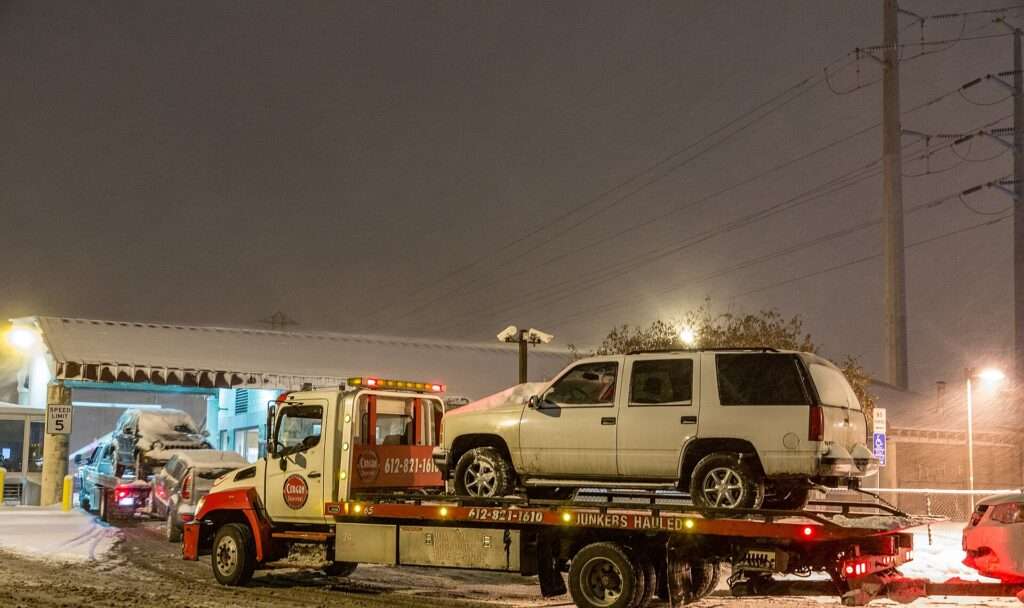
Repossession is where the damage is hardest to undo. Wells Fargo’s order found that the bank repossessed cars it had no right to take. New York says nearly half of Credit Acceptance’s borrowers lost their vehicles during their loans. A wrongly repossessed car means missed shifts and a hit to the borrower’s credit report, and a refund check months later doesn’t make up for that.
States carry most of the enforcement after the CFPB’s 2025 retreat
Lined up by date, the seven cases show the shift. The CFPB brought the Westlake, Wells Fargo and Toyota orders and co-filed against Credit Acceptance. By May 2025 it had withdrawn from Credit Acceptance and canceled the Toyota order. States brought the Santander, Exeter and American Credit Acceptance cases and Massachusetts’s own rate-cap case against Westlake, and they finished Credit Acceptance without federal help.
Enforcement now depends on where the borrower lives. Massachusetts has a 21% rate cap and an attorney general’s office that has brought at least three of these cases by itself. Many states have no such cap, and some attorneys general have never brought an auto-lending case. A lender can write the same contract in either kind of state. That matters more as payments climb; our recent reporting found used-car buyers taking on the most strain as auto debt grows.
Court approvals, compliance reports and the next contract you sign
Each Credit Acceptance consent judgment still needs approval from a court in its state, and the company’s 8-K says there is no guarantee every court will approve. It must file annual compliance reports for five years. Those reports, and any state that challenges them, will show whether the new add-on disclosures and the 95% forgiveness rule change how loans are written, or whether, as the company told investors, the business model stays as it is.
For buyers, these files point to a few specific steps. Read the itemization page of the contract, where GAP, service contracts and other add-ons are listed, and treat any statement that a product is required with suspicion; New York alleged that Credit Acceptance’s dealers told buyers exactly that. When you pay off, refinance or trade in, ask the lender in writing for any unearned GAP or service-contract refund, and confirm whether it will come to you as a check or be applied to the balance. If your car is repossessed, ask for the sale accounting before paying any deficiency. Complaints go to your state attorney general, since, based on this record, that is the office most likely to act.
If you paid off or traded in a car with GAP on the loan, did the refund ever show up on its own, or did you have to chase it?