
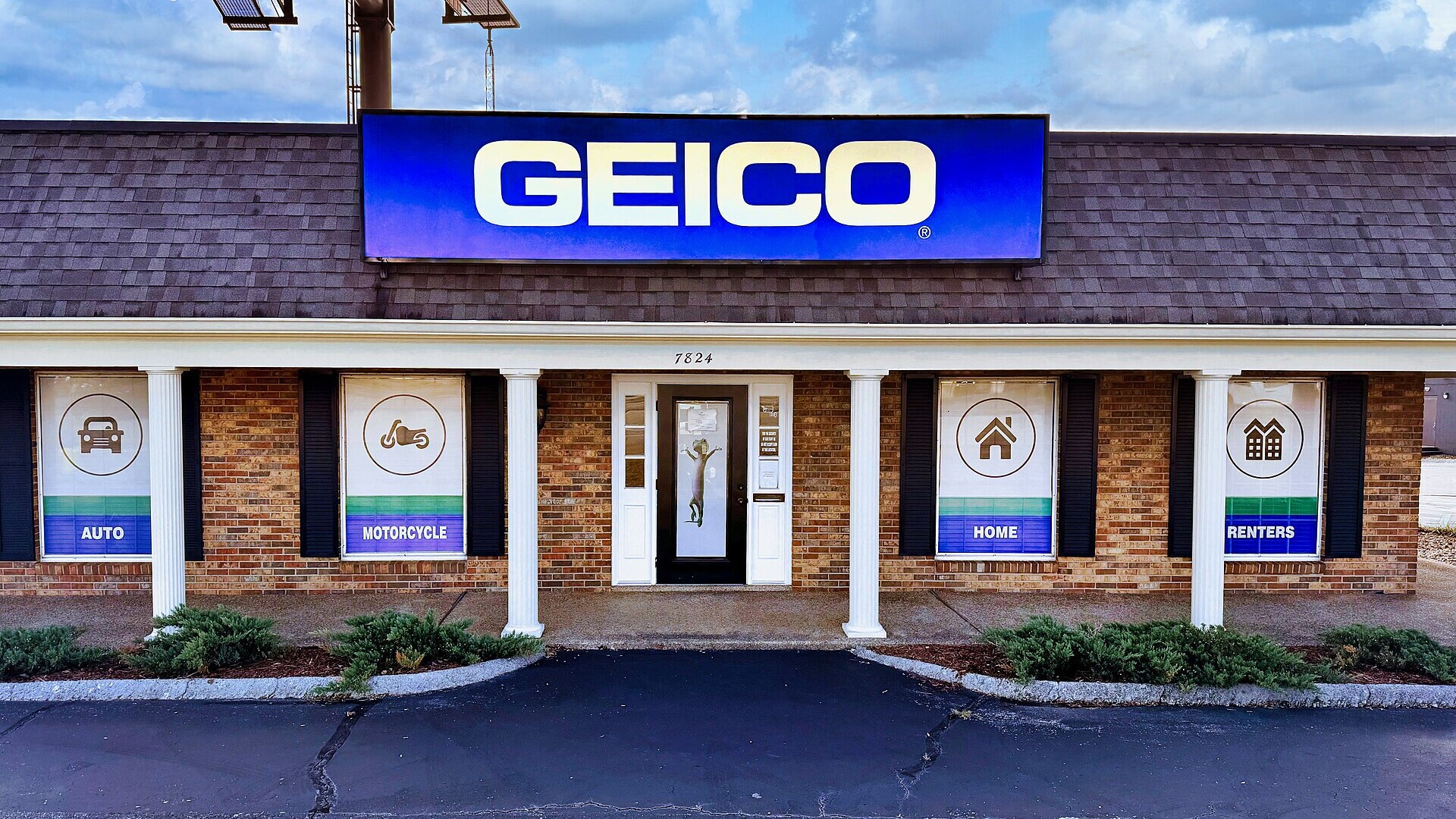
GEICO cancelled six New Jersey auto policies midterm because the drivers worked for rideshare companies. State rules don’t list that as a reason. The finding sits in the same Oct. 20 consent order and market conduct examination report that produced the $10.5 million in refunds, but it comes with no refund of its own. It hits different customers than the refunds do: rideshare drivers dropped mid-term, and anyone who ignored a renewal questionnaire or had a car totaled.
The New Jersey Department of Banking and Insurance announced the action as Order No. E26-103, with a $1.2 million penalty against GEICO and four affiliates. The report covers private passenger auto policies from June 1, 2023, through May 31, 2024, with examiner fieldwork starting in September 2024. It lists four “improper general business practices.” One is the pricing problem, which The Auto Wire covered when the order came out: charging rates outside GEICO’s filed plans after policies were moved between its companies. The other three are the cancellations, the renewal notices and the total-loss paperwork.
The money is all on the pricing side. The report’s three biggest refund line items, $1,755,083.20 for lending-loss errors, $6,744,192.26 for accident-forgiveness errors and $2,076,482.50 for rate-capping errors, add up to $10,575,757.96 by The Auto Wire’s math. The cancellation, notice and salvage findings are not part of that total.
Cancelling a policy midterm in New Jersey
Once a New Jersey auto policy is past its first 60 days, an insurer can cancel it only for reasons on a list. The report quotes the rule, N.J.A.C. 11:3-8.10(a), as saying a notice of cancellation is effective “only when based on one or more of the following reasons,” and the list includes nonpayment, a suspended or revoked license, and materially false information. Rideshare use is not on it. Examiners wrote that the policies “should have remained in force until nonrenewal at the end of the policy term.”
A nonrenewal notice has to be mailed 60 to 90 days before the policy expires, according to the rule cited in the report, which gives a driver weeks to shop for coverage. A midterm cancellation can leave a rideshare driver looking for a new carrier on short notice. Examiners found six rideshare cancellations in total, two in their random sample and four elsewhere in the population, and flagged cancellations tied to food and goods delivery work in the same way. GEICO told them the cancellations were the result of “execution errors made by underwriters.”
The random sample of 89 cancellations past 60 days turned up five errors, or 6%, out of a population of 114,445 such cancellations in the review period. Examiners cited the practice as improper because of the number of policies cancelled at midterm instead of being processed as nonrenewals.
Renewal questionnaires and the warning that was missing
Nonrenewals had the worst error rate in the termination sample: 13 errors in 77 files, or 17%. Several involved the renewal questionnaire, the form an insurer sends when it wants to confirm who drives the car and how it is used. New Jersey’s rule requires the request to warn that failing to return it may end the policy. The report gives the required wording as “Failure to complete and return that renewal questionnaire may result in the nonrenewal of the policy.” GEICO’s letters said instead: “Failure to provide this information may result in further action regarding your policy.”
Nine requests lacked the required warning, and four policies were nonrenewed for an unreturned questionnaire without the notice the rule requires. A customer reading “further action” has no way to know that means losing the policy. Examiners ruled that the quantity of documents in error made it an improper general business practice, and the report separately cites two nonrenewal notices that gave no specific reason.
Total losses, salvage rights and late settlements
The report lists 24,812 total-loss claims in the review period. Examiners pulled 70 of them and found errors in 10, or 14%. Their central finding was that GEICO failed on eight occasions to tell owners who kept a totaled vehicle about their salvage rights, a written notice that N.J.A.C. 11:3-10.4(j) requires at the time the settlement offer is made. GEICO agreed in all eight.

The mechanism is easy to miss on a settlement sheet. When an insurer declares a car a total loss and the owner keeps it, the insurer can deduct the car’s salvage value from the payout. Under the rule as the report describes it, the owner then has 30 calendar days after settlement to tell the insurer in writing if the salvage cannot be sold for the amount deducted, and the insurer must pay the difference or give the owner a salvage buyer’s contact information. An owner who was never told about that right never starts the 30-day clock. The report does not say how many of the 24,812 owners were affected, and examiners cited the failure as a general business practice because of its overall impact.
The same section found four total losses that were not settled within the required time frames and went out without written delay notices. Those are the 30-day collision and 45-day property damage deadlines in the state’s claim-handling rules, and the report says no delay letters were sent in any of the six late settlements it counted across total and partial losses. It also found a personal injury protection claim where the $250 deductible was applied twice, an underpayment of $118.06 in principal and $4.77 in interest, which examiners called an isolated error.
What the order requires from GEICO next
The remedies I found in the report focus on refund and credit notices, claim reopening letters, written procedures due within 30 days of adoption, an affidavit that GEICO’s directors received the report, and a possible reexamination within 12 months of the consent order. Nothing in the sections I read promises a payment to a rideshare driver whose policy was cancelled or an owner who never got the salvage notice. Anyone in that position can file a complaint with the department online or through its consumer hotline, 1-800-446-7467 or 609-292-7272, and should keep the cancellation notice or settlement letter in hand.
A reexamination, if the department orders one, would show whether the rideshare cancellations and the missing warning language were truly execution errors, as GEICO told examiners, or a habit that survived the first exam.
If you drive rideshare or delivery in New Jersey, has an insurer ever dropped you over it? What did the notice say?