
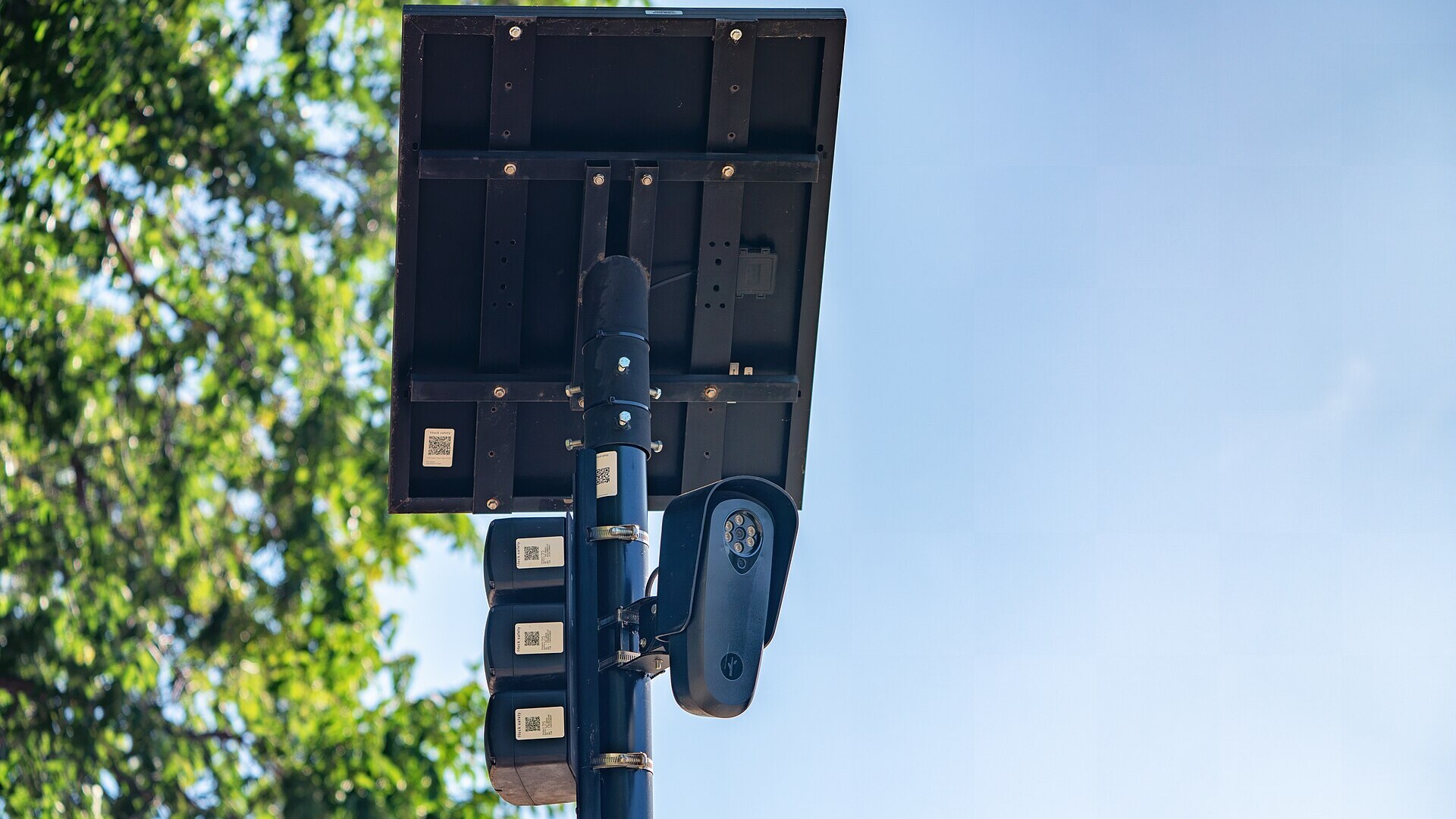
The North Carolina State Bureau of Investigation arrested Charlotte-Mecklenburg Police officer Seth Elliott on July 29 over alleged misuse of Flock license plate readers, and he faces a charge of unauthorized access to a government computer. The phone data investigators collected in that case is the reason six more officers have resigned or been suspended without pay. What started as a CMPD Flock investigation into one officer’s searches ended up exposing a group text thread that Chief Estella Patterson has described as going back years.
What investigators say Elliott did
CMPD said it received information from the SBI on June 18, put Elliott on paid administrative assignment on June 22 and revoked his access to criminal intelligence systems. According to CMPD, he improperly accessed CJLeads, the state criminal justice database, and the Flock system for non-law enforcement purposes. WBTV reported that court records allegedly show he used Flock and other technology to help someone involved in a drug investigation. His attorney, George Laughrun, told the station they would not comment beyond preparing for the criminal case. Elliott resigned Aug. 4, and the SBI told Spectrum News 1 that its criminal investigation is ongoing.
North Carolina’s statute on accessing government computers makes willful, unauthorized access a Class H felony under subsection (b), and a Class F felony when it is part of a scheme to defraud. Reports on the arrest describe the charge only as unauthorized access to a government computer. I could not find one that names the subsection.
How a plate-reader case became a text-message case
The SBI pulled data from Elliott’s phone and shared it with CMPD, which found messages involving six other officers, Spectrum News 1 reported. WBTV, citing anonymous sources, reported that the thread included a contest over who could pull over the most Black drivers, along with repeated use of a racial slur in connection with force and firing on Black residents. The Rev. Corine Mack, president of the North Carolina NAACP, told Spectrum the texts include multiple uses of the N-word. Patterson said the messages show racial, sexual and religious bias, though she told reporters she had not read all of them, per WBTV.
CMPD moved to terminate six officers on Oct. 9. Between Oct. 11 and Oct. 19, most of them resigned, and CMPD’s list shows at least one still suspended without pay pending Civil Service Board review. Patterson cannot fire a sworn officer herself. She can recommend termination, and the board has the final say. She has said CMPD will seek to revoke the officers’ state law enforcement certifications, which is the step Mack has pushed for so the officers can no longer become officers elsewhere. U.S. Attorney Russ Ferguson said his office is looking into a possible civil rights investigation, while cautioning that the standard of proof in those cases is very high.

The Flock settings in place while this unfolded
CMPD told reporters it does not own or operate Flock cameras. It has a memorandum of understanding with Flock that lets its officers access devices belonging to other agencies and entities. A search typed in by an officer in Charlotte can therefore reach cameras that Charlotte police did not buy and may not control.
In an Aug. 13 post, Flock CEO Garrett Langley said the company was moving its recommended default retention from 30 days to 7, with existing customers keeping their current periods. He said case codes on searches had been optional since July 2025 and would be required for all law enforcement searches by the end of this year, with emergency searches allowed to bypass the rule but flagged for administrator review. Flock also said it would require Audit Assistance, which flags abnormal activity, for all law enforcement customers by year’s end. Elliott’s alleged searches predate that post. I have not found a public document showing which of those settings CMPD’s users had enabled, and CMPD is the party that can say.
The Vidalia, Georgia, case shows what the audit route looks like when it works: police there audited their own Flock cameras, flagged a sergeant and called the GBI. Public reporting on Charlotte does not say what first led the SBI to Elliott.
What CMPD’s review has found so far
Patterson said CMPD’s internal review of arrests, traffic stops and body-camera footage has so far turned up nothing specifically targeting Black drivers, according to WBTV. CMPD has also started a broader look at body-worn camera video, officer communications and hiring procedures, per WUNC. The review is not finished, and a thread that spans years leaves a wide window of stops to check.
The Mecklenburg County District Attorney’s Office told Spectrum it is aware of the allegations but would not say whether the material could affect pending or past cases, citing state ethics rules. That leaves open how courts will treat stops and arrests these officers made.
Your car doesn’t have to belong to a suspect to be in the database. A plate reader logs everything that drives past, and the checks on who searches those logs include features Flock says will be mandatory only by the end of this year. What to watch: the SBI’s case against Elliott, the Civil Service Board’s review of the officer still suspended, any federal civil rights decision, whether CMPD discloses its Flock search settings, and whether Flock’s deadline for mandatory case codes holds.
Charlotte officers could search cameras Charlotte didn’t buy. If you could ask CMPD for one record about those searches, what would it be?