
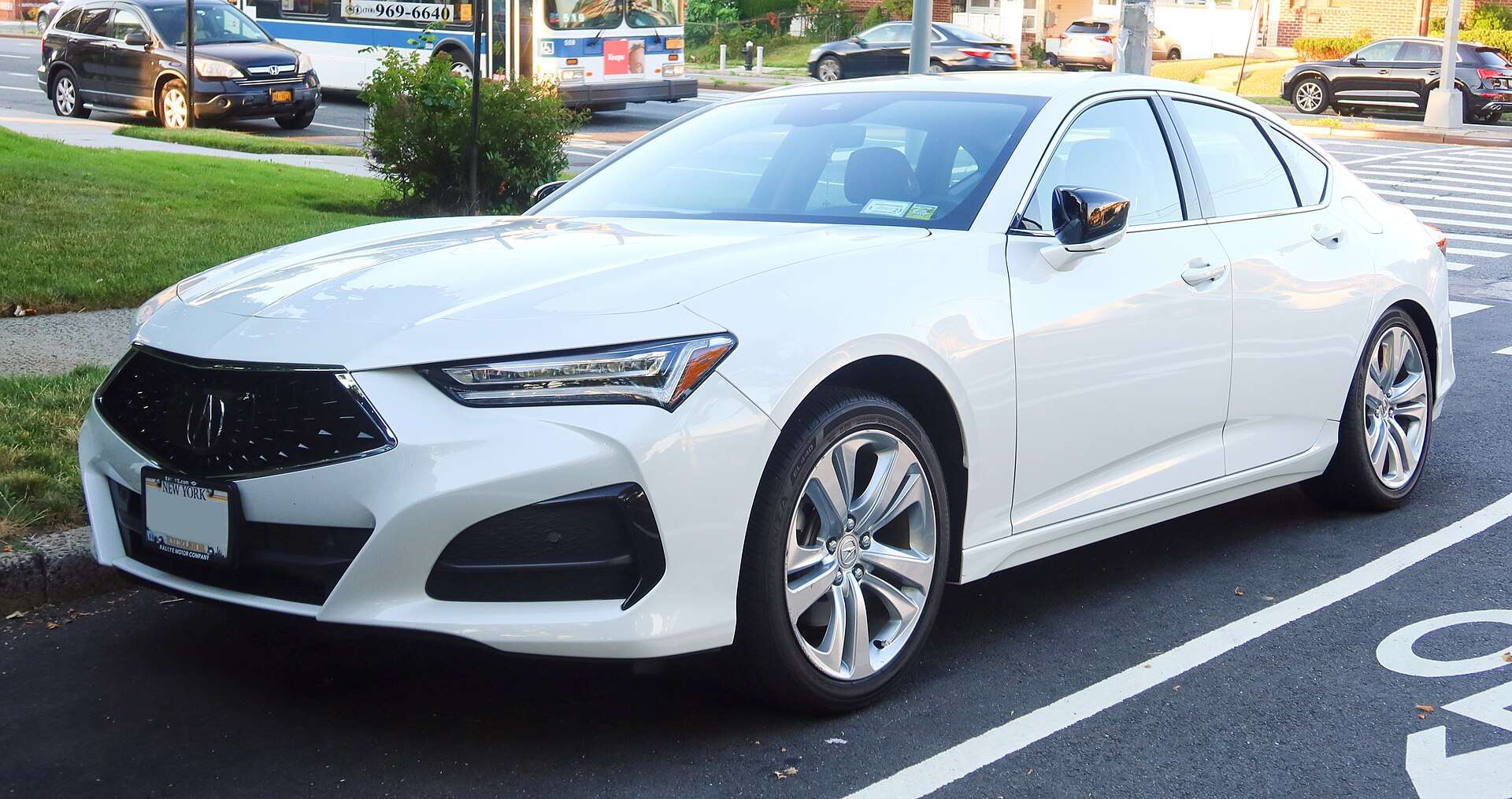
A class action filed October 29 asks a federal court to treat every Honda and Acura sold with push-button start since January 1, 2015, as defective in the same way. The Highway Loss Data Institute’s May 2025 theft report on 2022-24 models does not see one problem across that lineup. It sees three: the all-wheel-drive Acura TLX, the front-drive TLX and the all-wheel-drive CR-V Hybrid, ranked second, fifth and 13th among the 20 most-stolen vehicles. Most of the other Hondas and Acuras in that report were stolen less often than the average car.
The suit, Innarella v. American Honda Motor Co., No. 2:26-cv-12679, was filed in the U.S. District Court for the Central District of California. The plaintiff, Trina Innarella of New Jersey, bought a 2024 Civic Sport at a dealership there in 2023. Her lawyers allege that Honda has known for at least 15 years that its passive keyless entry systems can be exploited, that it advertised its immobilizer as protection against theft, and that it never told buyers an aftermarket fix existed. The 77-page complaint lists eight claims, including violations of California’s Consumers Legal Remedies Act, fraud and breach of warranty, and asks for damages, an injunction and a notice to current owners about the risk. These are allegations, and I found no Honda answer to them in the filing or in the primary sources I reviewed.
Four theft methods, one doorway
The complaint describes four techniques: relay attacks that amplify a nearby fob’s signal, software that wakes the car’s security system, an attack on the fob’s rolling codes, and key cloning from a VIN. Most of them end at the same place. Once a thief is inside, the filing says, a device plugged into the car’s OBD port, the 16-pin diagnostic connector under the dash, writes a new key. The complaint puts the price of a programming tool such as an Autel at under $600, an OBD port lock at under $150 and an aftermarket stealth immobilizer at under $800. Those are the plaintiffs’ figures, not Honda’s.
The criminal case the complaint leans on is public. A U.S. Attorney’s Office release for the District of Columbia dated April 22, 2026, announced a 15-count indictment of six people accused of stealing at least 20 cars in the Washington area and Pennsylvania and selling them in the United States and Ghana. The vehicles were primarily recent Civics and CR-Vs and Acura TLXs and RDXs, and the thieves used electronic devices to reprogram the cars to accept previously blank key fobs. The release says investigators are also looking at more than 100 thefts in D.C. and more than 30 in Prince George’s County, Maryland. The Autel name and the “gone in 60 seconds” line appear in the complaint’s account of the press conference, not in the written release.
What the insurance claims show
HLDI sets the average passenger vehicle at 100, which it defines as 0.45 theft claims per 1,000 insured vehicle years. On that scale the all-wheel-drive TLX scored 2,138, or roughly 9.6 claims per 1,000 vehicle years, about 21 times the average. The front-drive TLX scored 805 and the all-wheel-drive CR-V Hybrid 340. Then the list gets quiet for Honda. The Civic scored 91, the Civic hatchback 74 and the Civic Si 69. The Accord scored 85, the Pilot between 41 and 80 depending on drivetrain, and the Acura MDX 37 and 97. The report says nothing about keyless entry or how the cars were stolen, so these numbers measure claims, not methods.
The proposed class covers owners and lessees of every Honda and Acura with passive keyless entry from 2015 forward, and the complaint itself puts Honda’s U.S. sales at about 1.43 million vehicles in 2025 alone. A court deciding whether all of those buyers were harmed the same way will have to deal with a theft curve that rises on a few models and sits below average on most of the rest. The complaint has its own local counts, including about 747 Hondas stolen in Philadelphia by late March 2026, roughly 30 percent of the city’s thefts, and those include model years the HLDI report does not cover.
Why a working immobilizer doesn’t settle it
The complaint quotes Honda’s owner’s manual as saying the immobilizer “prevents a key that has not been pre-registered from starting the engine.” The allegation is that a thief can pre-register a blank fob in under two minutes through the OBD port. If that is accurate, the immobilizer is doing exactly what the manual says: it checks that the key is registered. What it allegedly does not check is who is authorized to register one. That is a gap in the diagnostic port’s access rules, and no amount of key-fob encryption closes it. Hyundai’s multistate settlement over skipped immobilizers was a different failure, a missing component. This one involves a component that is present and, the plaintiffs say, too easy to talk to.
Federal law doesn’t help either side much. I read the sections of Federal Motor Vehicle Safety Standard No. 114, the theft-protection rule, that apply to cars like these. They require that removing the key prevents the engine from starting and steering or forward movement, that a manufacturer offers at least 1,000 key combinations per vehicle type or one per vehicle built, whichever is fewer, and that an automatic transmission locks in park. The text I read says nothing about diagnostic ports or key programming. A carmaker can meet the standard and still leave that door open, and the complaint’s claims rest on what Honda said and omitted, with FMVSS 114 cited as background.
What to watch
Honda’s response to the complaint will show whether it contests the model-by-model picture or the omission theory first. A fight over class certification would turn on the 2,138-versus-69 spread in the HLDI table. Owners of a TLX or an all-wheel-drive CR-V Hybrid should ask their insurer what theft coverage costs, since the claims data are what price those premiums. The OBD lock the complaint prices under $150 is a question for a dealer or an installer, and Honda has not said in anything I reviewed whether it will sell one. Thefts have fallen in all 50 states this year, Congress is again looking at a federal car-theft bureau, and deputies in an October Escalade case said thieves made a third key with a computer, so the diagnostic-port problem is not confined to Honda.
Should Honda owe every owner since 2015 a remedy, or only the owners of the models thieves actually go after?