
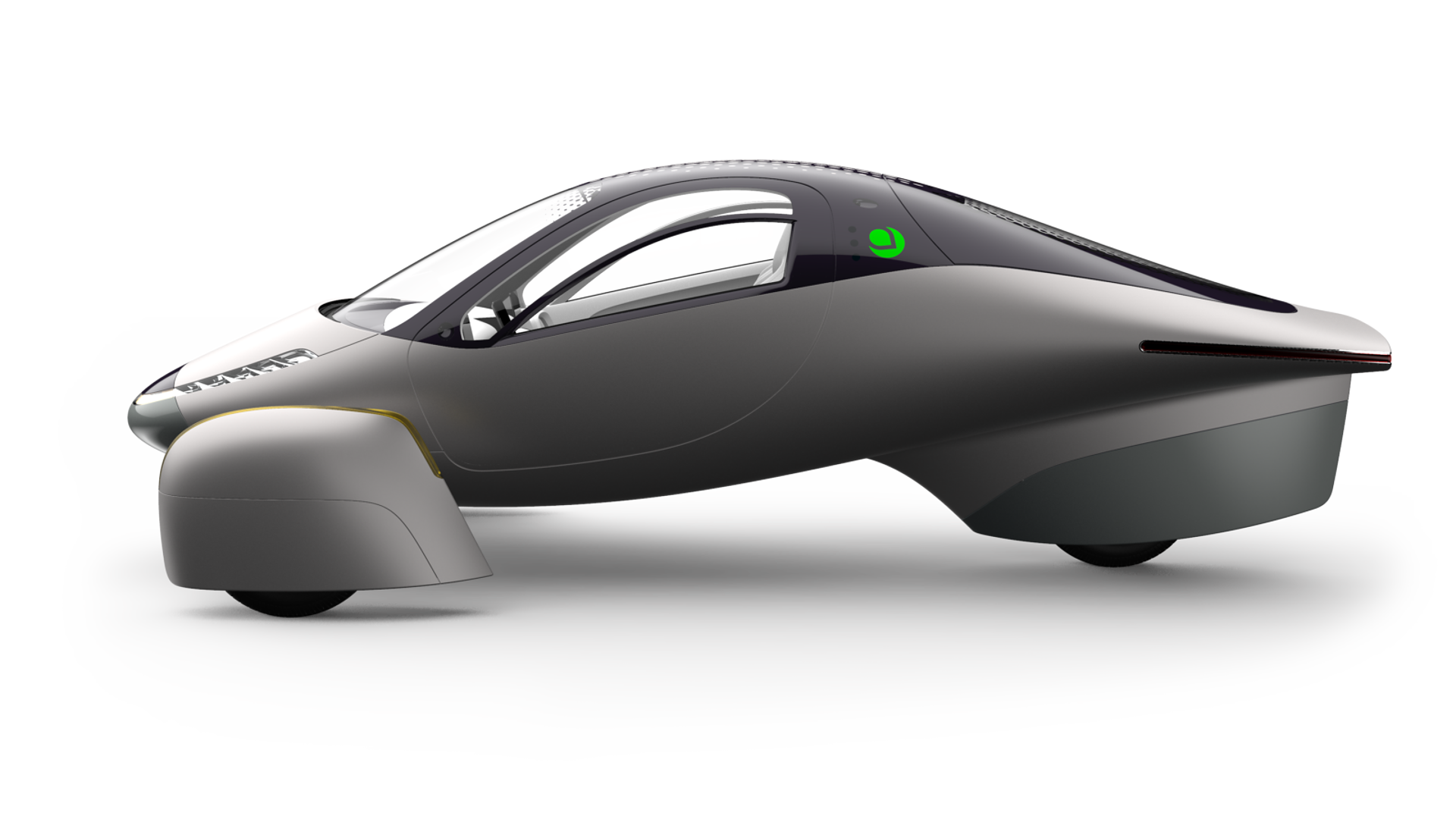
Aptera Motors said on Nov. 19 that it had finished its first car for a paying customer at its Carlsbad, California, plant, a step that other deposit-funded EV startups never reached. The matte black three-wheeler was built for Martin Hartono, Accelerator #1 in the company’s investor program, and Aptera’s announcement says the company intends to export it to him outside the United States.
Hartono is CEO of GDP Venture, a venture firm based in Jakarta, Indonesia, according to Claremont Graduate University, where he sits on the board of trustees. The release’s photo shows a GDP Venture representative standing with co-CEOs Chris Anthony and Steve Fambro beside the car. The release does not name the destination country, the price Hartono paid or a delivery date, and it describes the sale, export and delivery as plans, not finished events.
“We set out to build a vehicle that harnesses the sun. Now the first one built for a customer is complete,” Fambro said in the announcement.
It took a while. Aptera Motors Corp. was formed in Delaware on March 4, 2019, according to its annual report. It shares a name with an earlier Aptera Motors Inc., which its securities filings say it is not legally related to, and it spent much of 2026 building validation cars for testing. The first customer car leaves the line seven years and eight months after incorporation. For the roughly 49,000 people still holding reservations, who got this car and how much money Aptera has left will decide when theirs arrives.
Accelerator #1 Bought His Place at the Front
The line Hartono jumped was built on money. Aptera’s Accelerator program offered a spot among the first 2,000 owners to anyone who invested $10,000 or more in the company’s crowdfunding offering, and bigger checks came with extras up to lunch with the founders. According to the Nov. 19 release, Accelerator delivery positions are ordered by how much each person invested. Being No. 1 means Hartono invested more than any of the other Accelerators.
Everyone else comes after that group. Aptera’s reservation FAQ says the first 2,000 Launch Edition cars go to Accelerator investors, then to Paradigm Launch Edition holders, and only then to the general queue, sorted by location, configuration and reservation date. The same page lists pricing between $25,900 and $46,000-plus depending on range and options, and says the final vehicle price and fees have not been set.
A reservation is not a purchase. Aptera’s 10-K says each reservation is fully refundable and that reservations are not binding purchase orders. Buyers can walk away, and Aptera has no signed sale behind most of that 49,000-person list.
Aptera’s $9.2 Million Includes $4.1 Million It May Owe Back
Aptera’s third-quarter results, released Nov. 13, show $9.2 million in cash and cash equivalents on Sept. 30. Of that, $4.1 million was refundable reservation fees collected from customers. Subtract the deposits and the company had about $5.1 million that no reservation holder could ask for back, which is The Auto Wire’s math, not Aptera’s. The GAAP net loss for the quarter was $14.0 million, or $10.2 million on the company’s adjusted, non-GAAP basis.
The same release says existing cash isn’t enough to fund the next twelve months and that substantial doubt remains about its ability to continue as a going concern. That is the formal disclosure a company makes when it cannot show it will keep operating without raising more money.
How much more has been a moving number. In August, Aptera said it needed $40 million to $45 million for its initial low-volume production phase. On Oct. 1, it cut that estimate to about $25 million to start production, about $65 million to reach 500 cars a month (the rate where it believes sales could cover operations), and about $115 million for the full plan through high-volume tooling, down from $180 million to $205 million. The company credits most of the cut to its partnership with Shanghai Launch Automotive Technology, which signed on in August as a manufacturing and contract-engineering partner for up to RMB 300 million in services, two-thirds payable in cash and one-third in warrants on Aptera stock.
Since the quarter ended, Aptera says it has raised about $6.0 million in gross proceeds and about $0.6 million net from its equity line of credit. The bigger piece was a Nov. 10 registered direct offering of 3,428,571 shares at $1.75 each, with warrants for the same number of shares at $2.05. In January, Aptera sold shares in a public offering at $2.00 apiece. New shares dilute the Accelerators, who are shareholders as well as customers.
Under Federal Rules, the Aptera Is a Motorcycle
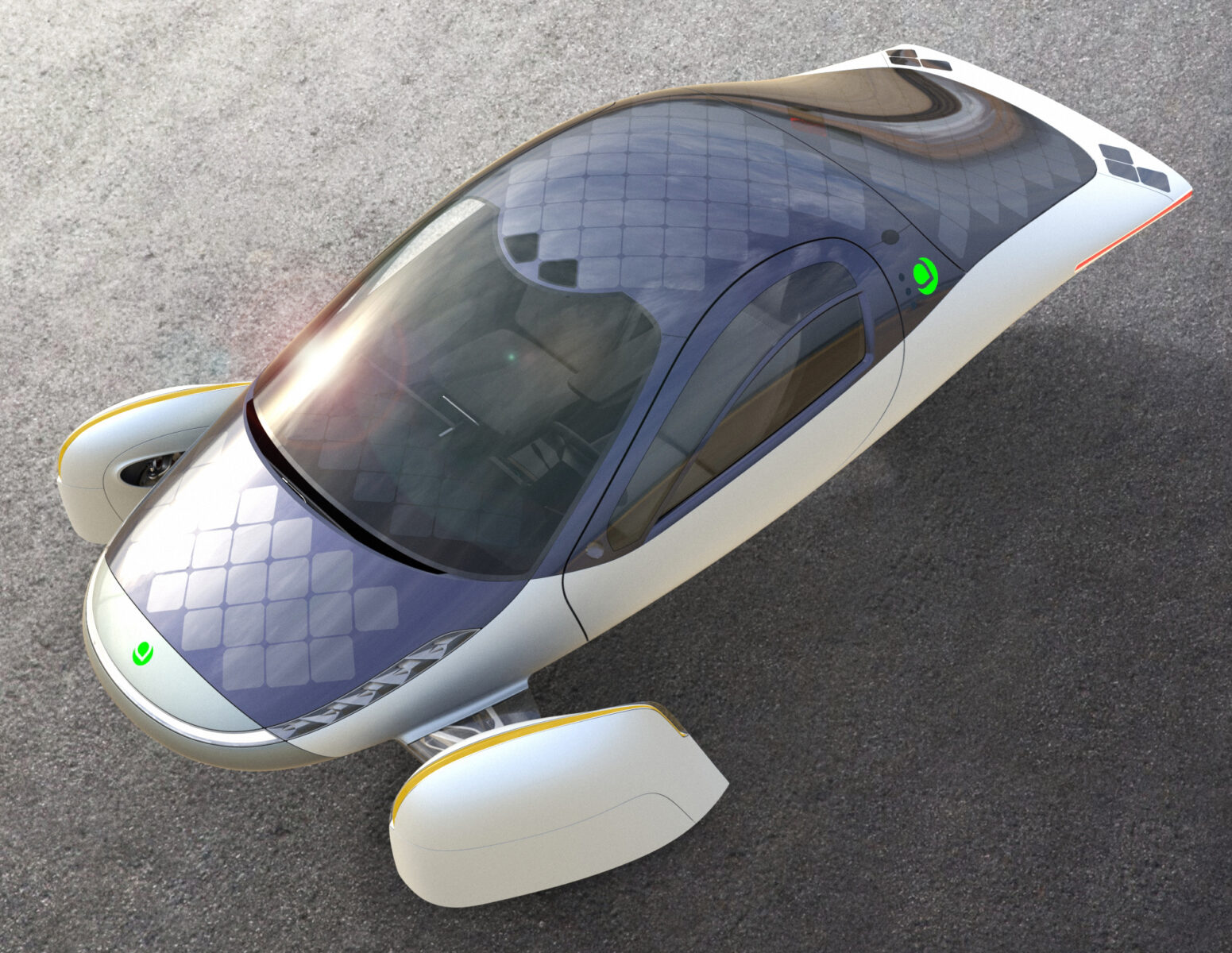
The third wheel matters legally. Aptera’s 10-K says the car is classified as a three-wheeled motorcycle under 49 CFR 571.3, NHTSA’s definitions section, which counts any powered vehicle with a seat for the rider that travels on no more than three wheels as a motorcycle. Aptera says it will self-certify each car to the safety standards that apply to motorcycles and fix a certification label before delivery.
That changes which rules apply. FMVSS 208, the occupant crash protection standard behind the frontal crash tests and airbag requirements carmakers live with, applies to passenger cars, multipurpose vehicles, trucks and buses. It does not list motorcycles. An enclosed two-seater with a steering wheel can reach the road without meeting the federal crash test a Honda Civic has to pass, though it still has to meet motorcycle standards for brakes, lighting and controls. On emissions, Aptera got its EPA Certificate of Conformity for the 2026 Launch Edition on June 18, which the company called one of the two primary federal certifications it needs to sell the car in the U.S.
States handle the driver’s side. The 10-K says most states have adopted “autocycle” classifications that typically let an Aptera be driven on a standard Class C license, and that the vast majority would not require a helmet or motorcycle license today. It also warns that states could add helmet rules later. Those definitions vary by state, so the license and gear rules for an Aptera owner in one state may not carry over to the next.
Selling it is a separate fight. Aptera plans to sell direct, without independent dealers, and the Nov. 19 release lists state dealer licensing, title transfer and registration timing among its risks, along with export controls and foreign import, certification and registration rules for Hartono’s car. Direct sales have run into state franchise law before; Scout Motors just lost a Tennessee direct-sales license bid while fighting dealers in a California courtroom.
Aptera’s Next Deadline Is 40 Cars by Year’s End
The Oct. 1 plan said the first 40 production vehicles would begin building by the end of 2026, with customer deliveries in early 2027, subject to timely financing. The Q3 release, six weeks later, gave no dates and said building and delivering production cars depends on timely financing and regulatory approvals. Bodies and chassis for those 40 cars were ordered in August. The Nov. 19 release doesn’t say whether Hartono’s car counts toward those 40 or how many more are close behind it.
Aptera says the car’s body-mounted solar panels can add up to about 40 miles of driving a day in favorable conditions, and the release’s own risk list adds that sunlight may not cover a given owner’s typical driving. For a reservation holder outside the Accelerator group, the useful numbers are elsewhere: 2,000 investor cars ahead in line, a price that isn’t final, a deposit the company still lists as refundable, and a company that says it needs roughly $25 million to start series production after ending September with $9.2 million.
Whether car No. 1 was a starting gun or a photo op comes down to two things: how many of those 40 cars actually get built by Dec. 31, and what Aptera’s fourth-quarter filing shows for cash and reservations once the top Accelerator investor had his.
Reservation holders: you just watched the biggest check in the building take car No. 1. Is your deposit still sitting there, and what would make you pull it?