
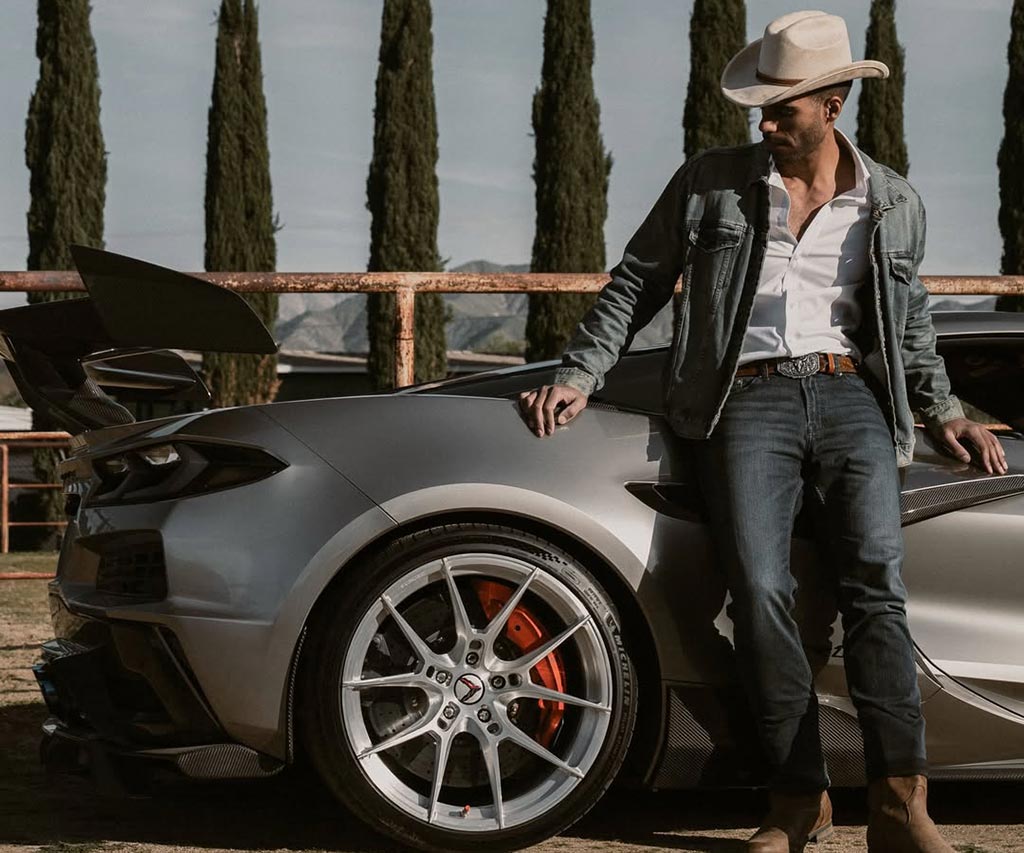
A legendary American advertising icon just rode back into the spotlight, this time from behind the wheel of one of the most powerful Corvettes ever built. A fan-made video circulating online revives the imagery of the Marlboro Man to promote the upcoming 2026 Corvette ZR1, and it’s grabbing serious attention across enthusiast social media.
Chevrolet didn’t make this one, and neither did a major ad agency. It came from a creative fan project shared on Instagram by Christian J. Williams. What starts as a sequence of seemingly random slides builds into something far more dramatic by the end, a cinematic reveal tying the rugged cowboy imagery of the Marlboro Man directly to the raw horsepower of the ZR1.
For enthusiasts, it’s the kind of throwback that sparks instant nostalgia, and it raises a bigger question about why bold automotive storytelling like this rarely comes from manufacturers themselves anymore.
A Fan Video Built Like a Real Commercial
The Instagram post isn’t a traditional video in the usual sense. It unfolds across nearly 20 slides that initially look like unrelated images, a collection of stylized photos without any obvious narrative thread. Then, as viewers keep scrolling, the pieces start connecting. The final slide ties all the earlier visuals together and reveals the underlying concept: rugged Marlboro Man aesthetics fused directly with the aggressive performance identity of the 2026 ZR1.
The result feels less like a casual social post and more like a conceptual ad campaign that could easily air during a major sporting event broadcast, which is exactly why it’s picking up attention.
Why the Marlboro Man Still Resonates
For decades, the Marlboro Man represented a specific strand of American mythology built around independence, toughness, and freedom, qualities that advertising repeatedly tied to open roads and wide-open landscapes. While the character originated in cigarette marketing, the visual language around it grew into a cultural symbol that outlived its original purpose, with the image of a lone cowboy against a massive landscape coming to represent a certain raw American individualism.
That same spirit has long overlapped with car culture. High-performance American cars have been marketed for decades as machines built for drivers who value power, freedom, and independence, and muscle cars, sports cars, and performance trucks routinely lean into that same rugged storytelling. Pairing Marlboro Man imagery with the ZR1 taps directly into that tradition rather than inventing something new.
A Corvette Built to Match the Imagery
The 2026 ZR1 sits at the top of Chevrolet’s performance lineup, and while the Instagram video leans on visual storytelling rather than spec sheets, one message comes through clearly: this car represents serious horsepower. That reputation is exactly what makes the cowboy-style pairing work.
Corvette as a brand has always balanced two identities, cutting-edge performance engineering on one side and deep roots in American automotive culture on the other. When those two elements collide, it tends to produce the most memorable Corvette marketing, and this fan-made piece leans hard into the cultural side, framing the ZR1 as a machine built for drivers who want power and attitude over corporate polish.
Why Enthusiasts Are Responding So Strongly
There’s a clear reason this post is spreading through enthusiast circles: it delivers something a lot of automotive fans feel modern advertising has lost. Over the past decade, car marketing has leaned hard into technology, efficiency, and corporate messaging, with safety features, driver assistance systems, and connectivity dominating most manufacturer campaigns. Those elements matter, but they rarely stir any real emotion.
Enthusiasts tend to respond far more strongly to storytelling built around power, freedom, and personality, the kind of messaging that used to define performance car advertising. This fan-made ZR1 piece leans directly into that older style, skipping spec sheets in favor of imagery, symbolism, and atmosphere, and for a lot of viewers, that approach reads as more authentic than anything coming out of a boardroom.
When Fans Out-Market the Manufacturers
Social media has completely rewritten how automotive content spreads. Advertising used to be controlled almost entirely by manufacturers and big agencies, but today, a talented enthusiast can produce content that genuinely rivals professional marketing work, which is exactly what’s happening here. A single Instagram post captured enthusiast attention simply by being visually compelling and culturally familiar at the same time.
It’s a reminder that car culture has always been driven by passionate individuals first. Car clubs, forums, and social media groups routinely shape how a vehicle gets perceived long before an official marketing campaign ever launches, and when enthusiasts take the creative lead, the results can land harder than traditional advertising ever does.
The Reveal That Makes the Whole Thing Work
One of the smartest parts of this fan-made piece is its pacing. Early slides leave viewers unsure what they’re even looking at, images that feel disconnected, almost like random fragments, until the final slide ties everything together and turns the scrolling experience into a genuine moment of realization. Pulling off that kind of slow-build storytelling on social media, where attention spans are famously short, isn’t easy. Here, it works.
What It Says About Car Culture Right Now
The viral spread of this Marlboro Man-inspired ZR1 video points to something bigger about automotive culture today. Enthusiasts are still drawn to storytelling built around power, independence, and attitude, themes that stay deeply tied to performance cars, especially an icon like the Corvette. Meanwhile, much of the industry has drifted toward safer, more neutral messaging, and that gap is exactly the space enthusiasts are stepping into with content that captures the emotional side of driving that corporate campaigns tend to avoid.
This fan-made commercial might just be an Instagram post, but its reach says something real: when an enthusiast produces marketing that feels more authentic than a corporate campaign, it raises an uncomfortable question for the industry about who actually understands car culture best. Automakers spend millions crafting brand narratives, yet sometimes a single creative fan captures a car’s spirit more convincingly than any of it, and if that keeps happening, manufacturers may need to rethink how they engage with the enthusiasts who built their brand in the first place.