
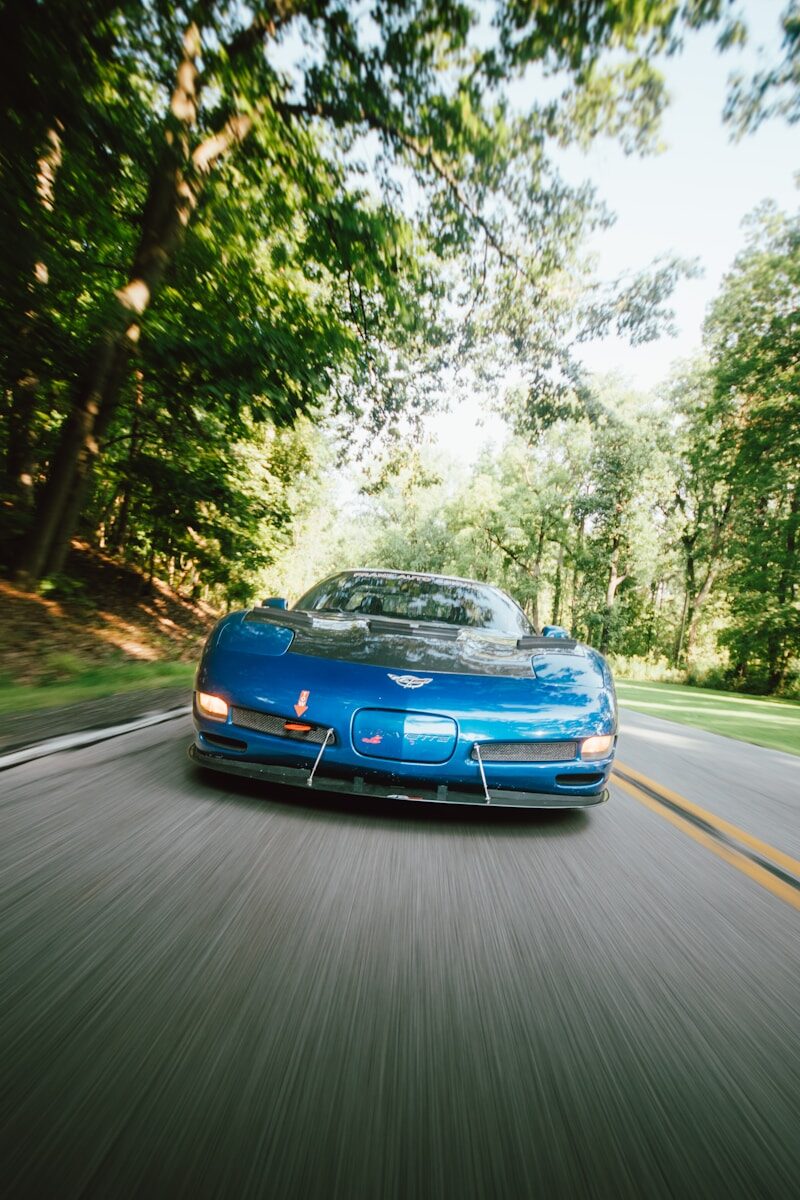
An open stretch of road can feel like an irresistible invitation to a lot of performance car owners. A bright yellow Corvette C5 recently proved just how tempting that moment can be, and how fast it turns into an expensive mistake once law enforcement is watching from above.
Authorities near the Golden Ears Bridge tracked a Corvette blasting across the span at more than 100 mph. The driver may have assumed the highway was clear, but a police helicopter was already circling overhead, and within minutes the situation went from a high-speed thrill to a traffic stop loaded with penalties.
A Corvette That Was Impossible to Miss
According to the Royal Canadian Mounted Police, their Air 1 helicopter unit first spotted the bright yellow Corvette traveling roughly 170 km/h, about 106 mph. That kind of speed might earn applause at a track day, but the setting made all the difference, since the posted limit on that stretch of road is just 50 mph. The driver was moving at more than double the legal limit while crossing the bridge, and a bright yellow paint job with an unmistakable sports car silhouette isn’t exactly subtle from a helicopter monitoring traffic from above.
Tracked From the Air the Whole Way
Rather than relying on roadside radar, police kept the Corvette under observation from the air, a method that lets a helicopter crew quietly monitor a vehicle without tipping off a driver who might rely on a radar detector or a quick burst of speed to slip away. After leaving the bridge, the Corvette kept moving fast along Dewdney Trunk Road, with officers clocking it at about 75 mph in a zone where the limit drops to just 37 mph. By that point ground units were already coordinating directly with the helicopter crew, and the Corvette was pulled over without incident shortly after.
What Extreme Speeding Actually Costs in British Columbia
British Columbia treats excessive speeding as a serious offense, especially once a driver clears the posted limit by a wide margin. Driving 50 mph or more over the limit triggers an automatic seven-day vehicle impoundment, a penalty that applies even to drivers with a clean record. For this driver, that meant the Corvette got towed straight to an impound lot for a full week.
The driver was also hit with multiple excessive speeding tickets. The base fine alone totals $483, but that’s far from the full financial picture, since towing fees, storage costs, and the insurance increase that typically follows can push the overall cost close to $2,500. That’s a steep price for a few minutes of highway speed.
Police Couldn’t Resist a Joke
When authorities shared details of the stop, they added a bit of humor to the announcement, comparing the bright yellow Corvette’s dramatic speed run to a “Lightning McQueen” scene. The reference is obvious enough: a flashy sports car grabbing attention with serious speed. Behind the joke, though, the message was serious. Driving at extreme speeds on a busy commuter route creates real risk for everyone else using the road, and police were clear that a highway full of daily traffic isn’t the place to explore a performance car’s upper limits.
Why Helicopter Enforcement Is So Hard to Dodge
The Golden Ears Bridge is a major connector between communities like Langley, Surrey, Maple Ridge, and Pitt Meadows, and its long open stretches and steady traffic flow can tempt a driver to press the throttle harder than they should. Aerial patrols change that equation dramatically. From above, a helicopter can track a vehicle continuously and relay its exact position to ground units in real time, and unlike a roadside radar setup, drivers usually have no idea they’re being watched at all. Radar detectors, sudden braking, and short speed bursts don’t do much good when officers are watching an entire stretch of road from the sky, and in this case, the driver never had a real chance to slip away unnoticed.
Where Performance Cars and Public Roads Collide
A Corvette C5 is built to deliver serious speed, with a powerful V8 and track-inspired engineering more than capable of reaching speeds well beyond typical highway limits, which is exactly why enthusiasts love the platform. Public roads introduce variables a racetrack simply eliminates, though. Traffic, intersections, pedestrians, and unpredictable conditions make high-speed driving far riskier the moment it leaves a controlled environment, which is why authorities keep pointing to incidents like this one as justification for strict enforcement around excessive speed.
A Forced Week Off
For now, the bright yellow Corvette is sitting still in an impound lot instead of tearing across open pavement. The seven-day impound effectively works as a forced cooling-off period for both the car and the driver, one week parked behind a fence instead of logging highway miles. For other performance car owners, the story is a familiar reminder about where speed actually belongs: sports cars are built for excitement and pushing limits, but testing those limits on a busy public road tends to end the same way, flashing lights, an expensive bill, and a ride on the back of a tow truck.
The real takeaway might be simple: when a road looks too perfect for a high-speed run, there’s always a chance someone’s watching. Sometimes that someone is in a helicopter.