
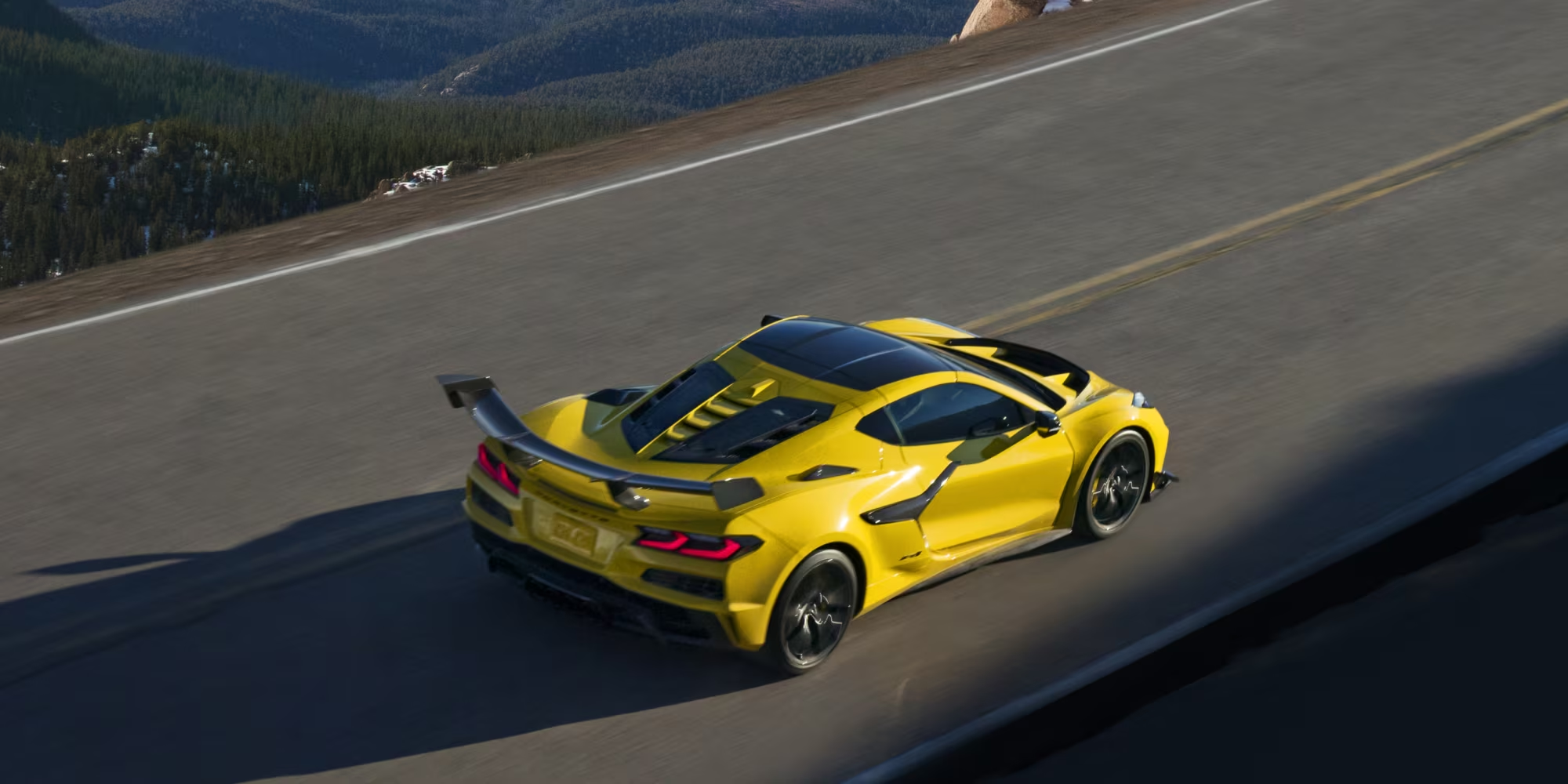
The Chevrolet Corvette ZR1 was built to embarrass supercars that cost three times as much. The rear-drive version pushes past 1,000 horsepower, and the all-wheel-drive model clears 1,200. That AWD car can hit 60 mph in under two seconds and keep pulling until it tops 230. None of that is the problem here. The problem is that one of the very parts responsible for making the ZR1 so fast appears to be quietly damaging the car it’s bolted to.
A YouTuber Spots Something Wrong
The owner who flagged it goes by the handle Wheeler, and the story picked up steam after it began circulating online. In both an Instagram clip and a longer YouTube video, he laid out what he found after a track day where he was running north of 180 mph. The paint around one of his rear wing struts had chipped away. This wasn’t a rock chip or a sloppy wash, it looked like the car was hurting itself.
10 Best Safety Items for Your Car
Then comes the detail that makes the whole thing more believable. A friend of his took the ZR1’s wing and bolted it onto a Z06, and that car developed the same kind of damage. Two different cars, the same part, the same result. Wheeler’s theory is that there’s so much downforce being generated that either the wing or its mount flexes under load. When it flexes, something rubs against the bumper, and the paint pays the price.
An Expensive Option, and They Aren’t Cheap
Wheeler’s window sticker, shown in an earlier video, confirms he ordered the aero package without the ZTK performance package. He took delivery in June of last year, which makes his an early production example, and at the time the package ran $8,495. That number has since climbed to $10,495.
If you want the ZTK package layered on top, the bill gets ugly fast. ZTK is a $4,395 set of options, but it requires the aero package to come along with it, which pushes the total upcharge past $15,000. Spending that kind of money on parts designed to improve the car, only to watch them scuff up the finish, is not what anyone signs up for. The whole point of an option that expensive is that it makes the car better, not that it leaves marks behind the rear wheels.
The Dealer Did Right By Him
There is a bright spot in all of this. Wheeler isn’t eating the repair bill. He brought the car to his dealer, and the dealer agreed the damage was abnormal and consistent with body parts rubbing against each other. They covered the paint repair out of their own pocket. He did say he’s worried about it coming back, which is fair, because fixing the symptom doesn’t necessarily fix whatever is causing it. As of now there’s no recall or technical service bulletin tied to the issue, and Chevrolet hasn’t offered a statement.
Why Enthusiasts Should Care
A couple of things are worth sitting with. The first is plain old caution about buying into a brand-new model. The C8 Corvette has been around for years and the Z06 for a couple, but the ZR1 only arrived recently with all-new hardware, from the powertrain down to that one-of-a-kind rear wing. Buyers who can’t stomach early-run surprises are usually better off waiting a year while the factory works the bugs out.
The second is that the dealer actually did its job, and that’s becoming the difference between a good ownership experience and a miserable one. The only thing worse than a problem with an expensive car is a manufacturer or dealer that shrugs and walks away. That matters more every year as cars get pricier and budgets get tighter, even on machines well under six figures. If buyers can’t trust a car to hold together, or trust the people selling it to make things right, there’s no reason to hand over the money.
So the open question isn’t whether the ZR1 is fast. It obviously is. The question is whether Chevrolet figures out why its halo car is rubbing through its own paint before more owners start inspecting their wing struts and finding the same thing. A car that fights its own bodywork at speed has a problem worth solving, and it’s on the automaker to solve it.
Images Via: Corvette