
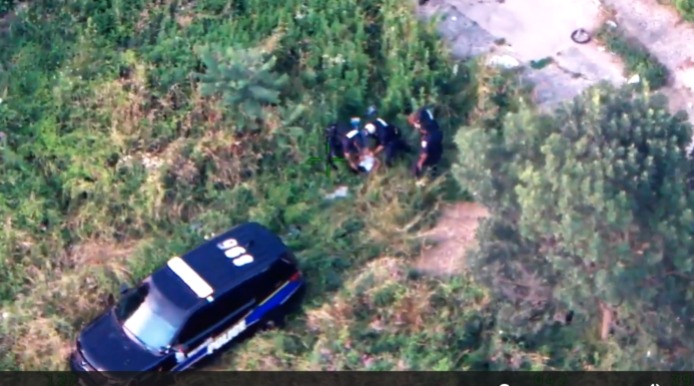
Baltimore’s spending board just cut a $400,000 check over a car crash that wasn’t really a crash — it was a fleeing 16-year-old ending up under the passenger-side wheels of a Ford Explorer wearing police livery. The Board of Estimates, the five-member panel that signs off on the city’s money, approved the payout unanimously on July 1. What makes this one worth a car enthusiast’s attention isn’t the dollar figure. It’s the vehicle at the center of it, the data that vehicle almost certainly recorded, and the legal argument the city tried to run before deciding to settle.
What the Complaint Says Happened
Here’s the sequence, drawn from the federal complaint filed in the U.S. District Court for the District of Maryland and the city’s written response to it. On June 14, 2021, Baltimore officers were chasing a Honda taken in the armed carjacking of a Pizza Boli’s delivery driver. The car was abandoned, the occupant bailed on foot, and the pursuit turned into a foot chase through the Harlem Park neighborhood with a police helicopter — call sign Foxtrot — overhead. One officer chased Devonte Jett on foot with his weapon drawn. Another officer, identified in the suit as Steven Reed, was in a department SUV. Reed drove that SUV into Jett from behind in an open lot and ran him over. Jett didn’t regain consciousness until he was in an ambulance headed to Shock Trauma, with a collapsed lung, pelvic injuries, a likely concussion, and lasting memory loss.
Check This Out: 5 Genius Garage Upgrades Under $100 That Make a Big Difference
The “Roadblock” That Was Moving
The city’s lawyers did not argue that running over a pedestrian is fine. They argued it was an accident — that the contact happened because Jett stepped into the path of a patrol vehicle attempting a lawful roadblock. That word choice is doing a lot of heavy lifting, and it’s where the automotive reality matters.
- Porsche Reportedly Wants To Pull Cayenne Production Out Of Slovakia And Move It Home To Germany
- Ford’s 2026 Recall Tally Tops 10 Million Vehicles as Park-System Defect Hits 741,000 SUVs and Trucks
A roadblock is, by definition, a vehicle sitting still so that something else runs into it. The complaint alleges the opposite: that the SUV accelerated and steered toward Jett, who was running in a straight line and never turned into it. Reed’s own account, quoted in the filing, is that Jett “stepped into the path of his vehicle” and that he didn’t even realize he’d hit anyone until Foxtrot radioed it down. Those are two irreconcilable stories about throttle input, and that brings us to the machine.
The marked SUV Baltimore runs is the Ford Police Interceptor Utility, which since the 2020 model year is built on the sixth-generation Explorer. Per Ford’s own fleet specifications, that truck carries a curb weight between roughly 4,700 and 5,090 pounds and a gross vehicle weight rating of 6,840 pounds. Call it two and a half tons of reinforced, AWD, pursuit-rated hardware. As a “roadblock” against a teenager on foot, it is less a barricade than a battering ram. Under virtually every modern use-of-force policy, aiming a moving vehicle at a fleeing person on foot is classified as deadly force — the legal equivalent of firing a gun, not deploying a cone.
The Car Probably Knows Who’s Telling the Truth
Here’s the part that gets glossed over in the courtroom framing: that Explorer was very likely carrying a witness. Since 2014, effectively every new light vehicle sold in the U.S. that has an event data recorder must, under federal standard 49 CFR Part 563, capture a standardized packet of pre-crash information the moment the airbag system senses an impact. That typically includes vehicle speed, throttle percentage, and brake application in the seconds before contact. In other words, the single disputed fact in this entire case — did the sergeant speed up or was this an unavoidable step-into-traffic accident — is exactly the kind of question a vehicle’s black box exists to answer. Layer on the department’s dash and body-worn cameras, and the evidentiary picture should have been unusually complete. Notably, the complaint alleges that repeated public-records requests between 2022 and 2025 never produced body-camera or dash-camera footage from the three officers most directly involved. When the objective data goes missing and the incident settles for six figures, reasonable people can draw their own conclusions.
Why the City Paid Rather Than Fought
Legally, Jett’s suit pairs a Fourth Amendment excessive-force claim with a broader allegation that Baltimore has a pattern of using police vehicles as weapons — the kind of “custom and practice” theory that, if proven, exposes the city itself rather than just one officer. The suit invoked the department’s ugly recent history, from the Gun Trace Task Force to a separate 2025 case in which an officer was charged with attempted murder after allegedly trying to run a man down with his cruiser. It all unfolds against Baltimore’s federal consent decree, the court-enforceable reform agreement in place since 2017 that explicitly demands de-escalation and tighter use-of-force controls, overseen by an independent monitor reporting to the same federal court.
- Ford Fired a Diabetic 11-Year Veteran Over a $1.95 Cookie He Actually Paid For
- McLaren Driver Allegedly Ran a Red Light on a Suspended License, Killing a Chicago Woman in a Brutal Chain-Reaction Crash
A $400,000 settlement reached before any dispositive motions is a tell. Cities that like their odds file for summary judgment and try to get a case tossed on qualified immunity. Cities that have seen the video tend to write checks. The plaintiff’s attorney called running the teenager over grossly excessive and unconstitutional, and the city’s own comptroller argued at the meeting that a citizen complaint about being run down by an officer ought to outrank the paperwork violations clogging the disciplinary system.
The Economics Enthusiasts Should Notice
Baltimore, like most large cities, self-insures these payouts — there’s no outside carrier absorbing the hit, so the $400,000 comes straight from the municipal budget, which is to say from residents. And the meter kept running long after the crash. City payroll records show Reed remained on active duty from the 2021 incident until January 2025, when he was suspended with pay over a separate matter, collecting more than $700,000 in salary and overtime along the way, including roughly $115,000 in overtime in fiscal 2024 alone. The internal investigation into the crash was described by a police spokesperson as concluded, though the result was never made public. City officials acknowledged a backlog of more than 800 disciplinary cases.
For the car-world reader, there are two durable takeaways here. First, a police-spec Explorer is a purpose-built, five-thousand-pound tool, and pointing one at a person is a use-of-force decision, not a driving maneuver — a distinction pursuit policies exist to enforce. Second, the black box in that SUV is the same technology sitting in your own car right now: in any serious collision, the vehicle records what your right foot was doing, and that data increasingly decides who was at fault long before anyone’s memory gets a vote.
Images Via: Comptroller’s Office
Read Next: 10 Emergency Car Products You Hope You Never Need