
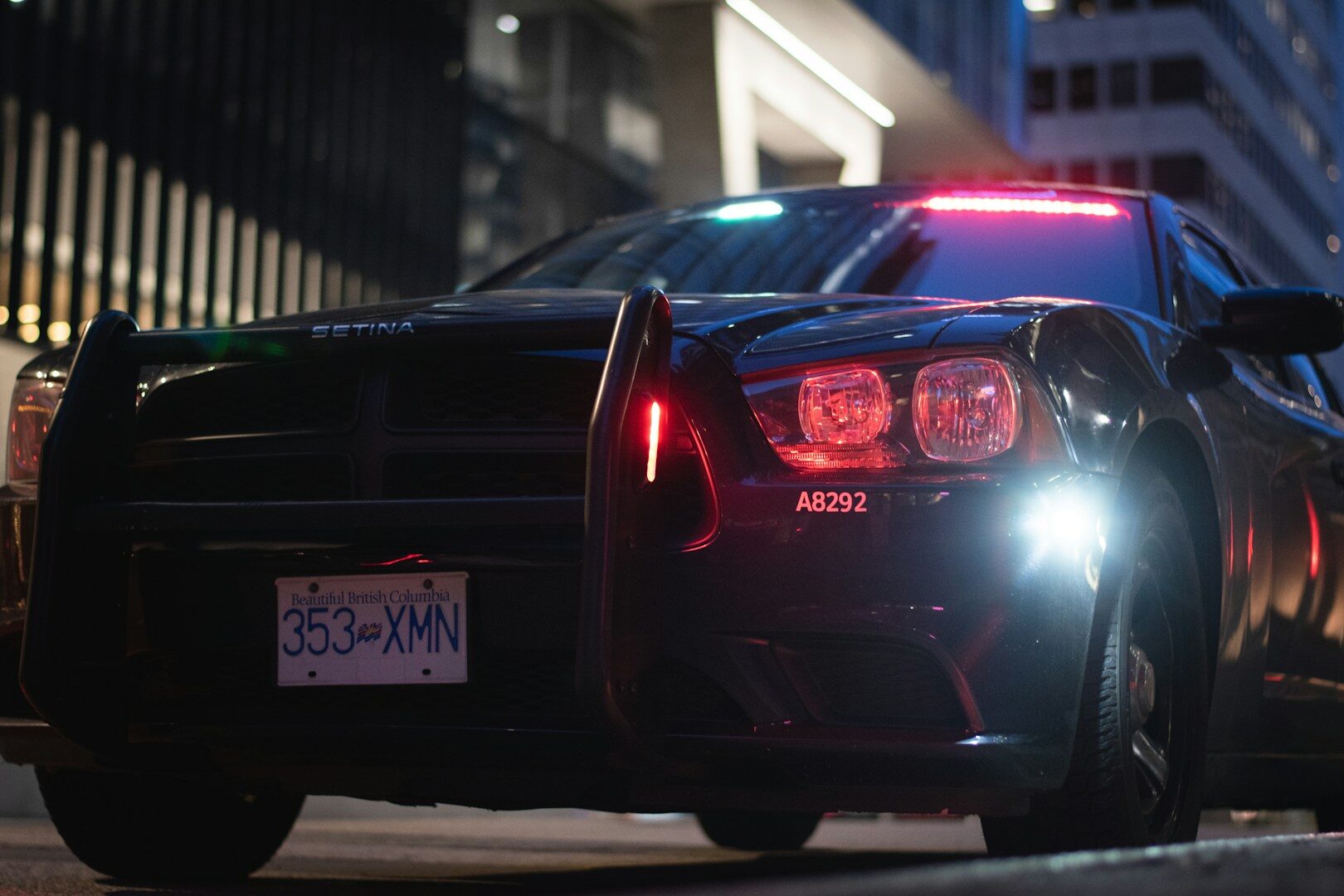
You can buy a lot of things over the counter that have no business being on a private vehicle, and a light bar that flashes red and blue is near the top of that list. A resident of Dubois County, Indiana apparently agreed with that concern, because a citizen tip is what pointed troopers toward a black 2016 Ford Explorer kitted out to look an awful lot like an unmarked squad car.
According to the Indiana State Police Jasper District, Trooper Kayla Denk-Mundy cited a Jasper man on two counts after an investigation that started with that tip: displaying red and blue lights on a vehicle, and possession of a police radio. Notably, the state police say no one has come forward alleging the man actually pulled anyone over or pretended to be a cop. He was cited for having the gear, not for a documented traffic stop.
That distinction matters more than it might seem, and it gets at why Indiana treats emergency lighting the way it does. The color of the lights on a moving vehicle is essentially a public signal system, and the state reserves specific colors for specific jobs. The Jasper District laid out the whole hierarchy: red and blue is law enforcement, red and white is fire and EMS, blue is for authorized volunteer firefighters, green is for authorized EMTs and paramedics, and amber is the catch-all for utility, construction, and recovery rigs. If you have ever wondered why the tow truck hooking up your dead sedan glows amber instead of blue, that is the reason. The colors are legally spoken for.
Red and blue sits at the top of that pyramid precisely because it commands the most authority on the road. When those colors light up your mirror, you are legally obligated to pull over, and that obligation is exactly what makes the setup dangerous in the wrong hands. A convincing light package plus a police radio does not need to be paired with a fake badge to be a problem. The equipment itself does most of the work of making a driver comply.
The choice of vehicle is worth pausing on too. A black Ford Explorer is arguably the single most cop-coded SUV on American roads right now. The Explorer-based Police Interceptor Utility has become the default cruiser for departments across the country, so a civilian Explorer in a dark color already reads as a plausible unmarked unit before a single light is added. That visual shorthand is a big part of what makes a build like this convincing at a glance in a rearview mirror at night.
There is a practical side to this for anyone who buys or builds project vehicles, too. Emergency lighting and scanner-style radio gear are easy to find online, and plenty of enthusiasts install auxiliary lighting for legitimate reasons. The line Indiana draws is about color and function, not just intent. Amber work lights on a recovery vehicle are fine. Forward-facing red and blue on a personal SUV are not, regardless of whether you ever switch them on in traffic. If you are wiring up lighting on a build, the color you choose is the part that keeps you on the right side of the law.
The state police are now trying to work backward from the equipment to see whether it was ever actually used. The Jasper District is asking anyone who believes they may have been stopped by this vehicle to come forward, which is the standard move when investigators have the hardware but not yet a victim. If someone does report being pulled over, the situation escalates quickly from a lighting-and-radio citation into potential impersonation territory, which carries far heavier consequences.
For now, the takeaway for drivers is the same advice troopers have given for years. A real unmarked officer will typically be in a vehicle with proper lighting and can identify themselves, and if anything about a stop feels off, you are within your rights to slow down, turn on your hazards, and continue to a well-lit public area or call 911 to confirm the stop is legitimate before pulling over. Anyone in the Dubois County area who thinks they were stopped by the Explorer described here can reach the Indiana State Police Jasper District at 812-482-1441.