
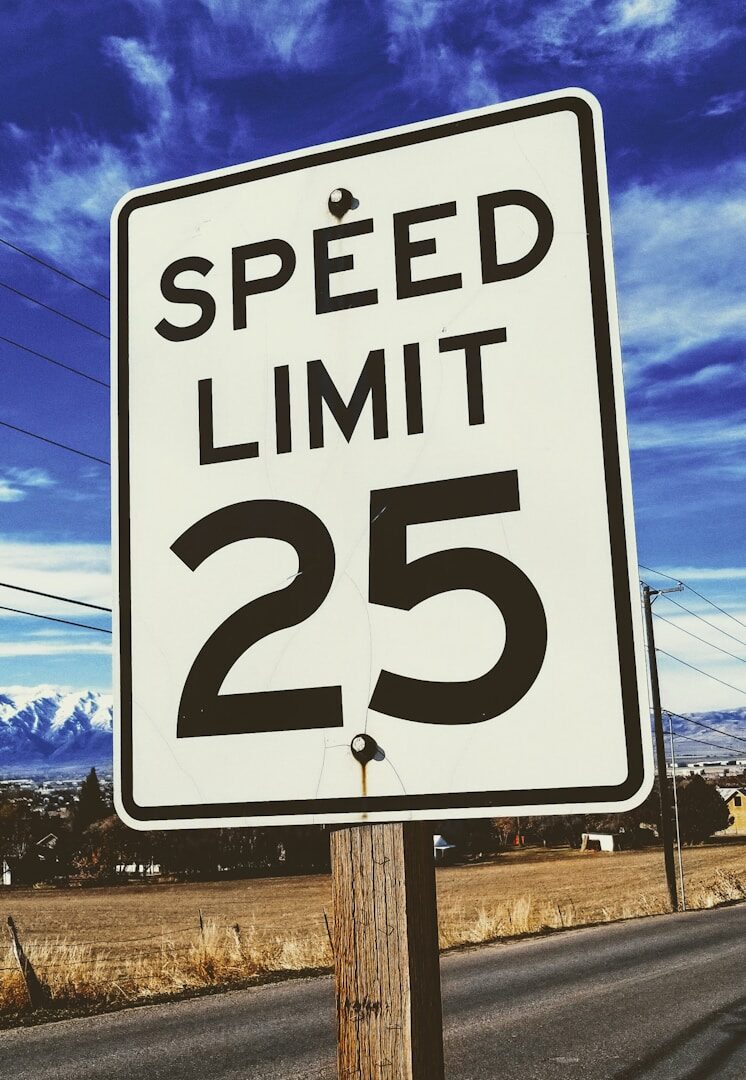
Nobody at the European Commission is going to volunteer this part, so here it is: the same regulatory push to let satellites cut your engine power when you speed just ran headlong into real-world test data showing the underlying tech isn’t accurate enough for that job yet. That’s not speculation. That’s a finding from the industry’s own crash-safety lab, published weeks before the proposal even made headlines.
Garage-worthy EDC gear, on sale this week.
The headline version of this story, first surfaced by the Daily Mail and picked up widely since, goes like this: the EU is weighing a rule that would require all new cars sold after 2030 to use satellite positioning to detect speeding and automatically cut engine power in response. No formal proposal has been tabled. But the direction is consistent with where Brussels has been heading for years, and it’s worth understanding what’s actually being upgraded, because it isn’t new spy tech. It’s an accuracy problem nobody has solved.
What’s already in your car, whether you noticed or not
Start with what already exists. Under EU Regulation 2019/2144, Intelligent Speed Assistance has been mandatory on every new car sold in the EU since July 2024. Today it’s a nag, not a governor. The car reads speed limit signs using a camera and GPS map data, chimes if you’re over, and lets you override it through the accelerator pedal. You can switch the whole system off. Here’s the part almost nobody clocks: by law, it has to be “in normal operation mode upon each activation of the vehicle master control switch.” Translation: every time you restart the car, the nag turns itself back on. You don’t get to decide once and move on.
That’s the system regulators want to promote from advisor to enforcer. Instead of beeping, it would trim power output when it believes you’re over the limit. The pitch is straightforward: Brussels has committed to halving road deaths by 2030 and effectively eliminating them by 2050 under its official road safety framework, and a hard speed governor is a cheap way to chase that number without repaving a single road or adding a single guardrail. Software mandates scale across an entire vehicle fleet in a way that infrastructure spending never will. That’s the business logic behind this, and it’s not unreasonable. It’s also not the whole story.
The inconvenient data point
Here’s the wait-really moment. Thatcham Research, the UK’s independent vehicle safety and insurance testing body, published real-world ISA testing results in June that expose a gap nobody designed the current approval process to catch. EU type-approval measures ISA accuracy over total distance driven, which sounds rigorous until you realize it’s the wrong metric entirely. A car can drive for miles with the correct limit displayed and still get it wrong at nearly every actual sign change, and the distance-based score would barely notice.
So Thatcham tested it the other way, measuring accuracy at the moment a posted limit actually changes. The results are rough. The best-performing vehicle in their sample scored 98.39% accuracy by distance but only 90.3% at the moment of each limit change. The worst dropped from 91.3% distance-based accuracy to 74.3% event-based, meaning it displayed the wrong number roughly one time in four. Multiple vehicles also displayed speed limits that don’t legally exist on UK roads at all, including phantom readings of 5 mph and 100 mph. Thatcham’s own research release flagged that these errors can already trigger unwanted harsh braking or acceleration where ISA is linked to adaptive cruise control, and that repeated misreads erode driver trust to the point that people simply switch the system off.
Sit with that. A car that’s wrong one time in ten at a sign change is annoying when all it does is display the wrong number. It’s a different animal entirely when it’s also the system deciding how much throttle you get.
Why this is an engineering problem, not a software toggle
Turning a warning system into a control system isn’t a firmware update. It’s a functional-safety redesign. A system that only has to warn you can fail safely by doing nothing. A system that actively cuts power has to fail safely by handing control back instantly and predictably, every time, on every road, in every weather condition, without inducing a new hazard like sudden deceleration in fast-moving traffic. That means redundant positioning data, sensor fusion between cameras and GNSS, and validation standards that don’t currently exist at the level Thatcham is describing. Building a system that nags you is hard enough that automakers are still getting it wrong a quarter of the time. Building one that’s allowed to physically restrain the car is a much taller order, and the accuracy bar has to be far higher than 90% before anyone should trust it with the throttle.
There’s a repair and ownership angle too, and it’s one owners will feel before any speed-limiting mandate ever arrives. The cameras and radar behind ISA already need recalibration after a windshield replacement, a bumper repair, or even a wheel alignment on some platforms, and that calibration step is now a standard line item in body shop invoices across Europe. Insurers are paying attention for a related reason: Thatcham feeds exactly this kind of ADAS accuracy testing into the vehicle risk ratings insurers use to set premiums. Your car’s ability to correctly read a speed limit sign is already, quietly, a factor in what you pay for coverage, mandate or no mandate.
This isn’t a new idea, just a more precise one
None of this is really about satellites spying on drivers. GPS has been sitting in cars doing navigation for two decades, and the positioning data this proposal would use already exists on your infotainment screen. The actual precedent is older and more mundane: heavy trucks and buses in the EU have operated under mandatory speed limiters since the 1990s, enforced mechanically rather than by camera and map data. What’s changing isn’t the concept, it’s the precision and the vehicle class. Passenger cars are getting the same treatment trucking got a generation ago, just with satellites and sign-recognition cameras instead of a cable-driven governor.
That pattern, technology built for convenience or logistics getting repurposed into enforcement, keeps showing up across the industry. We’ve covered Virginia’s new court-ordered speed limiter program for repeat offenders, which functions as a punitive preview of what a mandatory version might look like on the road. We’ve written about how your car already logs and reports driving data that regulators and insurers are increasingly eager to use. And we’ve watched automakers threaten to walk away from an entire state market over California’s push for a tracking off-switch. Automated enforcement tech has its own accuracy track record too; Colorado’s newer speed camera systems ran into similar credibility questions when the technology didn’t behave the way regulators assumed it would.
What to actually remember here
A warning system is allowed to be wrong sometimes. A control system isn’t. That’s the entire argument, and it’s the one the coverage obsessed with satellites keeps missing. The EU has every right to chase its 2030 safety targets, and reducing speed really would reduce deaths. But the evidence its own safety researchers just published says the sign-reading technology isn’t ready to be handed the throttle, not because the goal is wrong, but because the tool still fails at the exact moment it would need to be trusted most.
Watch what regulators do next, not what they announce. If the eventual proposal adopts Thatcham’s event-based testing standard instead of the current distance-based one, that’s a sign someone in Brussels actually read the data. If it doesn’t, drivers are being asked to trust a system with their engine power that its own testers just proved isn’t ready for the job.