
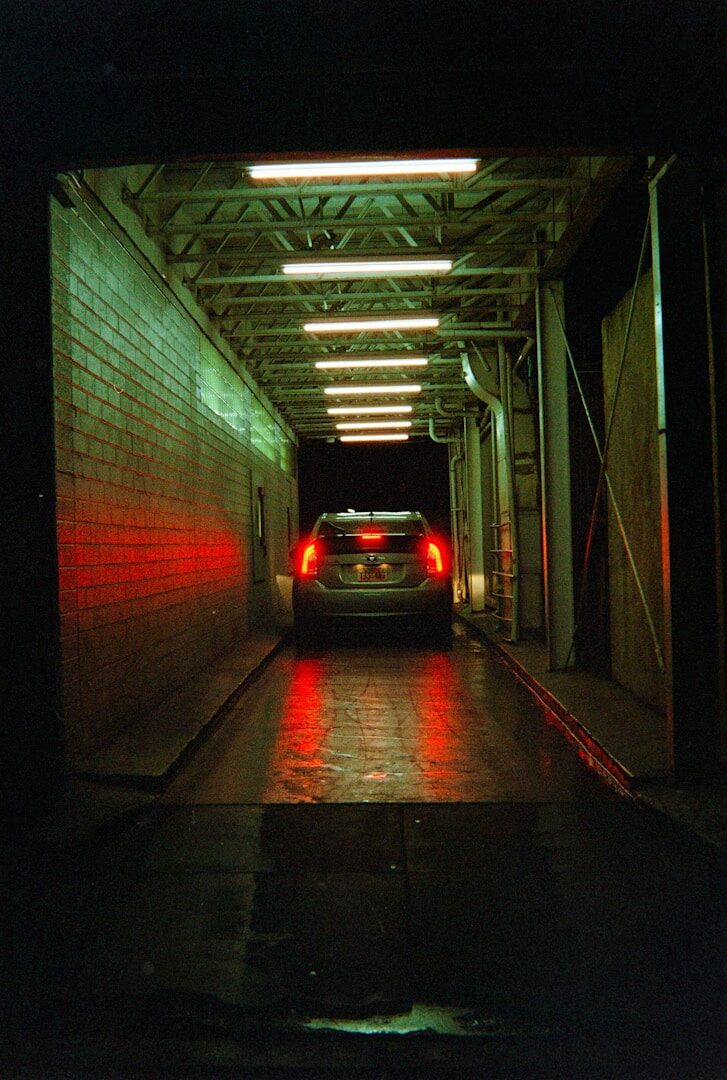
A market research firm just published a report projecting that the global car wash industry will grow from $38.4 billion this year to $55.5 billion by 2033. That’s a modest 5.4 percent annual climb, the kind of number that normally belongs in a filing cabinet.
But buried in the release is a sentence that matters more than the headline figure: leading operators now generate more than 70 percent of their wash volume through unlimited membership programs. Not single washes. Not punch cards. Subscriptions, the same recurring-revenue mechanism that runs Netflix, your gym, and increasingly, your car’s own heated seats.
That’s the real story here. This isn’t a report about Americans buying more cars, or suddenly caring more about clean paint. It’s a report about an entire service industry rebuilding itself around a financial structure, and the changes that come with it are already showing up in your paint job, your neighborhood, and who owns the wash bay you pull into every other Saturday.
The Subscription Math Nobody Explains at the Kiosk
Unlimited car wash memberships typically run $20 to $40 a month for a wash that would cost $15 to $25 a la carte. The pitch is simple: wash often enough and you save money. The business model behind that pitch depends on a meaningful share of members not doing that.
Gym memberships work the same way. Operators price the plan assuming plenty of subscribers will pay every month and show up rarely, subsidizing the smaller group that washes weekly. Car washes discovered they could run the identical playbook with even better unit economics than a gym, since a wash cycle takes minutes, uses almost no staff time inside an automated tunnel, and the same water and chemical infrastructure services every car that comes through, subscriber or not.
Unlimited plans aren’t really a discount, in other words. They’re a bet by the company that most of its subscribers won’t use the product enough to make canceling feel worth the effort. It’s the same bet a gym makes every January, dressed up in car-shaped clothes.
Wall Street Already Figured This Out
This is also, quietly, a private equity story, and the market report says so without quite saying so. Look at the key players it names: Mister Car Wash, a chain that’s been publicly traded since 2021; International Car Wash Group, which the report says is pursuing acquisition-led expansion across multiple international markets; Zips Car Wash; WashTec; IMO Car Wash. None of those are founder-run regional operators anymore. They’re consolidation platforms, built the same way private equity has spent the last decade rolling up veterinary clinics, self-storage facilities, and dermatology practices: buy a fragmented industry made of independent operators, standardize it, load it with recurring subscription revenue, and sell the platform at a multiple few analysts would have applied to a car wash a generation ago.
The Auto Wire covered a version of this same dynamic recently with Roger Penske’s move to buy back control of Penske Automotive Group, a reminder that the auto industry’s ownership structure changes far more often, and far more consequentially, than its sheet metal does. Car washes are simply the latest fragmented, cash-generating, unglamorous business that finance discovered could be engineered into something bigger.
Water Regulation Is Doing Wall Street’s Consolidation Work For It
Here’s the detail in the report that deserves more attention than it got: a traditional wash uses 15 to 45 gallons of water per vehicle, and drought-prone regions across North America, Europe, and Australia are tightening wastewater discharge rules in response. Big operators are investing in water reclamation systems to comply. Independent operators, the report notes, face greater financial pressure doing the same thing.
Environmental regulation, in this case, isn’t just an operating cost. It’s functioning as a moat. A reclamation system that a regional chain can amortize across two hundred locations is a rounding error. The same system, installed at a single-location independent wash, can be the difference between staying open and closing. Regulators aren’t trying to consolidate the car wash industry. But the effect on small operators is the same as if they were.
The Automation Push Isn’t Really About Getting You Out Faster
The report highlights ISTOBAL’s new M’WASH3 PRO MAX, a rollover system that washes and dries a car in about three and a half minutes, roughly 35 percent faster than a conventional rollover unit. That reads like a convenience upgrade. It isn’t, primarily.
Labor runs 45 to 55 percent of operating costs at full-service and detailing-focused washes, according to the report, and rising minimum wages keep squeezing that margin. A synchronized wash-and-dry system doesn’t just move cars through faster; it removes the need for a person to do the drying by hand. Every subscription-funded tunnel operator has the same incentive: fewer staff hours per car, more consistent output, and a business that scales without scaling headcount. That’s also why tunnel washes, which require the least labor per vehicle of any format, already account for 34 percent of global industry revenue, more than any other service type.
None of this is happening in a vacuum. The broader auto service industry has spent the past couple of years unable to hire enough people at almost any price, and that kind of labor market is exactly what makes an automated, subscription-funded wash tunnel look less like an innovation and more like a necessity.
What the Subscription Boom Means for Your Paint
None of this is free for the car itself. The Auto Wire has previously reported on how the brushes inside tunnel washes accumulate grit from every vehicle that passes through, and can etch fine scratches into clear coat if operators skip basic maintenance steps like rinsing the brush between cars. That risk doesn’t disappear as the industry scales up. If anything, a model that rewards subscription volume over per-visit revenue gives operators less financial incentive to slow down, swap worn media on schedule, or staff the bay closely enough to catch problems. The customer paying $29.99 a month regardless of how any individual wash performs isn’t in a great position to notice a five-cent problem with a brush.
The $55.5 billion projection is real, and vehicle ownership genuinely is climbing worldwide, especially across Asia. But growth was never really the interesting part of this report. The interesting part is that the humble car wash, one of the least glamorous businesses in the entire auto economy, has become a case study in how a lot of modern service industries get built now: find a fragmented business people already pay for out of habit, wrap it in a subscription, automate the labor out, let regulatory compliance costs squeeze out the small operators, and let recurring revenue do what it always does.
A subscription car wash doesn’t need to make your car spotless. It needs you to forget you’re paying for it.
That’s not a criticism of clean cars. It’s a description of where a lot of quiet money in this country is headed next.