
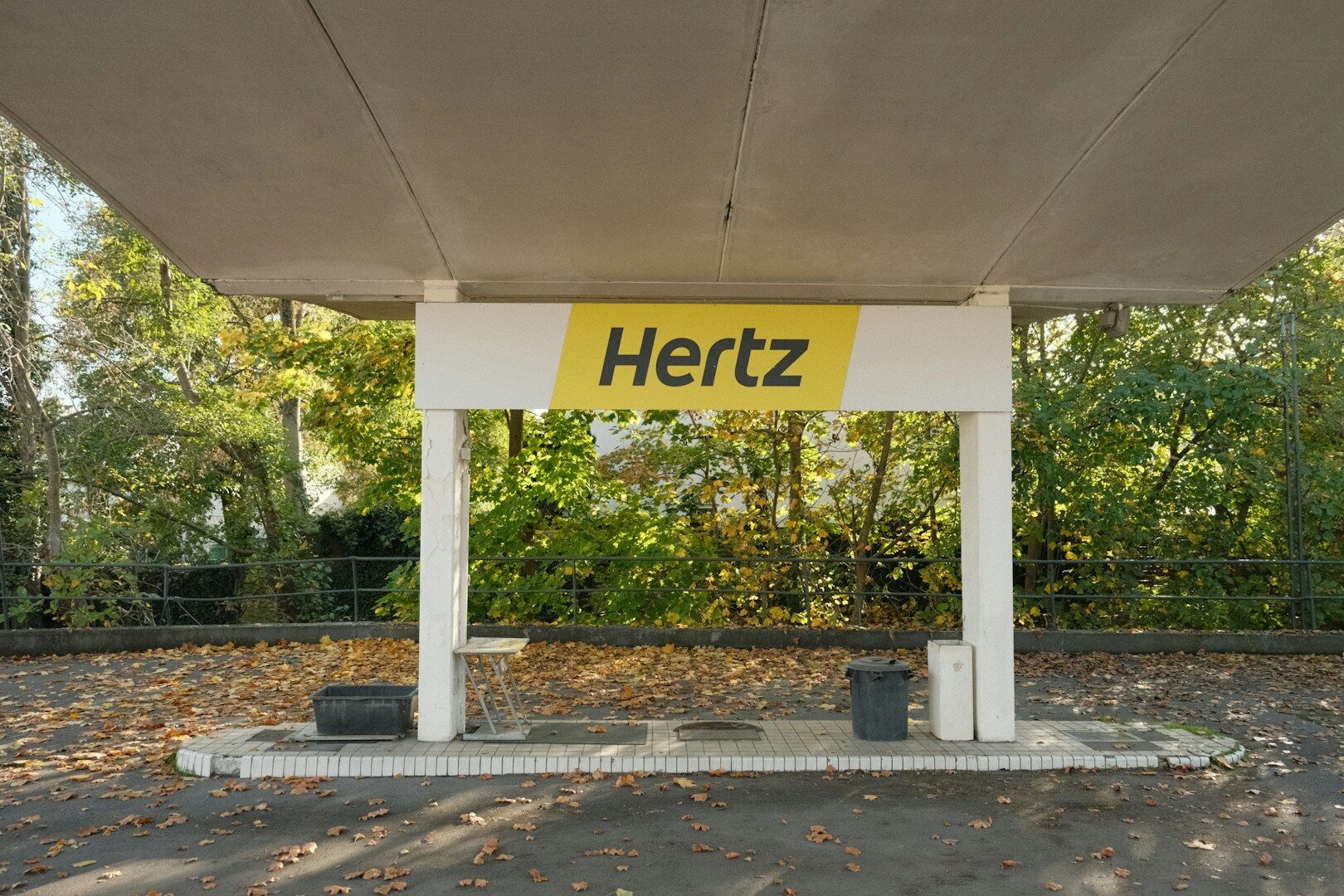
Hertz Told Investors The Fleet Was Fixed. Six Weeks Later, The Disposal Lane Said Otherwise
A federal securities class action is now pending against Hertz Global Holdings in the Middle District of Florida, captioned Cameron Schweitzer v. Hertz Global Holdings, Inc. et al., No. 2:26-cv-02242, covering purchasers between May 7 and June 23, 2026, with a September 22 deadline to move for lead plaintiff. Allegations are allegations, and Hertz hasn’t answered yet.
But strip away the lawyer copy and what’s left is one of the better real-world lessons in how a rental car company actually earns money — and how fast that math can invert when the wholesale lane turns on a specific slice of inventory.
The May Story
On May 7, Hertz reported $2.0 billion in first-quarter revenue, up 11%, against a GAAP net loss of $333 million and Adjusted Corporate EBITDA of negative $161 million. The headline number for fleet people was Net Depreciation Per Unit Per Month: $312, a 13% year-over-year improvement, closing in on the company’s stated North Star of sub-$300. On the used market, the release said it “was in the seasonal trough through February, but has since improved considerably.”
The June Story
Seven weeks later, buried in an operational update inside a prospectus, Hertz said demand, fleet size, revenue per day and rental days were all tracking at or slightly above plan — but that “unexpected” softness in used cars had turned April gains on vehicle sales into May losses. Second-quarter net DPU was now pegged at roughly $300, and Adjusted Corporate EBITDA at $50 million to $80 million.
Related Articles
- Inside the Senate Connected Vehicle Bill: Airbags, Batteries and the 15% Rule
- 2026 Audi A6 IIHS Ratings: The Cheapest Trim Has the Best Headlights
That same document lists the June 23 close at $5.06. The next day Hertz priced 37 million shares at $2.70.
Why $12 A Car Matters
DPU is average depreciation and lease charges per vehicle per month, and critically, it is net of what the car actually fetches at disposal. Sell above book and the gain credits back against depreciation expense. Sell below and it hits.
Run the Q1 numbers: $481 million of vehicle depreciation across 514,163 average vehicles over three months lands at $312. Which means every $10 of DPU movement across a half-million-unit fleet is worth roughly $5 million a month, or $15 million a quarter. Against EBITDA guidance of $50 to $80 million, the disposal desk isn’t a rounding error. It’s the quarter.
Here’s the part worth sitting with: the guided Q2 DPU of about $300 hits the North Star target. The implication is that internal plan had Q2 running comfortably below $300 before May’s sales losses landed. The metric got better year over year and the earnings outlook got worse anyway.
“The Used Car Market” Was Not One Market
Cox Automotive’s June data put the Manheim Used Vehicle Value Index at 212.9, up 2.1% year over year and up 0.1% on the month against a long-term June norm of +0.5%. Days’ supply finished at 26.9. That is a market cooling politely, not collapsing.
Rental units were a different animal. Cox reported rental values down 1.6% from April during May, then down another 2% on a non-adjusted basis in June, while MMR prices for the three-year-old index slid 1.9%.
That divergence is the whole education. Rental risk units are a distinct sub-market: one to two years old, mileage well above retail average, fleet-spec trim and option content, and — the killer — released for sale on a calendar rather than when the money is good. They track their own curve. Using the headline index as a proxy for rental residuals is like using national average fuel prices to budget a track weekend.
Program Versus Risk
Hertz’s 2025 annual report confirms the majority of the fleet sits outside manufacturer repurchase programs, with a planned holding period averaging 27 months. Program cars come with an OEM buyback or guaranteed depreciation, which hands residual risk back to the manufacturer at the cost of a higher acquisition price. Risk cars are cheaper to buy and you own the outcome.
The Back-to-Basics turnaround was built on buying right and selling right — which is another way of saying Hertz deliberately kept the residual exposure because it believed it could out-execute it. That’s a defensible bet. It just requires the lane to cooperate every single month.
The Financing Was The Real Gut Punch
Two transactions landed together. Hertz Corp. offered $300 million of exchangeable senior first-lien secured PIK notes due 2030, later upsized to $350 million at 6.75% — half paid in cash, half paid in kind — netting about $339.5 million to pay down the revolver. Initial exchange price: roughly $3.58 a share.
Simultaneously, Hertz lent 37,037,037 shares to J.P. Morgan under a share lending agreement. Hertz receives no proceeds from that sale. It collects a fee of one cent per share. The borrower sells the stock short so note buyers can hedge. The prospectus says so plainly, and even warns the arrangement may push the share price lower.
For an equity holder watching a company with $18.2 billion of total debt and negative $786 million of stockholders’ equity at March 31, that’s a stack of new first-lien paper sitting above you, interest that can compound rather than be paid, and 37 million shares deliberately routed into a short position. The guidance cut was the trigger. The capital structure was the reason it kept going.
The Recall Tax Nobody Prices In
Q1 recall activity ran roughly 300% higher year over year, costing about 200 basis points of utilization, some 930,000 transaction days, around $50 million of revenue and more than $25 million of EBITDA.
The reason is statutory. The Raechel and Jacqueline Houck Safe Rental Car Act, enacted as part of the 2015 surface transportation law, bars rental companies operating five or more vehicles from renting or selling a covered vehicle under an open safety recall until the defect is remedied, with a narrow carve-out allowing rental — not sale — where the fix isn’t yet available and the vehicle is temporarily altered to remove the hazard.
Related Articles
- Stellantis Is Profitable Again. It Also Just Told You Which Of Its 14 Brands Don’t Matter.
- Audi H1 2026 Results: Profit Held, Guidance Cut, and a CFO Asking VW for Help
A grounded unit earns nothing, depreciates on schedule, and cannot be liquidated. It also can’t exit the fleet on time, which jams the disposal calendar and pushes cars into whatever market exists whenever the parts finally arrive.
What Buyers And Owners Should Take From This
If you shop ex-rental, softness in the rental lane is your leverage, and it doesn’t show up in the headline index everyone quotes. These cars are typically under a year old — Hertz says its average fleet age is the youngest in nearly a decade — with heavy mileage, multiple prior drivers, and, usually, factory warranty still running and service intervals actually documented. Price them against comparable rental-spec wholesale data, not against retail comps of the same model year.
There’s an insurance wrinkle too. Wholesale values feed actual cash value modeling, so a soft stretch in fleet-spec sedans and crossovers can quietly trim total-loss offers on those same trims.
What The Plaintiffs Have To Prove
Hertz’s filings carry extensive cautionary language, including an explicit risk factor stating that non-program residual values could decline suddenly or unexpectedly, or fail to follow historical seasonal patterns. The exact risk that materialized was disclosed in advance, which is what the safe harbor for forward-looking statements exists to protect.
So the case doesn’t turn on whether residuals fell. It turns on whether management characterized recurring pressure as isolated while internal disposal data said otherwise. That’s a documents-and-emails fight, and it will take a while.
The mechanical lesson costs nothing to learn right now: in this business, the money isn’t made at the rental counter. It’s made or lost the day the car crosses the auction block.