
A clean VIN report can tell you plenty about a vehicle. It cannot tell you whether the vehicle standing in front of you is the one that VIN belongs to.
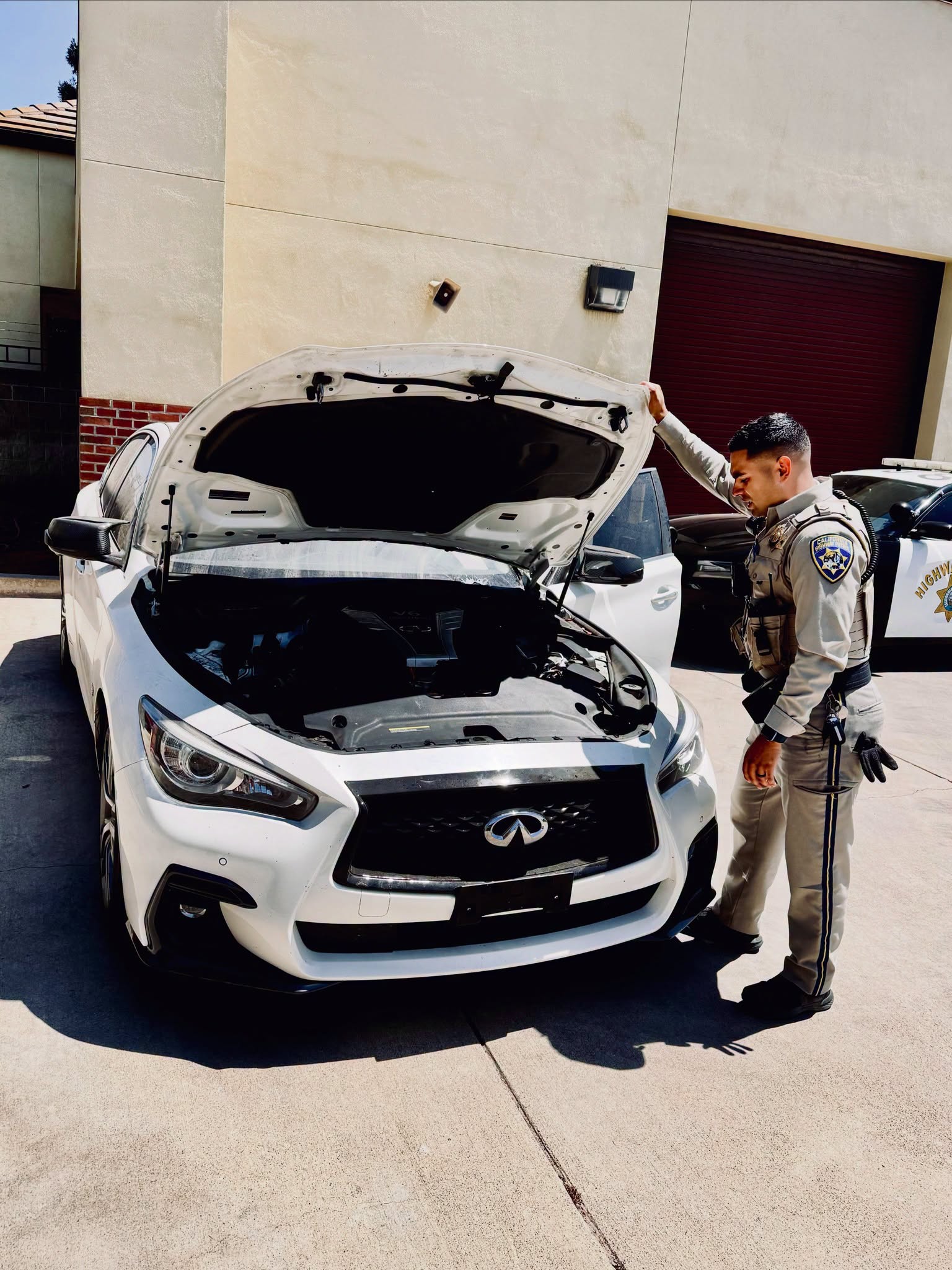
That distinction is the real story behind a recent California Highway Patrol enforcement stop that uncovered a stolen Infiniti wearing a switched vehicle identification number. CHP did not identify the model or explain what first made the officer suspicious. What it did say is more useful to anyone shopping the private-party market: Officer Trenado has been finding these vehicles lately, and buyers need to slow down when the seller, title and VIN do not line up.
The uncomfortable lesson is that a VIN lookup is not an identity check. It is a records check.
Buyer’s guide: Best GPS Trackers for Cars in 2026
How A Stolen Car Borrows A Clean Identity
The National Insurance Crime Bureau describes vehicle cloning as a remarkably tidy fraud. A thief copies the VIN from a legitimate vehicle, often one of the same make and model, creates a counterfeit VIN tag and matching ownership documents, then installs that identity on a stolen car.
Run the dashboard number through a history service and the result may look reassuring because the number is real. It belongs to a real Infiniti with a real paper trail. It just does not belong to the Infiniti you are about to buy.
That is the first “wait, really?” part of this scam: the cleaner the donor vehicle’s history, the more convincing the stolen car can appear. A history report audits a number, not a machine.
Even the VIN’s built-in check digit is limited. Federal rules standardized the modern 17-character VIN, and California DMV procedures require certain vehicles to pass the mathematical check. But a crook who copies an existing valid VIN also copies its valid check digit. The calculation can expose a mistyped or invented number; it cannot expose a correctly copied one.
The Title Can Look Better Than The Car
This is why CHP’s advice goes beyond checking the number at the base of the windshield. The seller’s name should match the title. The VIN on the dash should match the paperwork. Cash-only demands, a rushed meeting in a random location and a story explaining why somebody else’s name appears on the title are not colorful quirks. They are reasons to leave.
California’s private-party transfer rules make the ownership chain explicit. The title must be signed by the seller, and when the person selling the vehicle is not the titled owner, DMV requires a bill of sale signed by both that seller and the person named on the title. Buyers have 10 days to transfer ownership.
Paperwork still is not proof of the car’s physical identity. The Auto Wire has already seen how far the trick can go: a Toronto re-VIN case allegedly involved altered history reports made to match fraudulent numbers. In a separate Georgia title-fraud case, the allegations reached inside the government office responsible for the records. The broader point is not that every document is suspect. It is that every layer of the transaction has to describe the same vehicle and the same owner.
The Buyer Can Lose Twice
The second surprise is the financial one. Paying honestly does not turn stolen property into your property. NICB warns that a cloned vehicle is never legally yours; if police discover the switch, the car can be confiscated and returned to the rightful owner or the insurer that paid the theft claim.
The innocent buyer is then left trying to recover the purchase price from a seller who may have used a false identity and disappeared. A suspiciously cheap luxury car can become the most expensive car you never owned.
That makes the location of the sale more than a personal-safety decision. Meet at a DMV office, a bank or a law-enforcement safe-exchange area. Verify the seller’s government-issued identification against the title before any money moves. Pull your own history report rather than accepting a printout. Use NICB’s free VINCheck as one layer, not the final word, because its theft and total-loss data comes from participating insurers and is not a complete history.
Then inspect the vehicle itself. Compare the dashboard VIN with the title and the certification label in the driver’s door opening. Look for crooked rivets, disturbed trim, mismatched fonts, adhesive residue or a label that looks newer than everything around it. California DMV’s own vehicle-verification procedure uses the federal safety label as a second public VIN source and calls for an alternate accessible VIN when that label is missing or illegible.
For a late-model vehicle, especially an unusually cheap luxury model, ask your insurer or a qualified pre-purchase inspector to examine it before purchase. An inspection costs money. Losing the payment and the car costs considerably more.
The Dashboard Number Is Only The Beginning
CHP’s post is deliberately simple: take your time, match the seller to the title, compare the VIN and walk away when the story feels wrong. That is good advice, but the stolen Infiniti adds an important refinement.
Do not ask only whether the VIN is clean. Ask whether this is really the car that earned that clean record.
Image via California Highway Patrol/Facebook