
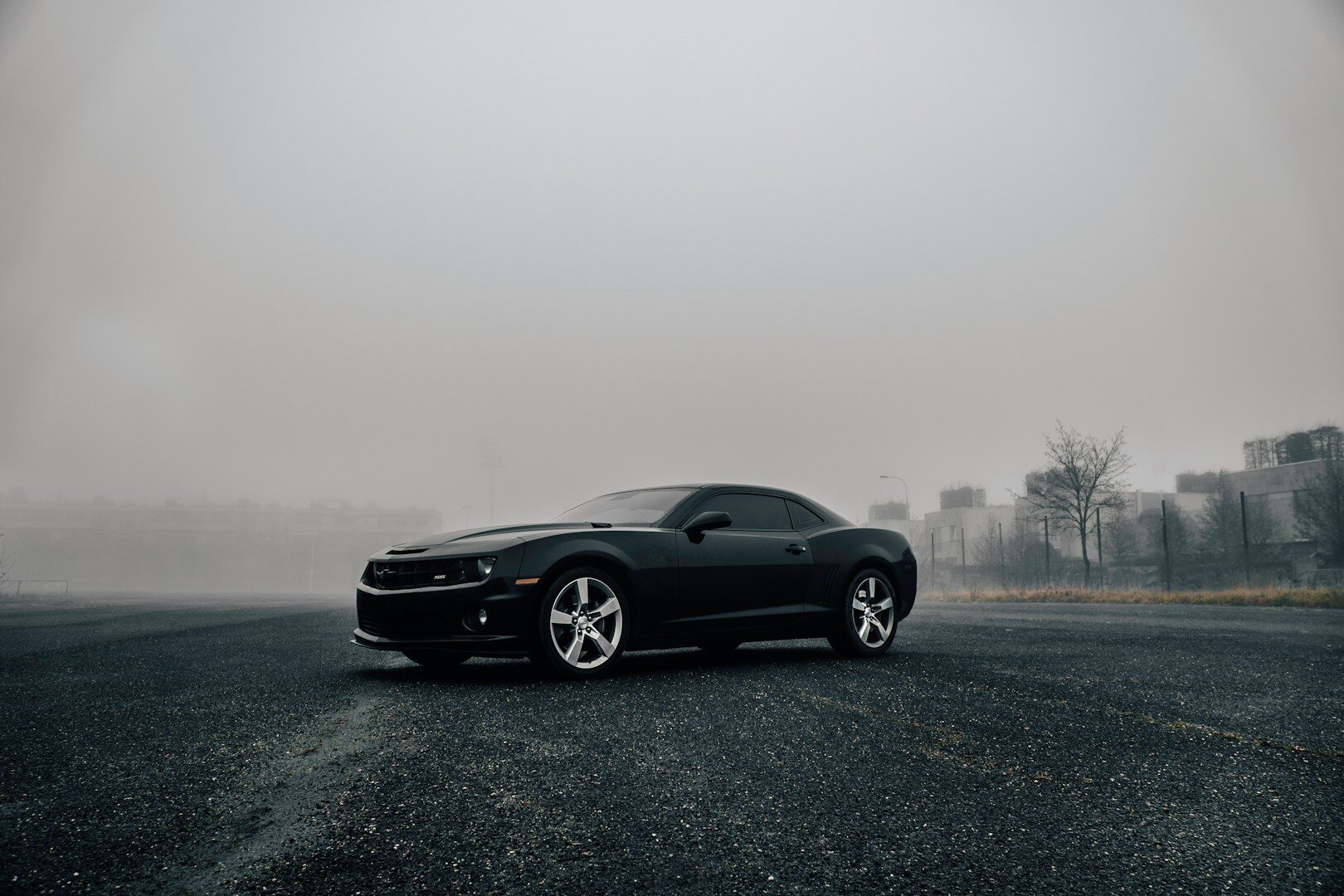
Every spring the safety establishment publishes its list of vehicles it thinks a 16-year-old should be driving, and every spring you can search the whole thing for “Camaro” and come up empty. Enthusiasts tend to read that as institutional joylessness. It isn’t. The numbers behind the recommendation are worse than most parents realize, and the reason they’re bad is more interesting than “V8 go fast.”
What the screen actually excludes
The IIHS-Consumer Reports teen list has published criteria, and they’re specific. Vehicles must weigh more than 2,750 pounds, carry standard electronic stability control, earn a good rating in the driver-side small overlap front test, and post average-or-better Consumer Reports scores for braking and handling. Then there’s the disqualifier that kills the Camaro: the list doesn’t include anything with excessive horsepower relative to weight, or anything marketed for performance.
Note that second clause. It isn’t a horsepower threshold. It’s a marketing test. A vehicle sold on the promise of dominance gets excluded regardless of what the dyno says — and IIHS goes further, warning that even on the approved list, families should stick to the base engine, because plenty of otherwise sensible models hide a hot variant in the order guide.
Related Articles
- Honda Is Opening a New Dealership Down the Road. Its Longtime Dealer Says That’s Not Even the Worst Part
- The Internet Called It A ‘Snitch Car’ Patent. Ford’s Filing Says Something Very Different.
A 3,400-pound two-door with 335 horsepower at the bottom of the range and 650 at the top fails on every axis that matters here except curb weight.
The fatality math
IIHS updated its driver death rates in July 2026, covering 2021–24 fatalities for 2023-model-year and equivalent vehicles. The average across everything on American roads was 37 driver deaths per million registered vehicle years. The Camaro posted 88 — roughly 2.4 times the fleet average.
Here’s the part that gets skipped: the Camaro also lands on the other-driver death rate list at 87, against a 53 average. That’s the rate at which people in the other vehicle die. Only a handful of vehicles appear on both lists, and most of the other-driver offenders are three-quarter-ton and one-ton pickups that weigh twice as much. The Camaro earns its spot on driving behavior alone.
IIHS President David Harkey put the mechanism plainly: “Powerful engines and marketing that attracts aggressive drivers is the issue for sports cars and muscle cars. They’re dangerous mainly because of how they’re driven.” IIHS-HLDI
The insurance file is worse
This is where the argument stops being abstract and starts showing up on a bill.
HLDI’s collision report for 2020–22 models covers 74,433 insured vehicle years of Camaro two-door exposure and 7,254 claims. Against an all-vehicle index of 100, the Camaro two-door scored 160 on claim frequency, 115 on severity, and 184 on overall loss — the highest overall collision loss of any vehicle in the study priced under $30,000. It beat the Mustang (181) and the Mitsubishi Mirage G4 (182).
Translate the index. HLDI anchors 100 at 6.1 claims per 100 insured vehicle years and $532 in loss per insured vehicle year. A 160 frequency is about 9.8 claims per 100 vehicle-years; a 184 overall loss is roughly $980 per vehicle-year in collision payouts alone. That is what underwriters are looking at before they even open the file on your teenager’s age.
Then add theft. IIHS notes the Camaro has been a recent theft target because of vulnerabilities in the system, and large sports cars carried the highest relative theft losses among 2022–24 models. That’s your comprehensive premium, separately.
The counterintuitive part
If raw power were the whole story, the ZL1 would be the worst car in the lineup. It isn’t. In the same HLDI table, the Camaro ZL1 two-door posted a relative claim frequency of 90 — well below the all-vehicle average, and barely half the base car’s 160. Its overall loss was elevated (194) purely because severity is 216: when a ZL1 does get bent, the bill is enormous.
Read that correctly and it tells you the whole story. The 650-hp Camaro crashes less often than the 335-hp one because of who buys it, insures it, and garages it. Horsepower is a proxy. The actual risk variable is the driver, and a newly licensed one is the single worst value that variable can take.
Teens specifically
HLDI’s teen bulletin quantified it. Across 2008–12, drivers aged 15–17 logged a collision claim frequency of 10.7 claims per 100 insured vehicle years against 5.9 for drivers 35–50 — nearly double, before you pick a car. Sports cars then amplify it: large sports cars ran a teen-to-adult ratio of 1.87, and midsize sports cars had the worst ratio of all 32 categories examined, at 2.56.
Layer that on the fleet-wide fact that teens’ crash rate per mile driven is over four times that of drivers 20 and older, that excessive speed factors into almost a third of teen fatal crash involvements, and that many teen fatal crashes are single-vehicle loss-of-control events. A rear-drive coupe with a torque curve that arrives early and a chassis that will absolutely step out on a damp on-ramp is the wrong tool for a driver who hasn’t yet learned to read a damp on-ramp.
If a Camaro is already in the driveway
Plenty of you are reading this with a sixth-gen in the garage and a kid who just passed the road test. Practical levers, in rough order of effectiveness:
Put the family’s boring car on the teen’s policy as their rated vehicle and keep the keys to the coupe on a separate ring. Insurers rate by assigned driver, so this is the single largest cost and exposure lever you control.
Related Articles
- Porsche Signed A $1.46 Billion AI Deal. Investors Sold The Stock Anyway.
- Lucid Doesn’t Build A Single Car In Canada. Its Stock Still Fell The Hardest.
Check the tires before you check anything else. SS and 1LE cars leave the factory on staggered summer compounds that lose meaningful grip in cold weather, and a staggered fitment can’t be rotated front-to-rear — meaning an underfunded owner runs the rears bald while the fronts look fine. That asymmetry produces exactly the snap-oversteer moment a novice can’t catch.
Adopt the graduated-licensing rules your state probably doesn’t require. IIHS’s stated best practices are a permit at 16, an intermediate license at 17, at least 70 supervised practice hours, a night restriction starting at 8 p.m., and a ban on all teen passengers. Thirty-five percent of teen driving fatalities in 2024 happened between 9 p.m. and 3 a.m.
None of this means the Camaro is a bad car. It means it’s a car that rewards judgment, and judgment is the one component a new driver hasn’t been issued yet. Give it four years and a clean record, and the coupe stops being a statistic and goes back to being a good time.