
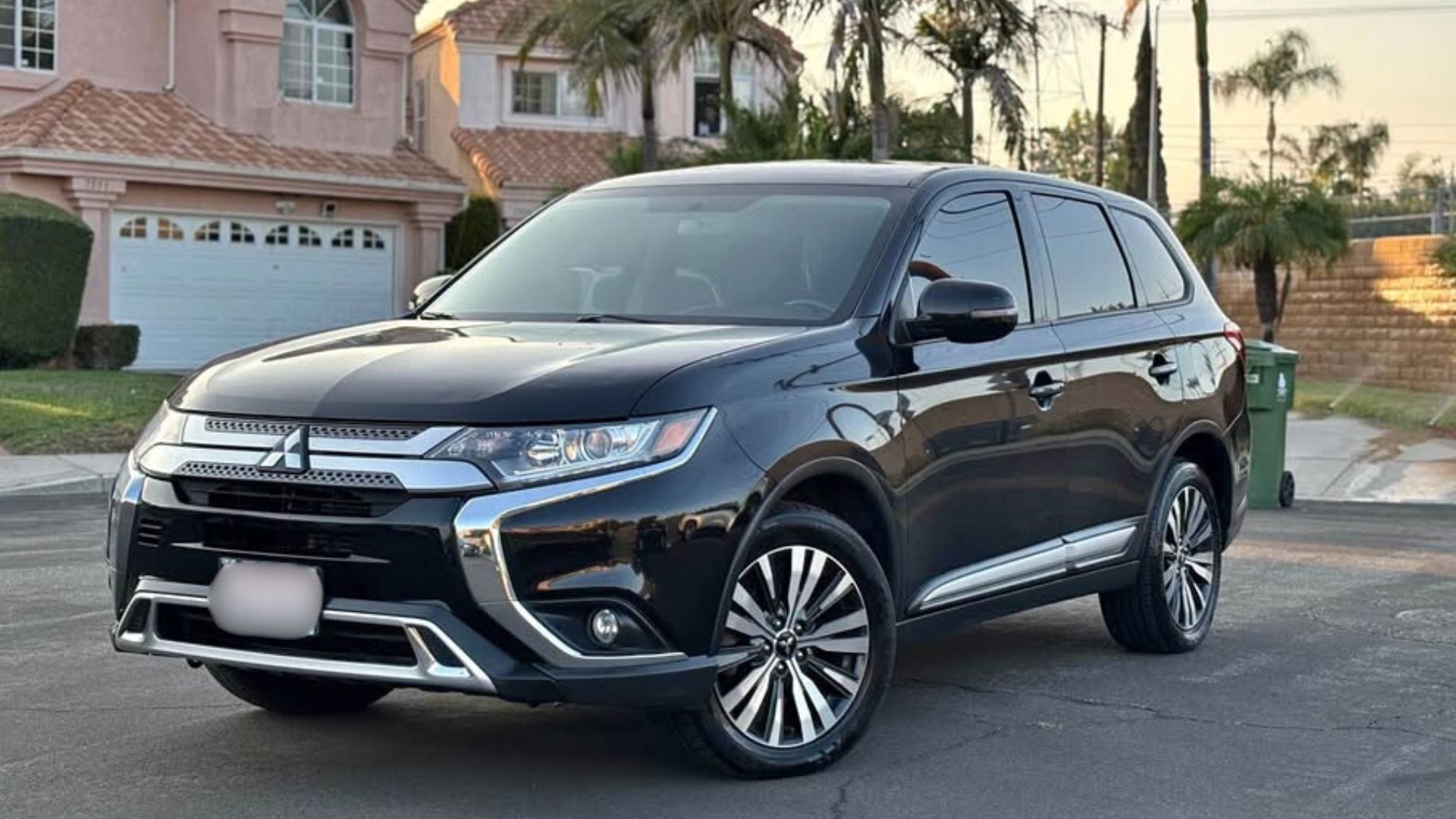
Mitsubishi is recalling 67,146 Outlanders and Outlander PHEVs to fix a rearview camera that, according to the automaker’s own paperwork, probably isn’t broken in 66,475 of them. That gap between “recalled” and “actually defective” is the first clue that this story isn’t really about a camera. It’s about what happens when a crossover starts running on the same kind of software that occasionally needs to be restarted for no reason at all.
NHTSA campaign 26V549 covers 2025 and 2026 Outlanders, including the PHEV, built primarily between December 2024 and July 2026. The problem lives in the A-IVI infotainment system, the touchscreen that handles music and navigation and, as it turns out, a federally mandated safety feature it was never supposed to be trusted with alone. Mitsubishi’s filing describes symptoms that read less like an automotive defect and more like a phone that needs a factory reset: unexpected restarts, boot failures, screens that freeze, and menus that scroll on their own without anyone touching them. When the crash happens at the wrong moment, specifically when the driver shifts into reverse, the rearview camera feed simply doesn’t show up.
That single missing image is enough to violate Federal Motor Vehicle Safety Standard 111, the rule that has required a working backup camera on every new vehicle sold in the U.S. since May 2018. We’ve written about the odd mechanics of that rule before, most recently when Volkswagen quietly recalled tens of thousands of Atlas SUVs for the identical symptom, and when Stellantis found a radio software bug capable of knocking out camera displays across four different brands at once. Add Honda’s water-logged Odyssey cameras to the pile and this is now the fourth time in about eight weeks that a backup camera has been the reason an automaker had to talk to NHTSA instead of its marketing department.
Here’s the detail worth sitting with. A cracked bracket or a corroded connector fails the same way every time, which is why a manufacturer can eventually isolate exactly which vehicles got the bad part. Software doesn’t work that way. The Outlander’s touchscreen doesn’t glitch because of a manufacturing tolerance; it glitches because of a race condition, a memory leak, or some other timing accident buried in code that only surfaces after the system has been running a certain way for a certain amount of time. There’s no bench test that reliably reproduces that failure on demand, which is exactly why Mitsubishi can estimate the defect at roughly 1 percent of the fleet, about 671 vehicles, and still have zero ability to say which 671. So all 67,146 get the letter. The math isn’t overcautious. It’s the only math that works when nobody, including the engineers, can predict which individual car will act up on any given Tuesday.
The timeline in Mitsubishi’s own filing is worth reading slower than most people will. The company says it first connected the dots in October 2025, after a vehicle in Canada developed an unresponsive touchscreen. But warranty claims describing the same symptom had already been landing in the U.S. since June of that year, eventually totaling 39 claims and one field report before the pattern got formally classified as a safety defect rather than an annoying glitch. From that October 2025 realization to the actual recall filing took roughly eleven months. Dealers won’t be notified until September 9, 2026. Owners get their letters two weeks after that. None of this breaks any rule; manufacturers get 60 days to notify owners once a recall is decided, and Mitsubishi is working inside that window. It’s just a useful reminder that the word “recall” implies urgency, and the process behind one rarely moves like it.
The fix itself says something too. Owners have to take the Outlander to a dealer, where a technician will load revised A-IVI programming onto the head unit at no charge. Compare that to Stellantis, which pushed its camera fix to nearly a million Ram, Jeep, Dodge, and Chrysler vehicles over the air, the same way a phone downloads an app update overnight. Mitsubishi doesn’t have that option here, and it’s worth asking why. An infotainment system that has already demonstrated it can freeze, reboot on its own, and scroll through menus without input isn’t necessarily a system you want receiving its own life-saving fix wirelessly. If the software is the thing behaving unpredictably, a dealer with a cable and a diagnostic laptop is the more reliable path, even if it’s the slower and more annoying one for everybody involved.
It’s also worth noting that the Outlander PHEV, the more technically complex vehicle in the lineup, shares the exact same vulnerability as the base gas model. The battery, the electric motors, and the extra software needed to manage a hybrid powertrain had nothing to do with this recall. The infotainment screen didn’t care what was happening underneath it, which says a lot about how walled off that system has become from the rest of the car, and how little it takes for a problem in one corner of a vehicle’s electronics to reach into every version of it Mitsubishi builds.
Zoom out and the pattern matters more than any single recall in it. In about two months, four different automakers, ranging from a Japanese brand selling a few hundred thousand vehicles a year in the U.S. to a multinational conglomerate selling millions, have all ended up in the same file cabinet at NHTSA over variations on the same problem. That isn’t a coincidence created by one bad supplier or one sloppy engineering team. It’s what happens when an entire industry decides the backup camera, one of the few features regulators mandate by name, gets to live inside the same general-purpose computer that also plays podcasts and spins a 3D model of the car on the home screen. Our running recall tracker has the receipts if you want to see how often this keeps happening.
None of the 67,146 Outlander owners getting a letter this month are in real danger. Mitsubishi says it has no reports of crashes tied to this defect, and the fix costs an afternoon, not a repair bill. But the lesson underneath the paperwork is worth keeping. The rearview camera on your Outlander didn’t get worse. The computer sitting next to it did, and it dragged the camera down with it on a bad day. That’s the trade every automaker has made over the last decade: bundling a device that has to work every single time into a system that, like every other computer on Earth, occasionally doesn’t.