
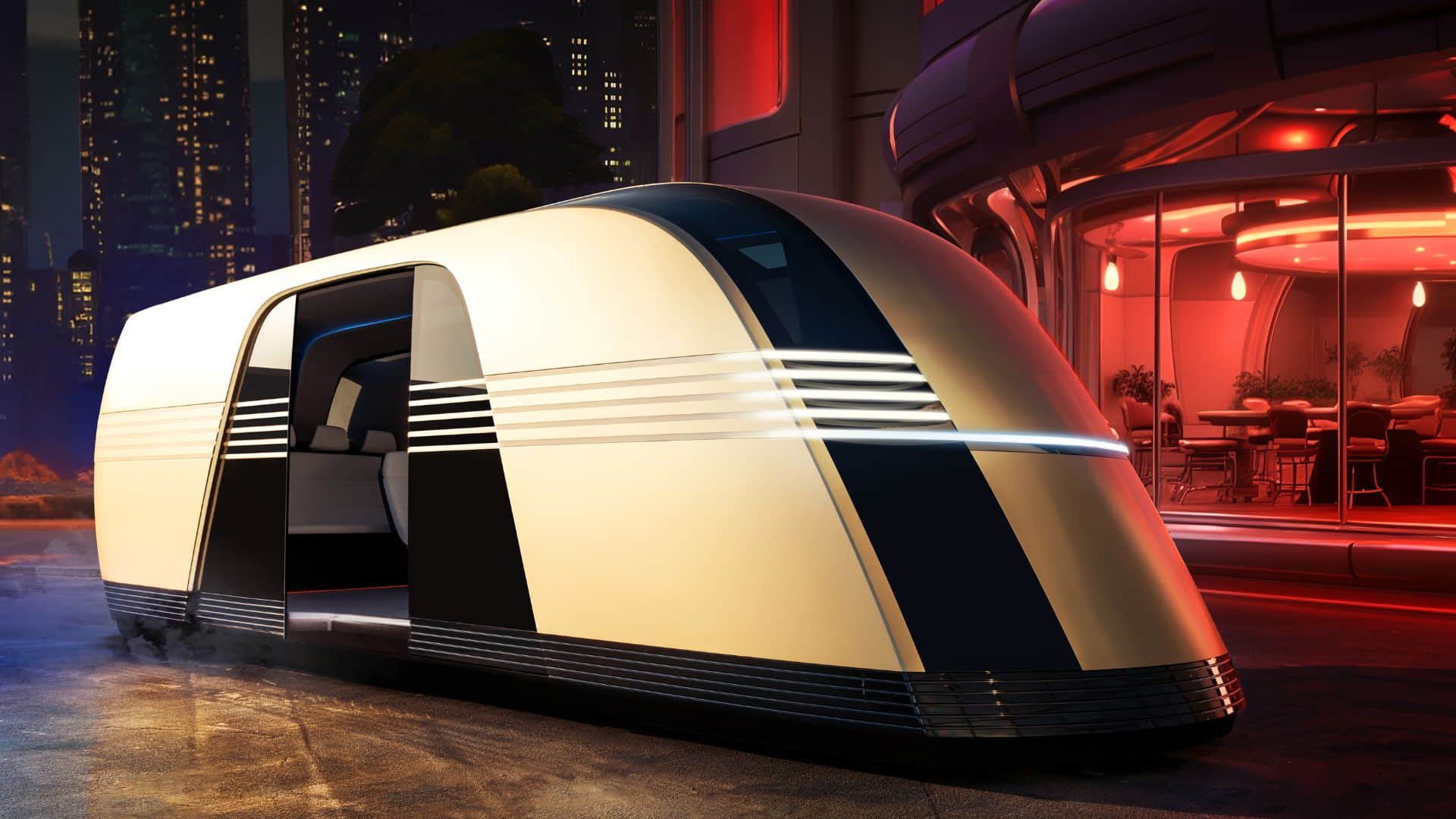
Tesla’s Cybercab is now picking up paying riders in Austin with no steering wheel, no pedals, and no way for a passenger to grab the controls if something goes wrong. That’s not actually the interesting part. Tesla has been building toward a car with no driver’s seat since Musk unveiled the concept back in 2024. The interesting part is buried in a one-page federal notice that most people will never read: while every other company still standing in the robotaxi business spent the better part of a year asking Washington for permission to remove those same controls, Tesla decided it didn’t need to ask. Hours after Cybercab rides went live for real money, the National Highway Traffic Safety Administration opened a federal audit into how Tesla reached that decision.
Tesla said on its website that riders could hail a Cybercab for errands, commuting, and more, with room for two passengers and, per the company, gear like golf clubs and scooters. This is a real commercial product now, not a demo. But a two-seat car engineered from the ground up with no manual controls has to answer to the same rulebook every Camry and F-150 answers to: the Federal Motor Vehicle Safety Standards. That’s where things get genuinely strange.
Two Ways to Delete a Steering Wheel
There are two legal ways to sell a car in the United States that skips requirements written around a human driver. One is to ask NHTSA for a temporary exemption under a rule known as Part 555, laying out your case in public and letting the agency, and anyone else who wants to weigh in, pick it apart before you’re allowed to charge a single fare. The other is to simply certify, on your own authority, that the car already meets every applicable standard, or that the standard doesn’t apply to a vehicle with no human driver to serve. NHTSA’s own recent ruling on this confirms the second path is legal: there is no rule that keeps an automated vehicle off public roads if it’s “self-certified by its manufacturer that it complies with all applicable FMVSS.” Tesla chose that path. Its closest driverless rival did not.
Amazon’s Zoox spent roughly ten months on the slow road. It petitioned NHTSA in September 2025, published its case for public comment in March 2026, and didn’t get a green light until July 31 of this year, and even then, only for two years, capped at 2,500 vehicles a year, under a system of rolling oversight that lets regulators tighten or loosen the leash as Zoox’s software matures. That approval covered exemptions from eight specific safety standards. Tesla asked for zero.
The Rules Nobody Expected to Matter
Here’s the first thing worth knowing: the eight standards Zoox had to get permission to skip aren’t really about crash structure. They cover windshield defrosting, windshield wipers, headlamp and mirror requirements, and glazing, rules that exist almost entirely because a human being needs to see clearly out of a windshield to steer. A car that is never driven by a person doesn’t obviously need a defroster tuned for a driver’s sightline. That’s a genuinely reasonable case for an exemption. What’s less mundane is the eighth standard on Zoox’s list: occupant crash protection, the rule that governs how airbags and restraints work with a steering column and instrument panel in a crash. Delete the steering wheel, and you don’t just delete a requirement. You delete the entire architecture that standard was written around, and you need an engineering answer for what replaces it.
Tesla says its own engineering already satisfies, or sidesteps, every one of those questions, including the crash-protection question, without asking anyone first. Nobody outside the company has seen that math. There’s no public docket, no comment period, no vehicle cap, and no outside safety analysis attached to it. The first time regulators are seeing Tesla’s reasoning in real detail is now, after the fact, in an audit the agency opened the same week riders started climbing in. If NHTSA doesn’t like what it finds, its options range from demanding design changes to ordering Tesla to pause the whole program.
None of this happened in a vacuum. The Department of Transportation’s own automated-vehicle framework, rolled out in 2025, is explicitly designed to clear away rules like these, and NHTSA has eight separate rulemakings in progress right now to rewrite standards on brake pedals, wipers, lighting, and mirrors for cars with no driver. Tesla isn’t defying the government’s direction so much as beating it there. It’s operating in the gap between the old rulebook and the one regulators already say is coming, betting the audit resolves in its favor before the rulebook, or public patience, catches up.
A Familiar Tesla Pattern
This is also not the first time in 2026 that Tesla’s own certification of its hardware has ended up under a federal microscope. NHTSA opened a fresh investigation into Tesla’s front suspension in August after the company’s earlier fixes didn’t hold up. Tesla has also been racing to stack up permission to scale, not just to launch: Nevada cleared the company for up to 5,000 robotaxis in the Las Vegas area alone, more than Tesla has ever operated anywhere else combined. The pattern is consistent. Move fast at the state and marketing level, and treat federal safety sign-off as something to sort out after the fact rather than before.
Regulators have also had to publicly correct Tesla’s version of events before. In July, the NTSB found that a fatal Katy, Texas crash involving a Tesla wasn’t actually running the automated driving software Tesla’s own defenders had pointed to. Whether the topic is a suspension recall, a fatal crash, or now a car with no steering wheel at all, the recurring theme is the same: Tesla’s account of what its vehicles are doing and are capable of keeps needing a second opinion from federal investigators, not a rubber stamp.
This Fight Is Older Than You Think
None of this is a new argument, either. Google’s earliest self-driving prototype, nicknamed Firefly, had no steering wheel back in 2015, and NHTSA had to issue a formal legal opinion the following year just to decide whether the software itself could count as the driver under federal law. A decade later, the industry is still litigating the identical question. The only difference now is that there’s a fare on the meter and a real passenger in the seat while the argument plays out.
That’s what makes this audit worth watching long after the headlines about Austin fade. If NHTSA reviews Tesla’s self-certification and lets it stand, self-certifying becomes the fast lane every future robotaxi, and eventually every steering-wheel-free personal car, will use instead of the slow, public exemption process Zoox just finished. If NHTSA instead forces changes or a pause, self-certification becomes a much riskier bet, and the industry quietly slides back toward asking first. Either way, the outcome gets decided in the next few months, by an agency most car buyers have never heard of, using a rule most of them didn’t know existed.
Zoox asked for permission and spent a year proving its case in public. Tesla skipped the question and is now finding out, in real time, whether the answer would have been yes.