
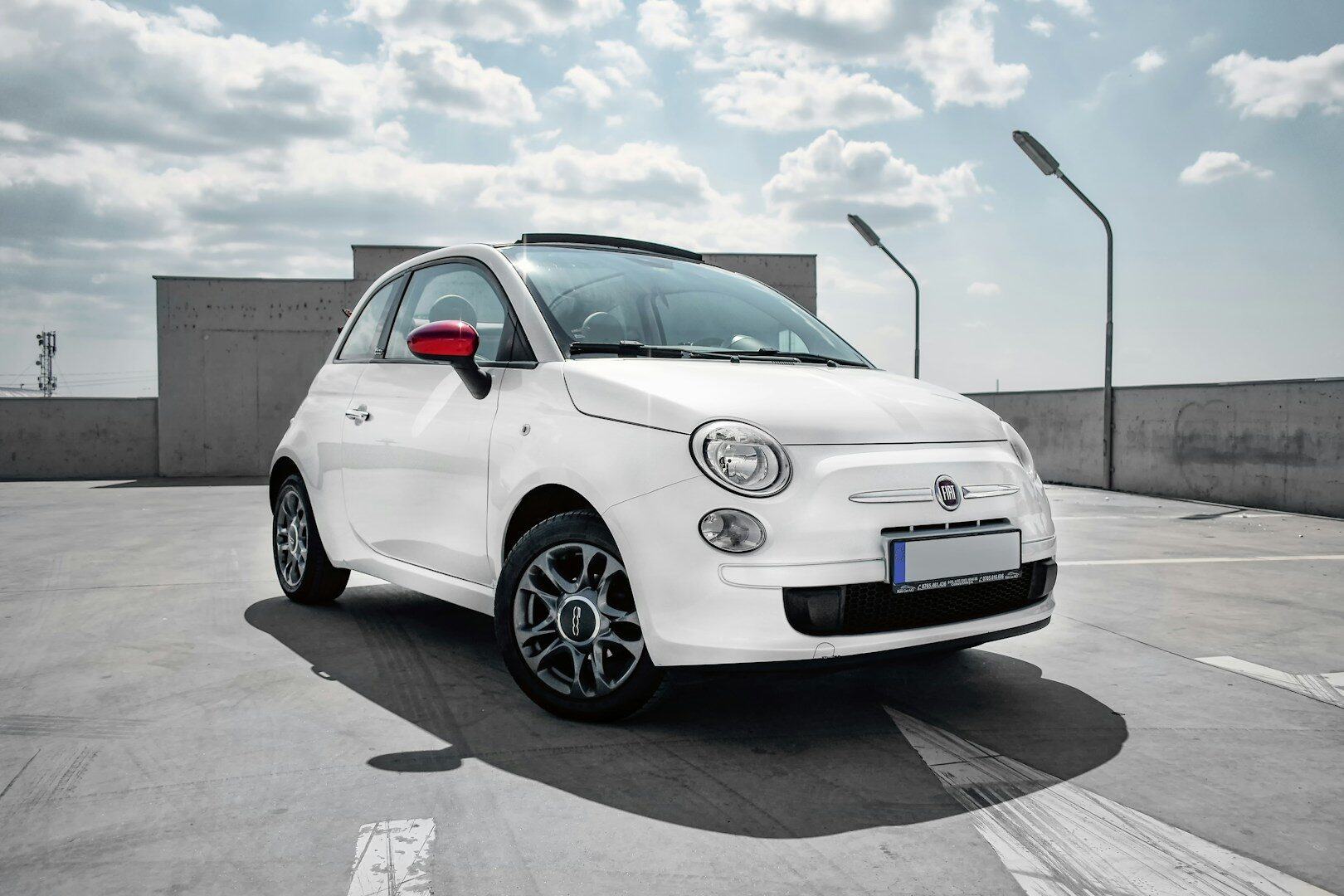
Stellantis idled its Mirafiori assembly plant in Turin for three days this week. If you’ve followed Fiat’s slow-motion Italian decline over the last fifteen years, that sentence alone probably triggered a groan. Mirafiori has spent more than a decade as the industry’s shorthand for Fiat’s shrinking Italian footprint — a factory built to produce hundreds of thousands of cars a year that, at its worst, limped along on a fraction of that volume while workers cycled through government-subsidized furlough programs.
So when the news broke that the Fiat 500 line had gone quiet on September 2, the easy assumption was more of the same tired story.
It wasn’t. And figuring out why is more interesting than the shutdown itself.
The Fiat 500 Hybrid isn’t sold in the United States, and it never will be. That doesn’t make this story irrelevant to American readers. The forecasting mistake behind it — betting factory capacity on the electric transition arriving faster than it has — is the same one showing up in Jeep and Ram planning on this side of the Atlantic. Mirafiori is just the clearest example so far of what happens when that bet doesn’t pay off on schedule.
Stellantis told worker representatives the problem isn’t weak demand for the Fiat 500. It’s the opposite. Orders for the 500 Hybrid — the mild-hybrid version of Fiat’s city car that returned to production at Mirafiori last November — are coming in faster than the supply chain feeding the assembly line can handle. The bottleneck traces back to Teksid, the casting and engine-component operation in nearby Carmagnola that machines the blocks and parts going into the Hybrid’s three-cylinder engine. Teksid was reportedly sized around older, lower-volume assumptions, and it’s now straining to keep pace with orders nobody at Stellantis apparently expected this soon.
Here’s the detail that should make people sit up: Teksid isn’t some anonymous third-party supplier caught off guard. Stellantis owns 85 percent of it. The company that can’t keep up with Mirafiori’s hybrid line is, functionally, Stellantis itself. That’s not a supply-chain surprise. That’s a capacity-planning miss inside the family.
The second detail worth sitting with is how modest the technology actually is. According to Stellantis’s own press materials, the 500 Hybrid runs a 1.0-liter, three-cylinder gasoline engine making a humble 65 horsepower, paired with a small 12-volt lithium-ion battery and a conventional six-speed manual gearbox. There’s no plug, no heavy battery pack, no exotic power electronics. This is about as unglamorous as hybrid engineering gets. And even that simple system, with its short parts list, still managed to outrun its own supply chain within ten months of launch.
For owners, that simplicity is normally the whole appeal. A 12-volt mild-hybrid system like this one doesn’t carry the repair costs or insurance premiums of a full hybrid or EV battery pack. There’s no need for high-voltage safety training at the body shop, and no five-figure battery replacement waiting at the end of the warranty period. It’s a hybrid built to be cheap to own, not just cheap to buy — which is exactly why so many buyers wanted one, and exactly why Stellantis should have seen this coming.
That’s the real story here. It’s not that a factory paused for three days. Factories pause for three days constantly, for reasons that never make headlines. The story is that Stellantis, after years of retooling its European lineup and its capital spending around electrification, badly underestimated how much appetite remained for the cheapest, simplest form of hybrid it could build — and didn’t leave itself enough slack in the parts chain to absorb the surprise.
Zoom out and the pattern shows up across Stellantis’s recent history. The company has been telling investors a story of shipment growth in North America, while dealers quietly absorb the consequences of that growth. It restarted Jeep Cherokee production at Belvidere as a bet on a platform strategy that, by Stellantis’s own admission, isn’t finished yet. And across the border in Mexico, “electrified” sales figures that automakers love to tout are turning out to be driven almost entirely by hybrids rather than the EVs that were supposed to carry the transition. Put those stories next to Mirafiori and a theme emerges: Stellantis keeps discovering, market by market, that customers want hybrids now more than they want the electric future the company spent the last five years engineering its factories around.
That’s not a small mistake to correct. Casting capacity isn’t software. You can’t push an update to a foundry. Adding capacity at a plant like Teksid means new molds, new tooling, new furnace time, and months of qualification before a single usable engine block rolls out the door. Stellantis can raise its ambitions for Mirafiori on a press release timeline. It can’t raise Teksid’s output on that same timeline, no matter how many extra shifts get scheduled.
There’s an irony worth sitting with for a second.
Italy’s government has spent years pushing Stellantis to commit to building one million vehicles annually inside the country, a target company executives have repeatedly declined to promise on any firm schedule. Mirafiori’s chronic idling has long been the visible proof of that gap between political ambition and industrial reality. For once, the plant isn’t sitting quiet because Italy stopped buying Fiats. It’s sitting quiet because, for three days, Fiat couldn’t build them fast enough. That is a better problem than the one Mirafiori has had for fifteen years. It is still a problem, and it’s one Stellantis created for itself by not trusting its own product.
None of this should worry a Fiat 500 Hybrid buyer waiting a few extra weeks for delivery. It should worry Stellantis shareholders and Italian policymakers considerably more. A company that can’t accurately forecast demand for a car this simple — no battery pack, no charging curve, no software platform, just a small engine and a tiny battery — is a company that spent its planning energy on the wrong bet. The lesson from Mirafiori isn’t that Fiat is popular again. It’s that Stellantis still doesn’t fully trust that popularity enough to build for it.
For fifteen years, Mirafiori’s problem was that Turin built more Fiat 500s than the world wanted. This week, for the first time in a long time, the problem flipped — and Stellantis still wasn’t ready for it.