
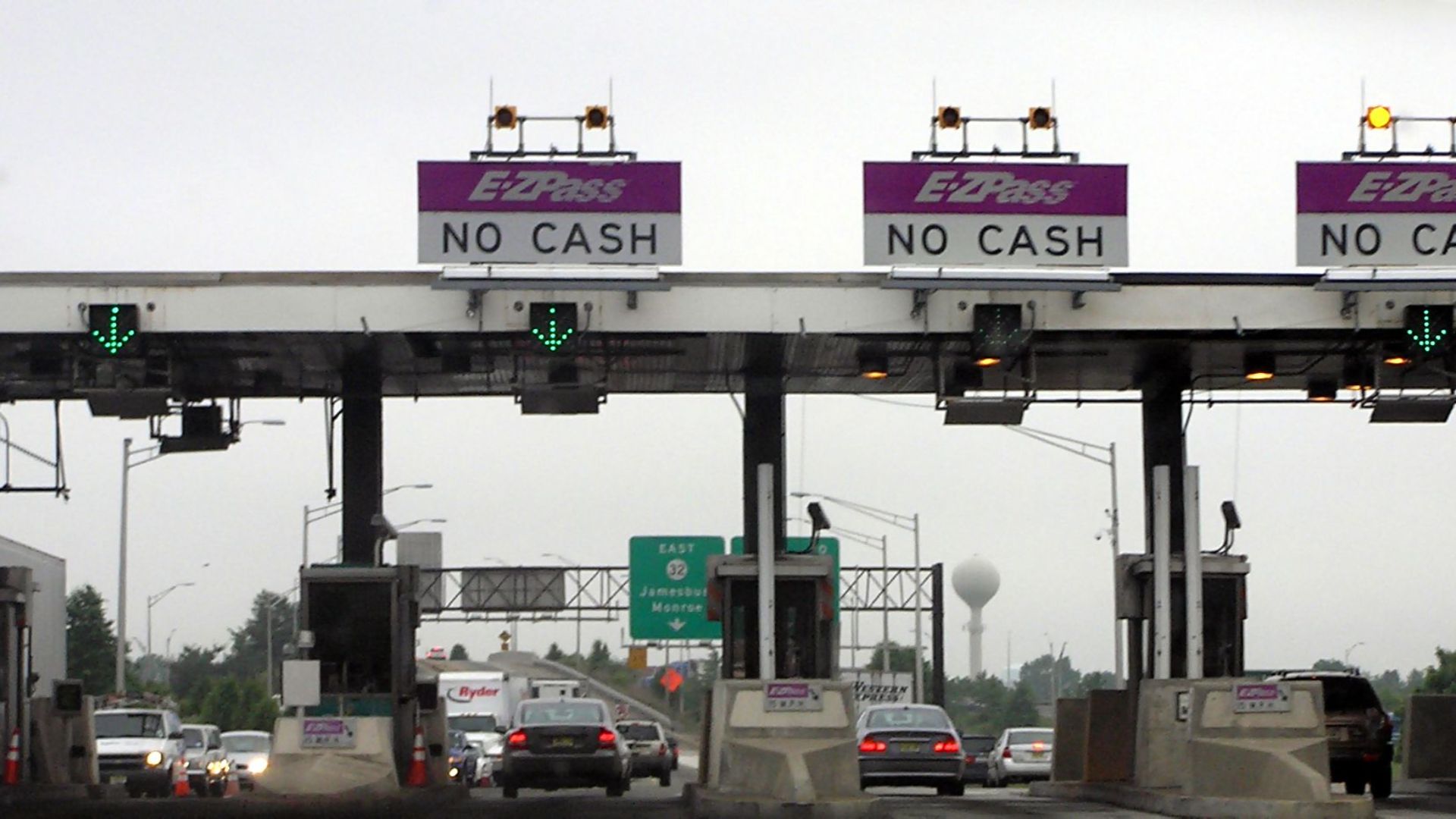
Somewhere in the fine print of a new California law is a detail that got lost in the headlines about drivers dodging bridge tolls: the state just quadrupled the fine for building a license-plate-hiding gadget, and it left the fine for driving around with one exactly where it’s been for over a decade.
That’s the part worth sitting with, because the anecdote that put this issue back in the news is almost too on-the-nose. California Highway Patrol’s Solano-area unit recently posted about pulling over a vehicle rigged with a push-button device that could conceal its plate on demand, captioning the stop “now you see it, now you don’t.” It’s exactly the scenario Sacramento lawmakers had in mind when they spent the last two years writing Assembly Bill 1085.
This isn’t new legal territory. California has barred selling plate-obscuring devices since 2008’s AB 801, then widened the ban in 2012 and again in 2024 to cover concealment for any reason, not just dodging a specific officer. By the time AB 1085 reached Governor Newsom’s desk, California had already spent 17 years trying to out-legislate a hobbyist with a soldering iron. He signed it on October 1, 2025, and it took effect January 1, 2026.
Here’s what the bill, authored by Assemblymember Catherine Stefani (D-San Francisco), actually does: it raises the fine for selling a plate-obscuring device from $250 to $1,000 per item, and for the first time makes manufacturing one inside California its own $1,000-per-item infraction. The California DMV’s own summary describes it as a law “addressing the use of illegal license plate covers that enable toll evasion and other criminal activity.”
Now look at what it didn’t touch. Vehicle Code 5201.1 has three parts: selling or manufacturing an obscuring device, actually operating a vehicle equipped with one, and defacing a plate’s reflective coating to beat a camera. AB 1085 only rewrote the first one. The fine for the driver CHP just pulled over in Solano — the person actually using the gadget — is still $250, the same number that’s applied since the law’s earlier rounds. Lawmakers went after the workshop, not the driveway.
That’s not an accident. The Senate Public Safety Committee’s own analysis of the bill says the quiet part plainly: “enforcement has primarily targeted individual users rather than the manufacturers and retailers profiting from illegal sales.” AB 1085 is a supply-side bill wearing a public-safety headline.
The money behind it is real. That same committee analysis puts statewide toll losses to obscured plates in the tens of millions annually, with Orange County’s Transportation Corridor Agencies alone out roughly $120,000 a month. The bill’s floor analysis goes further: Bay Area bridges — the same bridges CHP’s Solano officers patrol — lose an estimated $6.8 million a year to hidden plates, New York City says it’s out more than $100 million annually, and seventeen states combined are missing about $305 million a year in tolls that cameras never collected. Toll agencies still owe the same bond payments and maintenance bills whether or not that revenue shows up, which is the quiet mechanism by which a stranger’s plate flipper ends up on your toll statement in the form of a rate hike.
There’s a second cost that has nothing to do with tolls. Stefani’s push for the bill leaned heavily on what the Senate analysis calls California’s hit-and-run “epidemic” — plates that cameras and officers can’t read are plates that can’t be traced after a crash. That’s not just a headline for a legislator. It’s a dead end for an insurer trying to identify an at-fault driver, and for a victim trying to get their claim paid.
What’s genuinely surprising is how little debate any of this drew. AB 1085 passed the Assembly 69-0-10 and the Senate 35-0-5, with the official record listing “opposition: none known” — rare unanimity for anything touching license plates and camera enforcement, categories that usually draw privacy pushback. Legislators did talk themselves down from a proposed $2,500 manufacturing fine to $1,000, but nobody argued the underlying idea. The same committee record notes that plate covers are already sold openly by “big retailers, such as Target or Amazon,” and on marketplaces like Etsy — meaning the mundane version of this problem is one online order away, not a back-alley operation. A law that only reaches manufacturing inside California’s borders has nothing to say about a box shipped in from anywhere else.
Zoom out further and the Solano stop is really a preview of a structural problem. Every dollar California and other states have poured into automated tolling and camera enforcement — FasTrak, red light cameras, speed cameras — was justified as cheaper and more consistent than stationing an officer at every gantry. That case rests on one assumption: the plate will still be there, legible, when the camera looks for it. A dashboard button and a cheap actuator are a reminder that camera-only enforcement scales beautifully against ordinary traffic and falls apart completely against anyone willing to spend an afternoon wiring around it — which is exactly why it still took a human trooper, not a toll gantry, to catch the driver in Solano.
None of this is really a story about one clever driver. It’s a story about where California decided to spend its enforcement dollar, and where it decided not to. The state just told anyone building a plate flipper inside its borders that the hobby now costs $1,000 a unit. It never told the person already driving around with one that using it costs a penny more than it did in 2012. The camera at the toll gantry didn’t get any smarter. Sacramento just got tired of chasing drivers one at a time and decided to fine the workshop instead — and that only works if the workshop is still inside the state line.
Should the fine for actually driving with a plate flipper finally go up too, or is targeting manufacturers enough? Sound off in the comments.