
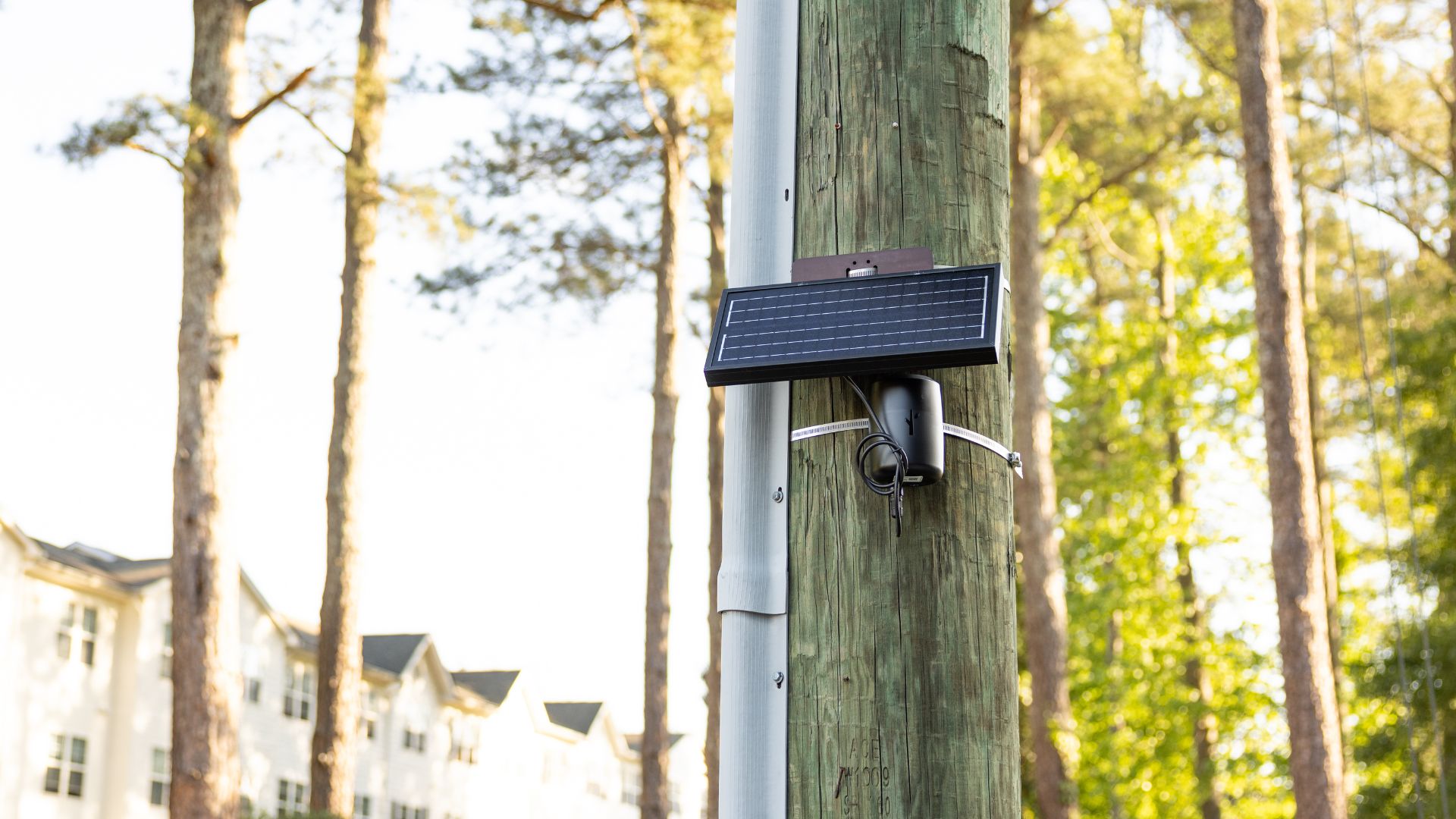
A county government in Florida spent the past three weeks trying to answer a question that sounds trivial and turns out not to be: how many cameras are watching its roads, and who owns them?
It went looking in the only place such a record exists anywhere in this country. Not a database. Not a registry. A stack of right-of-way permits, filed at the same counter that approves driveway culverts and mailbox setbacks.
The stack did not balance.
That is the real story in St. Lucie County, and it has almost nothing to do with the familiar argument about whether license plate cameras solve crimes. The commission ordered the readers off county land, which is newsworthy on its own. What should stop a car owner cold is the discovery underneath it. America has quietly built a dense, privately manufactured vehicle-identification network along its public roadsides, and the closest thing we have to an inventory of that network is a pile of paperwork from the public works department.
What the county actually ordered
According to the staff report presented to commissioners on September 15, the board issued three directions on September 1. Stop issuing authorizations for automated license plate readers, or any other automated vehicle identification or tracking system, on county-owned or county-controlled right-of-way and other county property. Revoke the authorizations already granted, and send 30-day removal notices to known owners, operators or permittees. Then inventory what is actually out there and remove anything unauthorized.
Public Works came back two weeks later with what the files said: 52 devices previously authorized inside county rights-of-way, plus a map. Crews then went out and physically checked the permit records against the poles. They turned up a few duplicate applications, and they turned up three cameras standing at locations no permit covered. Staff also reported that it was comparing crowdsourced camera data against its own records to look for more. Most of the permitted devices, the report says, were installed on behalf of law enforcement, and the Sheriff’s Office, Fort Pierce Police and Port St. Lucie Police were given advance notice. The county attorney was still drafting the removal letters.
Read that middle part again. A county government is checking volunteer-built maps to find out what is bolted to land it owns.
The registry that isn’t a registry
The exhibit attached to that agenda item is a GIS map titled, plainly, Flock Cameras. Its data layer is named for right-of-way permits. That is the inventory. Not a licensing scheme, not device registration, not an annual audit. A permit layer maintained by the same department that, on the very same agenda, awarded bids for roadside mowing and long-line mowing.
Which produces the sentence that sums up American car surveillance in 2026. St. Lucie County can tell you precisely who mows its shoulders. It cannot tell you, with the same confidence, who owns everything watching them.
The county has not said who put up the unpermitted devices, and I am not going to guess. The more useful observation is that the permit system was never built to answer that question. Right-of-way permitting exists to stop people from cutting drainage lines and planting poles inside clear zones. It was never designed to function as a surveillance registry. It simply turned out to be the only file cabinet in the building.
Florida wrote two laws about this. Neither one covers your county road.
Here is where it gets genuinely strange. Florida has legislated on plate readers, twice, briefly.
Section 316.0777 allows the Department of Transportation to permit a plate reader inside the right-of-way of a state highway, but only when a law enforcement agency requests it, and only for active criminal intelligence or criminal investigative purposes. The same section forbids using those systems to issue a traffic citation, requires removal within 30 days of FDOT’s notice, and places installation and removal costs entirely on the agency that asked for the camera. Section 316.0778 runs two sentences: the Department of State, consulting with FDLE, shall set a maximum retention period for the images and data.
That is the whole body of Florida law on the subject. One statute about state highway real estate, one about records retention. Neither mentions county roads, city streets, subdivision entrances, apartment complexes or shopping center driveways, which is to say neither mentions the overwhelming majority of roadside in the state. Below the State Highway System, the rule governing where a plate camera may legally stand is whatever the local public works ordinance happens to say.
That vacuum is why St. Lucie had to act through its own permit authority. It is also why, when the county went looking for a list, the permit counter was the only place to look.
The part you can actually use
Buried in the same statute is something most Florida drivers have never been told. Plate reader images and data are confidential and exempt from the state’s public records law, with one exception written directly into subsection four. Information relating to a plate registered to an individual may be disclosed to that individual, unless it happens to be active criminal intelligence or investigative information.
In plain English: in Florida, you can ask an agency what its plate cameras have recorded about your own car. That right has existed for years. Almost nobody uses it. If you would rather understand your exposure than argue about it, that is the lever.
Your modifications are index terms
Now the part that matters if you read this site because you like cars rather than because you follow county commissions.
Both Florida statutes define an automated license plate recognition system the same way: cameras plus algorithms that convert images of license plates into computer-readable data. That definition dates to 2014, and the hardware has moved on. Flock Safety’s own marketing now leads with attribute search rather than plate reading. The company’s FreeForm page invites users to type a plain-language description, and its own published example is a “dark SUV with rear bumper damage.” Its product comparison chart states that when a plate is partial or missing, the investigation continues on vehicle attributes instead. The plate has become one field in the record. It is no longer the record.
Sit with what that means for a car that is not anonymous. A silver mid-size sedan is nearly invisible to an attribute search. A lifted truck with a light bar, a roof basket, a hood scoop, a satin wrap, a club decal or an unrepaired quarter panel is not. Every modification you paid for is an index term. So is every body repair you have been putting off, because the dent in your rear bumper is functionally a searchable characteristic of your vehicle. The enthusiast’s car, built specifically to look like nothing else on the road, is the most identifiable object in the dataset.
It also makes one Florida enforcement priority look faintly absurd. The state spent this year threatening drivers with penalties over a dealership plate frame that covers part of a tag. If the system can pick your car out by its silhouette and its damage, the frame was never the leverage point.
Credit, then, to whoever drafted St. Lucie’s direction. It did not stop at license plate readers. It covered any automated vehicle identification or tracking system. A prohibition keyed to a 2014 noun expires the moment a vendor renames the feature, and somebody in that building clearly understood that.
Who actually pays to take them down
None of this began in Fort Pierce. It began with FDOT revoking plate reader permits inside state highway right-of-way at the start of the month, an order that arrived alongside a great deal of talk about banning the cameras outright. St. Lucie applied the same real-estate logic one rung down the ladder. Other counties will work out that they can do the same thing.
Look closely at the mechanism in both cases, though. No government switched anything off. A government revoked a land-use permission and mailed the removal bill to whoever asked for the camera. Under Section 316.0777 that is expressly the requesting law enforcement agency, which means on state roads the public pays to install the network and then pays again to uninstall it. St. Lucie’s notices go to known owners, operators or permittees, most of them acting for police agencies according to the county’s own report. Nobody has published what the teardown costs. Somebody should.
The company on the other side of it loses less than the headlines suggest. Flock’s business is a network, not a pole. Its own materials list neighborhoods, apartment complexes, businesses, schools and houses of worship as customers alongside police departments. A county revoking right-of-way permits does not touch a camera mounted on private property fifty feet away, watching the same intersection. In practice, an eviction like this relocates hardware from land that requires a permit onto land that requires only a contract.
To be fair, Flock has been tightening its own dials. The company now advertises a default retention window cut from 30 days to seven, mandatory multi-factor authentication for every customer, and expanded auditing built to catch misuse. Those are genuine improvements. They also arrived after the misuse cases rather than before them, and they are company policy rather than statute, which means they can be loosened by the same people who tightened them, with no hearing and no vote.
What to remember
Five years from now, nobody will care where any particular camera was bolted. Poles are the least durable part of this system. What endures is the record: a searchable description of your vehicle, held by somebody, for some number of days, under rules written when the phrase license plate reader still accurately described the product. Congress has so far answered with a bill with a memorable name and very little reach.
St. Lucie County did not solve any of that. It did something more useful by accident. It went and counted, and the count came up short, and in coming up short it proved that the only registry of America’s car-surveillance hardware is a roadside permit file kept by people whose actual job is culverts and mowing contracts.
Until that changes, every plate camera ban you read about is a permit dispute. And the thing quietly changing hands is a description of your car.