
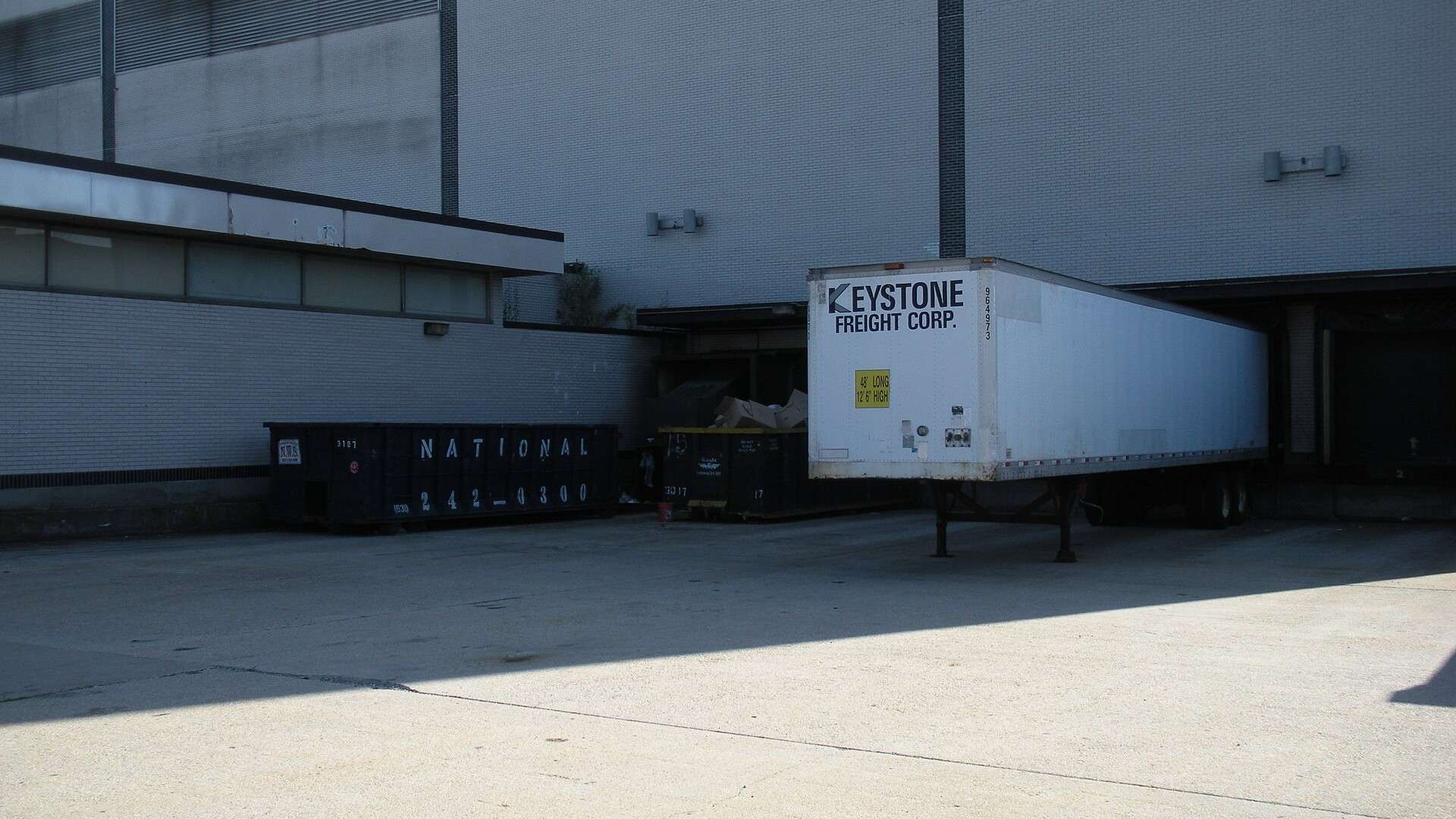
The paperwork said FedEx. The trailer held more than $680,000 in electronics. And according to Delaware State Police, the whole thing came apart the next day in a shopping-center parking lot off Interstate 95, when one of the men accused of taking it walked back toward the truck while troopers were standing there talking to the company it had been taken from.
That’s the sequence laid out in the state police’s own release announcing the arrest of 35-year-old Dushatdaman Parihar of Manteca, California.
A cab, a license, and the right paperwork
According to police, two men pulled into a business in the 1100 block of River Road in New Castle at about 9:15 a.m. on Monday, Sept. 14, driving a tractor-trailer cab. They said they were FedEx employees. They showed driver’s licenses. They had shipping documents for a particular trailer, the one loaded with more than $680,000 worth of electronics.
They hooked it up and left.
From the dock’s point of view, none of that looks strange. Cabs show up without trailers all day long; collecting trailers is what they’re for. A driver arrives, the documents match a load, the load goes out the gate. The system runs on the assumption that whoever is holding the right paperwork is the person who is supposed to be holding it.
“A short time later,” police say, the shipping documents were found to be fraudulent.
Then it turned up at the plaza
You’d expect a crew that could talk its way into a trailer of electronics to put some serious distance between itself and New Castle. The record suggests otherwise.
On Sept. 15, troopers were called to University Plaza in Newark, a shopping center at the junction of I-95 and Route 273 with a grocery store and a cluster of state offices. The business that had lost the load had found its tractor-trailer parked there and dialed 911.
The release doesn’t explain how the company tracked it down, or why a trailer full of allegedly stolen electronics was still sitting in a Delaware shopping-center lot the day after it rolled out. What it does describe is this: while troopers were talking with the caller, they saw one of the suspects walking toward the tractor-trailer. That man was later identified as Parihar.
Troopers stopped him. According to police, the driver’s licenses presented at the warehouse were fraudulent. So was the registration plate on the rig itself. Parihar was taken into custody without incident.
The trailer went back to the business. Per the state police, every piece of cargo was still inside.
The charges
Parihar is charged with felony theft of property valued at $100,000 or more, first- and second-degree forgery, second-degree conspiracy, and a fictitious registration plate count. He was arraigned in Justice of the Peace Court and committed to the Department of Correction on a $66,550 secured bond.
The release says he acted with a partner, but it doesn’t name a second suspect or report a second arrest. The state police Criminal Investigations Unit is still working the case. The charges are allegations, and Parihar has not been convicted of anything.
The expensive part worked. The cheap part didn’t.
The freight industry has a term for what police describe here: a fictitious pickup. Someone poses as a legitimate carrier and collects a load that was never meant for them. Cargo-theft tracking firm CargoNet logged 158 of them nationwide in the second quarter of 2026 alone, according to its Q2 2026 theft report. The same report put estimated losses for the quarter at $304.6 million and the average theft, where a value was reported, at $564,009, which makes this Delaware load a fairly typical target rather than an outlier.
CargoNet says most of the sophisticated versions now start with business email compromise: hijacked inboxes, spoofed carriers, rerouted loads. The New Castle case, as police describe it, was the analog edition. Two men, one cab, paperwork in hand, standing at the dock in person.
Paper has done the heavy lifting in other recent cases, too. Customs officers in Norfolk, Virginia, recently seized 1,043 radiators declared at $5.54 apiece, and a Canadian investigation into cars bound for overseas ports found many were never broken into at all. They were bought with real loans and real signatures.
Here, though, the part that should have been hard allegedly went fine. Convincing a warehouse to hand over nearly $700,000 in merchandise took forged documents, fake licenses, a fake plate and a believable story. The part that should have been easy, not leaving the truck somewhere its owner could find it, is where police say it ended.
Warehouses hand over loads to whoever shows up with a cab and paperwork that matches. What should a driver have to prove before $680,000 in freight leaves the dock, and who should be on the hook when the answer turns out to be “not enough”?
Top photo: dans362 / Wikimedia Commons (CC BY 3.0). File photo; not the trailer involved in the Delaware case.