
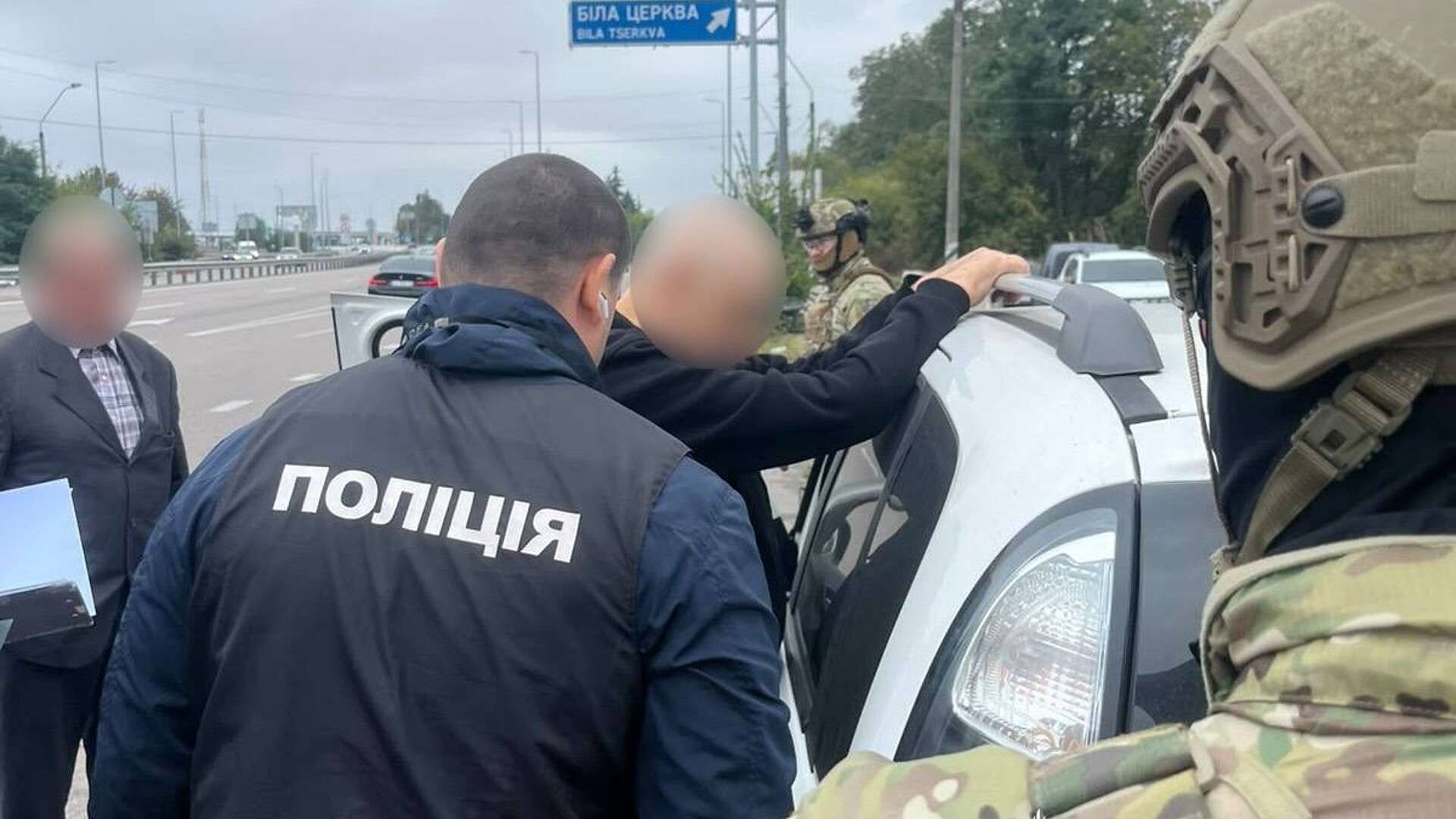
Ukraine’s National Police say a drug ring working out of a lab in the Kyiv region had worked out how to get its methadone to buyers abroad: convert it to a liquid, pass it off as automotive fluid, and carry it in a vehicle fitted with a purpose-built hiding place, on a route through Moldova, Romania, Bulgaria and Turkey to the country of Georgia.
Police laid out the alleged plan on Oct. 6, when they published the results of a two-stage operation they named Breaking Bad, after the American TV series about a chemistry teacher turned drug maker. According to the statement, the lab’s organizer brought in a co-organizer holding a candidate of chemical sciences degree, the post-Soviet academic rank closest to a PhD, who police said had specialized knowledge of synthesizing the drug.
Police said they carried out 87 searches, shut down two labs, detained six people and served eight with formal notices of suspicion, the step in Ukrainian criminal procedure that makes someone a suspect. Courts ordered the suspects held without the option of bail, police said. None has been publicly named, and none has been convicted. The cars are part of the case too. When a vehicle is built or adapted to move drugs, Ukrainian law and U.S. federal law both treat it as a tool of the crime that the state can keep, and the legal fight in both countries is over what counts as adapted and what the owner knew.
Two raids, 17 liters of methadone and 12 seized vehicles
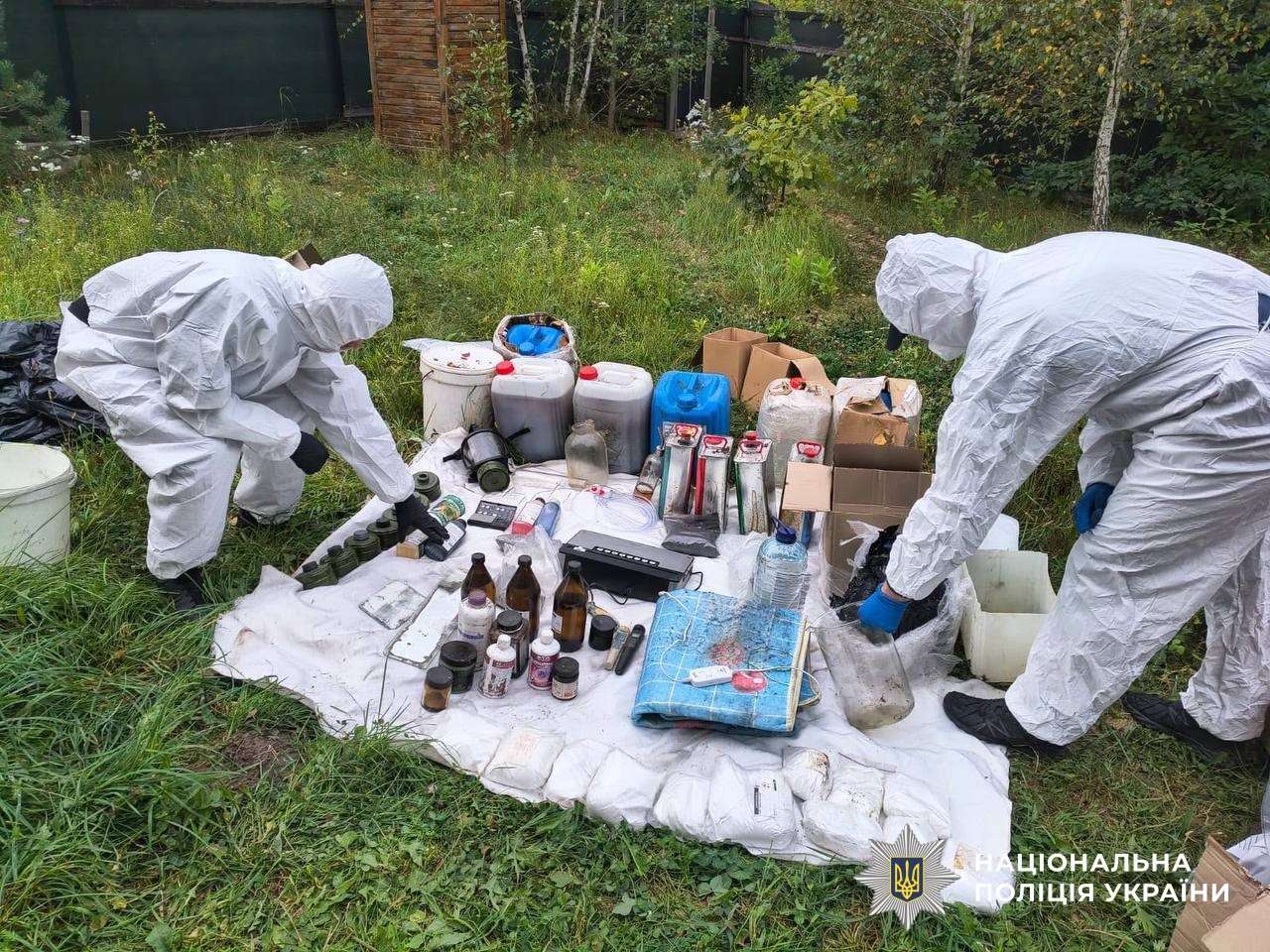
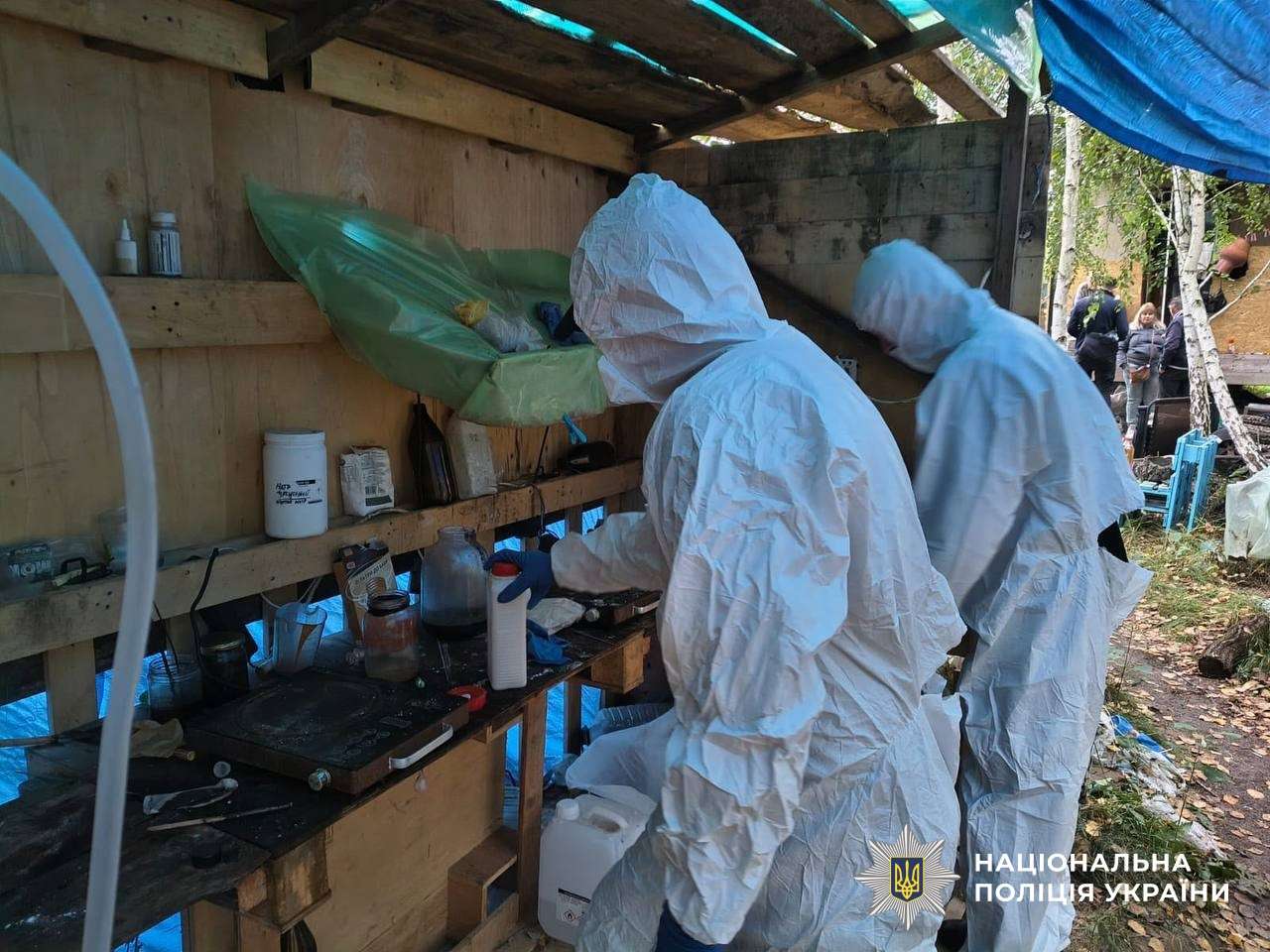
The first stage came on Sept. 13. In 12 searches, officers closed the methadone lab, detained a man police describe as a courier who also worked in the lab, and seized 17 liters of liquid methadone, 11 kilograms of precursor chemicals, lab equipment, electronics, a car and cash. Police put the black-market value of the methadone at more than 10 million hryvnias. At the National Bank of Ukraine’s official rate for Oct. 6, 45.0564 hryvnias to the dollar, that is about $222,000. Seventeen liters is about 4.5 gallons, roughly four and a half jugs of washer fluid. Police did not say which automotive fluid the methadone was made to resemble or where in the vehicle the hiding place was built.
The same group also sold methadone inside Ukraine through a Telegram storefront run by trained administrators, police said, with orders shipped through postal services so buyers never met a seller. Investigators estimated the lab’s capacity at more than 10 kilograms of methadone a month.
The second group, according to police, ran mobile amphetamine labs in the Cherkasy and Vinnytsia regions of central Ukraine, made about 10 kilograms a month and sold it in wholesale lots of a kilogram or more, with part of the output going to Moldova. On Sept. 30, officers ran 75 searches against that network and seized lab equipment, phones, laptops, tablets, bank cards, cash and 11 vehicles. With the car from the first raid, police are holding 12 vehicles from the operation. Vinnytsia regional police and the National Police’s drug-crime department did the work under the procedural supervision of the Office of the Prosecutor General and the Vinnytsia regional prosecutor’s office.
Video: National Police of Ukraine, posted to the agency’s official Telegram channel on Oct. 6.
Ukraine’s confiscation law and what happens to the cars
Police said the eight suspects were served under Part 3 of Article 307 and Part 3 of Article 311 of Ukraine’s Criminal Code, depending on each person’s alleged role. I read both sections in the Verkhovna Rada’s official legal database. Part 3 of Article 307 covers producing or selling drugs as an organized group or in especially large quantities and carries 9 to 12 years in prison with confiscation of property. Part 3 of Article 311, which covers precursor chemicals, carries five to eight years with confiscation.
Any ruling on the vehicles would come under a separate provision. Article 96-2 allows special confiscation of property that was sought out, made, adapted or used as a means or instrument of a crime, and Ukraine’s Constitutional Court upheld the article in a June 30, 2022, decision. The same clause carves out property that goes back to a lawful owner who did not know and could not have known it was being used illegally. A vehicle with a cache built in for drug runs is about as clear a case of “adapted” as the statute could get. A car borrowed from a relative who knew nothing is the case the exception was written for. Police have not said who owns the 12 vehicles.
U.S. federal law works on the same principle. Under 21 U.S.C. § 881(a)(4), a vehicle used or intended to transport or conceal controlled substances is subject to forfeiture to the government. The Civil Asset Forfeiture Reform Act of 2000 added an innocent-owner defense, now at 18 U.S.C. § 983(d), so the owner’s knowledge decides those cases, too. Border officers use the forfeiture power routinely. In a January 2025 release, U.S. Customs and Border Protection said officers at the Calexico East port of entry in California extracted 254.85 pounds of what should have been gasoline from the tank of a 2002 SUV. It tested positive for methamphetamine, and CBP seized the SUV along with the drugs.
Vehicles also show up in cross-border crime as the cargo itself, in schemes that finance cars under false pretenses and ship them overseas. In the Ukrainian case, as police describe it, the vehicle was the container.
Ohio’s hidden-compartment law and a Portage County console case
Some states make the compartment itself a crime. Ohio’s R.C. 2923.241, in effect since Sept. 28, 2012, makes it a felony to design or modify a vehicle to hide drugs, or to drive one knowing its hidden compartment is used or meant for drugs, and the charge rises to a second-degree felony when the compartment holds a controlled substance. The statute defines a hidden compartment as “a container, space, or enclosure that conceals, hides, or otherwise prevents the discovery of the contents” and lists false or modified fuel tanks, modified factory equipment and add-on boxes as examples.
On Feb. 9, Ohio’s Eleventh District Court of Appeals narrowed that definition in State v. Thompson. A Portage County driver was stopped for failing to signal a right turn, consented to a search, and police found methamphetamine, cocaine, and heroin and fentanyl mixtures behind factory panels under the center console, reached by pulling back the carpet. The court upheld his trafficking and possession convictions but vacated the hidden-compartment count. Judge Robert J. Patton wrote for the majority that all three examples in the statute involve altering the vehicle, and that “convenience or concealment alone cannot transform an unmodified factory space into a ‘hidden compartment.'”
The majority leaned on the statute’s Division (D), which bars anyone with a prior first- or second-degree aggravated trafficking conviction from driving a vehicle with a hidden compartment, whether or not it holds drugs. Under the state’s reading, the court wrote, that clause would criminalize such a person’s operation of “virtually any standard vehicle.” Judge Scott Lynch dissented on that count, reasoning that the space behind the paneling concealed the drugs, which is what the definition describes. The majority acknowledged that Ohio appellate judges have split on the question and resolved it under the rule of lenity, which requires ambiguous criminal statutes to be read in the defendant’s favor. The case went back to Portage County for resentencing.
Under that ruling, the vehicle Ukrainian police describe, with a hiding place built in for the trip to Georgia, is the kind Ohio’s law was written for. The far more common American case, drugs stuffed behind a trim panel that left the factory that way, no longer supports a hidden-compartment conviction in the Eleventh District, which covers Ashtabula, Geauga, Lake, Portage and Trumbull counties.
What comes next for the Ukrainian suspects
The eight Ukrainian suspects face up to 12 years in prison and confiscation of property if convicted on the most serious charge, and the fate of the 12 vehicles will be decided in court alongside them. Police have not said when the cases will go to trial or how long either group operated. The question that will decide what happens to each car is the same one the Ohio judges split over and the same one federal forfeiture law asks: whether the vehicle was changed to carry drugs, and who knew.
Should hidden-compartment laws cover any space in a car that can hide drugs, or only spaces someone built or modified for that purpose?